 ultimate-guide
Anti-Inflammatory Diet for Back Pain Relief
Table of Contents
- How Diet Impacts Spinal Health and Back Pain
- The Role of Chronic Inflammation in Back Pain
- Foods to Eat for Back Pain Relief
- Foods That Cause Inflammation in the Back
- How Long Does It Take for an Anti-Inflammatory Diet to Work
- Chiropractic Care and Nutrition for Back Health
- The Mediterranean Diet Connection
- Implementing an Anti-Inflammatory Diet: Practical Steps
- Frequently Asked Questions
Last Updated: September 28, 2026
How Diet Impacts Spinal Health and Back Pain
What you eat directly affects how your spine functions. When chronic inflammation builds in your body, it accelerates disc degeneration and intensifies pain signals in your back. An anti-inflammatory diet for back pain relief addresses this at the source by reducing the inflammatory cascade that aggravates spinal tissues. (Source: National Institutes of Health (NIH) on omega-3 fatty acids)
The connection runs deeper than most people realize. Your gut microbiome influences systemic inflammation throughout your entire body, including your spine. When you consume processed foods and refined carbohydrates, you're essentially feeding inflammatory pathways. The opposite is also true: nutrient-dense whole foods actively suppress the inflammatory response.
At Natural Healing Arts Medical, we understand that combining chiropractic care with dietary modifications can support faster recovery and longer-lasting pain relief. Diet isn't a replacement for treatment, but it's a powerful accelerator. Your spine can't heal optimally if inflammation is constantly working against that healing process.
The Role of Chronic Inflammation in Back Pain
Chronic inflammation is the silent driver behind most persistent back pain. Your body's inflammatory response is designed to protect you from injury, but when inflammation becomes chronic, it turns destructive. It damages disc cartilage, irritates nerve roots, and perpetuates pain signals even after the original injury has healed.
Refined carbohydrates and trans fats trigger pro-inflammatory cytokines, signaling molecules that activate your immune system's inflammatory cascade. These same foods also spike blood sugar, which amplifies oxidative stress in your tissues. Over time, this creates a vicious cycle: inflammation causes pain, pain causes stress, stress increases inflammation.
The scientific explanation matters because it changes how you approach relief. You're not just trying to feel better temporarily; you're interrupting the biological mechanism that sustains your pain. An anti-inflammatory diet for back pain relief works by starving this inflammatory cycle of its fuel sources.
Foods to Eat for Back Pain Relief
Your diet should prioritize foods that actively suppress pro-inflammatory pathways. These aren't exotic superfoods; they're accessible, affordable whole foods that work because of their phytonutrient and antioxidant content.
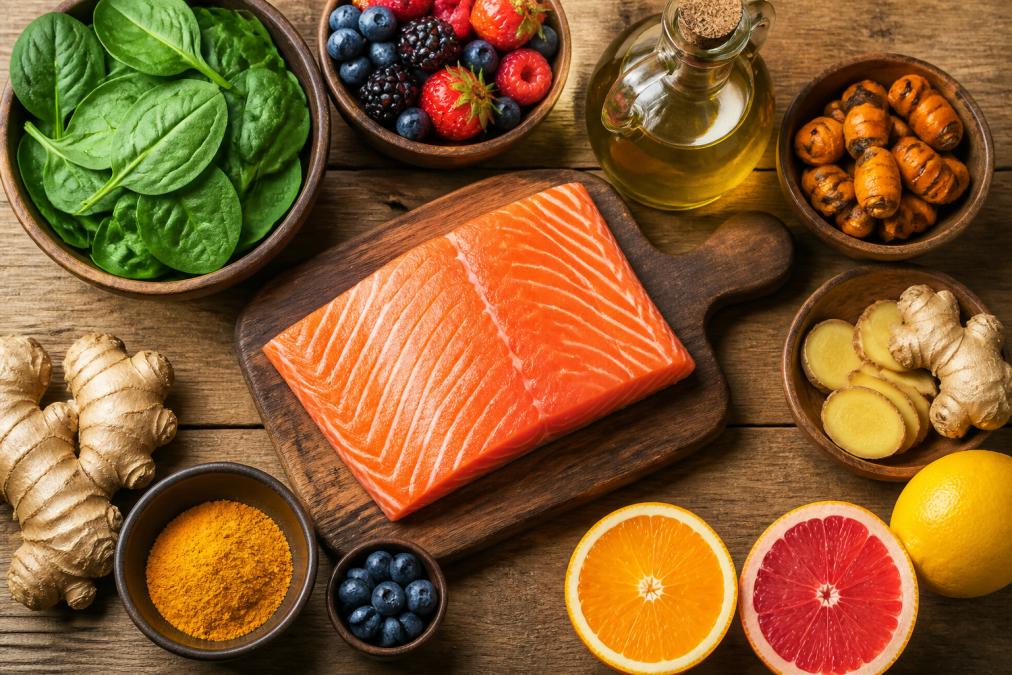
Fatty Fish and Omega-3 Fatty Acids
Fatty fish like salmon, mackerel, and sardines contain omega-3 fatty acids that actively suppress inflammatory markers. These aren't just anti-inflammatory in theory, they reduce prostaglandin production and IL-6 levels, both of which drive spinal inflammation.
Aim for 2-3 servings of fatty fish weekly. If fish isn't your preference, ground flaxseeds and chia seeds provide plant-based omega-3s, though fish sources have superior bioavailability. The omega-3 to omega-6 ratio in your diet matters enormously; most people consume far too many omega-6s from seed oils and processed foods, which tilts the balance toward inflammation.
Leafy Greens and Antioxidant-Rich Vegetables
Leafy greens like spinach, kale, and collards are nutrient-dense powerhouses packed with antioxidants that combat oxidative stress. Oxidative stress accelerates disc degeneration and nerve inflammation. Broccoli contains sulforaphane, a compound that suppresses inflammatory gene expression specifically.
Dark leafy greens should appear at nearly every meal. Aim for at least one full cup daily, raw or cooked. The bioavailability of fat-soluble vitamins in these vegetables increases when paired with healthy fats, so drizzle them with olive oil or serve alongside fish.
Berries, Citrus Fruits, and Plant-Based Nutrition
Berries contain anthocyanins and other polyphenols that reduce inflammatory markers. Blueberries, blackberries, and raspberries are particularly potent. Citrus fruits provide vitamin C, which supports collagen synthesis in your discs and ligaments while reducing systemic inflammation.
Plant-based nutrition extends beyond fruits and vegetables. Legumes, nuts, and seeds provide fiber that feeds beneficial gut bacteria, which then produce short-chain fatty acids that suppress inflammation. This is where the gut-spine axis becomes practical: your dietary choices reshape your microbiome within weeks.
Turmeric, Ginger, and Anti-Inflammatory Spices
Turmeric contains curcumin, a compound that inhibits NF-κB, a key inflammatory signaling pathway (Inhibition of the NF-κB signaling pathway by the curcumin analog...). The research on curcumin's anti-inflammatory effects is strong. However, curcumin has poor bioavailability, it's absorbed better when combined with black pepper (which contains piperine) and fat.
Ginger works through a different mechanism, inhibiting prostaglandin synthesis. Fresh ginger is more potent than dried. Use both turmeric and ginger liberally in cooking, or consume them as tea. These aren't supplements; they're whole foods with measurable anti-inflammatory activity.
Foods That Cause Inflammation in the Back
Certain foods actively drive the inflammatory response you're trying to suppress. Understanding what to avoid is as important as knowing what to eat.
Refined carbohydrates, white bread, pastries, sugary cereals, spike blood glucose and trigger inflammatory cytokine release. Trans fats in processed foods directly activate inflammatory pathways. Seed oils high in omega-6 (soybean oil, corn oil) shift your inflammatory balance when consumed in excess. Added sugars suppress your immune system's ability to regulate inflammation, essentially removing the brakes on inflammatory signaling.
Processed meats contain advanced glycation end products (AGEs) that trigger inflammation. Regular red meat is less problematic than processed varieties, but excessive consumption still contributes to systemic inflammation. Alcohol, particularly in excess, disrupts gut barrier function and increases inflammatory endotoxins.
The practical approach: eliminate obvious processed foods, reduce refined carbohydrates to occasional consumption, and be mindful of your seed oil intake. You don't need to be perfect; you need to shift the balance.
How Long Does It Take for an Anti-Inflammatory Diet to Work
Most people notice reduced pain and inflammation within 2-4 weeks of consistent dietary changes. However, this varies based on your starting point and adherence level. Someone eating mostly processed foods will see faster improvements than someone already eating reasonably well.
The biological timeline matters. Inflammatory markers in your bloodstream respond within days to dietary changes. However, tissue repair in your spine, the actual healing of damaged discs and ligaments, takes longer. You might feel 30-40% better within a month, but full tissue remodeling takes 8-12 weeks or longer.
This is why combining an anti-inflammatory diet with chiropractic care can support better results. Chiropractic treatment optimizes spinal mechanics and nerve function while your diet addresses the inflammatory environment. Together, they can create conditions for faster healing.
Chiropractic Care and Nutrition for Back Health
Chiropractic care and nutritional support work synergistically. Spinal adjustments restore proper biomechanics and reduce nerve irritation. An anti-inflammatory diet for back pain relief removes the inflammatory obstacle to healing. Without dietary support, even excellent chiropractic care faces an uphill battle.
Dr. David Zamikoff and the team at Natural Healing Arts Medical integrate nutritional guidance with chiropractic treatment because they understand this connection. The adjustments work better when inflammation isn't constantly reactivating damaged tissues. Patients who follow dietary recommendations alongside their treatment plan often find it supports their recovery.
This isn't theoretical. Patients with disc injuries, chronic lower back pain, and sciatica all benefit from the combined approach. Your chiropractor can identify mechanical problems; your diet addresses the inflammatory environment that sustains those problems.
The Mediterranean Diet Connection
The Mediterranean diet is essentially an anti-inflammatory diet for back pain relief that happens to be delicious. It emphasizes olive oil, fatty fish, leafy greens, legumes, whole grains, and moderate red wine consumption. It naturally minimizes processed foods and refined carbohydrates.
Research consistently shows that people following Mediterranean dietary patterns have lower inflammatory markers and better spinal health outcomes.
Implementing an Anti-Inflammatory Diet: Practical Steps
Starting an anti-inflammatory diet doesn't require perfection or deprivation. It requires strategic substitutions and meal planning that fits your life.
Budget-Friendly Anti-Inflammatory Shopping
Cost shouldn't prevent you from eating anti-inflammatory foods. Many of the most potent options are affordable.
Meal Prep for Pain-Limited Individuals
If chronic back pain limits your mobility, meal prep becomes essential. You can't be standing at the stove for an hour when your back is in pain.
| Strategy | Time Investment | Payoff |
|---|---|---|
| Batch cooking proteins | 45 minutes | 4-5 ready meals |
| Roasting vegetables | 30 minutes | Sides for entire week |
| Cooking grains in bulk | 20 minutes | Base for multiple meals |
| Pre-portioning | 15 minutes | Grab-and-go convenience |
Frequently Asked Questions
What foods trigger lower back pain?
Foods high in refined carbohydrates, trans fats, and added sugars trigger systemic inflammation that worsens back pain. Processed foods, fried items, sugary beverages, and products containing vegetable oils contribute to pro-inflammatory responses. Reducing these foods while adopting an anti-inflammatory diet for back pain relief can help decrease flare-ups and chronic pain symptoms over time.
How long does an anti-inflammatory diet take to reduce back pain?
Most people notice initial improvements in inflammation and pain levels within 2-4 weeks of consistently following an anti-inflammatory diet. However, significant pain reduction and improved spinal health typically develop over 8-12 weeks as the body reduces systemic inflammation and oxidative stress. Individual results vary based on diet adherence, severity of disc degeneration, and whether you combine dietary changes with chiropractic care or physical therapy.
Can diet alone fix chronic back pain without chiropractic care?
Diet plays a crucial role in managing chronic inflammation and supporting spinal health, but combining nutrition with chiropractic care and physical therapy can support better outcomes. While an anti-inflammatory diet reduces the inflammatory environment contributing to back pain, chiropractic adjustments address mechanical issues with vertebrae and discs. Together, nutrition and chiropractic care can work synergistically to help relieve pain, restore mobility, and support the prevention of future flare-ups.
What is the best anti-inflammatory food for back pain?
Fatty fish rich in omega-3 fatty acids, such as salmon and sardines, are among the most effective foods for reducing chronic inflammation and supporting joint health. Leafy greens, berries, and turmeric with curcumin also rank highly for their antioxidant and anti-inflammatory properties. Including nutrient-dense whole foods from these categories daily maximizes your body's ability to reduce systemic inflammation and support disc health.