 comparison
Chiropractor vs Physical Therapy: Results Compared
Table of Contents
- Chiropractor vs Physical Therapy: Key Differences at a Glance
- What Chiropractors Do: Treatment Philosophy and Methods
- What Physical Therapists Do: Rehabilitation and Functional Movement
- Chiropractor vs Physical Therapy for Lower Back Pain
- How Long Does Physical Therapy Take to Show Results
- Cost of Chiropractic vs Physical Therapy: What to Expect
- Which Should You Choose? A Decision Framework
- Integration of Care: Combining Both Approaches
- Frequently Asked Questions
Last Updated: August 9, 2026
Chiropractor vs Physical Therapy: Key Differences at a Glance
When dealing with chronic pain or injury recovery, the choice between a chiropractor and a physical therapist depends on your specific condition. Both address musculoskeletal problems through different treatment philosophies and methods.
Natural Healing Arts Medical, led by Dr. David Zamikoff in Bradenton, FL, specializes in chiropractic care for conditions ranging from disc injuries to whiplash, while offering comprehensive wellness solutions. Understanding how chiropractic care differs from physical therapy helps you make an informed decision about which path, or combination of both, suits your situation.
The fundamental difference lies in their treatment focus. Chiropractors primarily use spinal adjustment and manual manipulation to correct alignment issues, while physical therapists emphasize therapeutic exercise and functional movement to restore strength and mobility.
What Chiropractors Do: Treatment Philosophy and Methods
Chiropractors operate from the principle that proper spinal alignment directly influences nervous system function and overall health. Their core technique is spinal adjustment, a controlled application of force to vertebrae that have become misaligned, a condition called subluxation in chiropractic terminology.
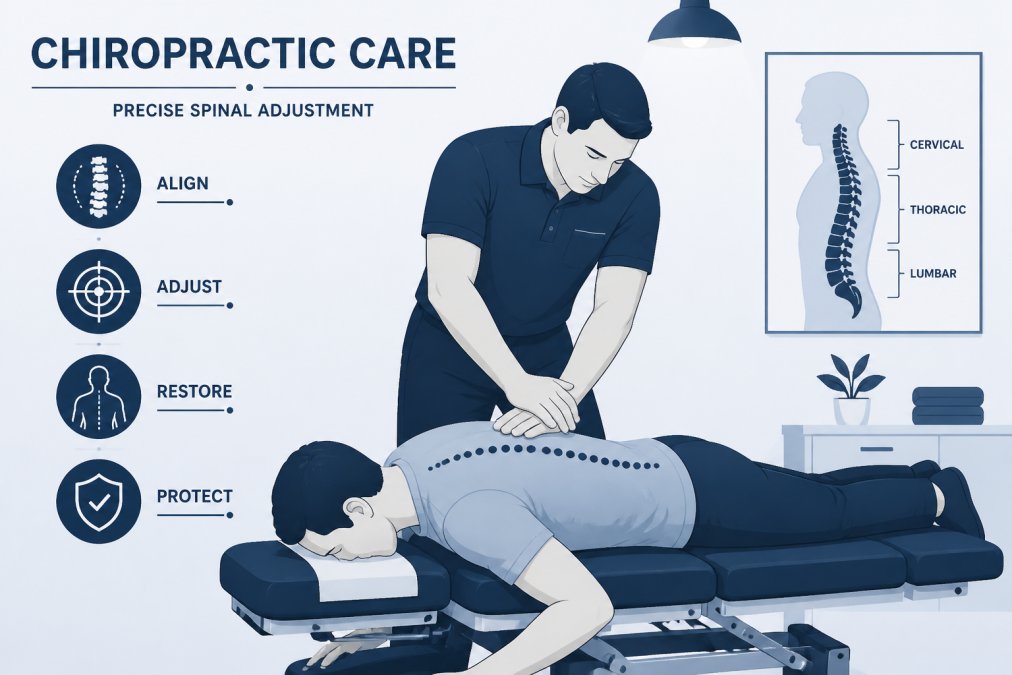
Modern chiropractic care incorporates soft tissue therapy, joint mobilization, and postural correction. A chiropractor evaluates your spine's biomechanics, identifies restrictions in range of motion, and develops a treatment plan aimed at restoring proper alignment. For acute pain relief, like sharp lower back pain from a disc injury or whiplash from an auto accident, chiropractic adjustment often provides faster initial relief than other approaches.
The treatment philosophy emphasizes prevention through regular adjustments to maintain spinal health and prevent future problems. A patient with acute lower back pain might see a chiropractor 2-3 times per week initially, then taper to maintenance visits.
What Physical Therapists Do: Rehabilitation and Functional Movement
Physical therapists focus on restoring function through therapeutic exercise, strengthening, and movement retraining. Their treatment philosophy centers on the principle that your body adapts to the demands you place on it. By systematically loading muscles and joints through controlled exercise, you rebuild strength, improve neuromuscular re-education, and restore range of motion.

A physical therapist performs a detailed diagnostic assessment, identifying which muscles are weak, which joints lack mobility, and which movement patterns are dysfunctional. They then prescribe specific exercises targeting those deficits. Treatment often includes manual therapy and joint mobilization, but the emphasis is on what you do between appointments.
Physical therapy requires active patient participation. A typical PT program involves 2-3 clinic visits per week plus daily home exercises. The time commitment is higher, but the payoff is functional improvement that persists because you've rebuilt your body's capacity. This approach works particularly well for chronic conditions and long-term recovery, addressing underlying weakness and movement dysfunction that likely caused the problem.
Chiropractor vs Physical Therapy for Lower Back Pain
Both approaches can help lower back pain, but they address the problem differently. Chiropractic care focuses on spinal alignment and nerve function. If your pain stems from a vertebra shifted slightly out of position, restricting a nerve or causing muscle guarding, spinal adjustment can provide rapid relief. Many patients report significant pain reduction after just a few sessions, making chiropractic an excellent choice for acute lower back pain.
Physical therapy addresses the muscular and movement dysfunction that often underlies chronic pain. Weak core muscles, tight hip flexors, and poor movement patterns all contribute to recurring lower back pain. PT rebuilds your foundation, which is why the benefits tend to last longer. A physical therapist might identify that your pain stems from weak glute muscles causing your pelvis to tilt, increasing stress on your lower back.
Research shows both approaches can be effective, but effectiveness depends on your specific problem. Acute pain from a disc injury or recent trauma often responds faster to chiropractic adjustment. Chronic pain from weakness or movement dysfunction responds better to physical therapy's exercise-based approach.
Many patients benefit from both. You might start with chiropractic care for acute pain relief, then transition to physical therapy to prevent recurrence.
How Long Does Physical Therapy Take to Show Results
Most patients begin noticing improvement within 2-3 weeks of consistent physical therapy. This initial improvement is often modest, perhaps a 20-30% reduction in pain or a small increase in range of motion.
Meaningful functional improvement typically takes 6-8 weeks of consistent therapy. By this point, you should notice measurable changes: you can bend further without pain, climb stairs with less discomfort, or sit at your desk longer without symptoms.
Full recovery or maximum improvement often requires 12-16 weeks of consistent treatment, depending on the condition. Chronic pain that's been present for months takes longer to resolve than acute pain from a recent injury.
The key variable is consistency. Patients who do their home exercises 5-6 days per week see results much faster than those who only attend clinic visits. Treatment frequency matters too, most effective programs involve 2-3 clinic visits per week for the first 4-6 weeks, then tapering as you progress.
Cost of Chiropractic vs Physical Therapy: What to Expect
Both chiropractic care and physical therapy are typically covered by health insurance, though coverage varies by plan. Medicare covers physical therapy when ordered by a physician, with certain visit limits. Many private insurance plans cover both modalities, though they may require a referral from a primary care physician for physical therapy.
Natural Healing Arts Medical accepts most health insurance and Medicare, and offers flexible payment plans for patients without insurance coverage or those with high deductibles.
The cost structure differs between the two approaches. Chiropractic visits tend to be shorter (15-20 minutes) and less expensive per visit, but you often need more frequent visits. Physical therapy sessions typically run 45-60 minutes and cost more per visit, but you may need fewer total visits to achieve your goals.
Your total out-of-pocket cost depends on your insurance coverage, your deductible, and your copay structure. Some plans have separate deductibles for chiropractic versus physical therapy.
Which Should You Choose? A Decision Framework
The right choice depends on three factors: your condition type, your pain timeline, and your treatment goals.
For acute pain from recent injury or trauma, chiropractic care often wins. If you have acute lower back pain from lifting something wrong, whiplash from a car accident, or a recent disc injury, spinal adjustment can provide rapid relief within days.
For chronic pain from weakness or movement dysfunction, physical therapy usually produces better long-term results. If your lower back pain has persisted for months, the underlying problem is likely weakness or poor movement patterns. Physical therapy rebuilds your foundation, which prevents recurrence.
For conditions requiring ongoing management, consider your lifestyle and preferences. If you prefer hands-on treatment and quick relief, chiropractic care aligns with your style. If you prefer active participation and building strength, physical therapy suits you better.
For post-surgical recovery, physical therapy is typically the standard of care. After spinal surgery, disc replacement, or joint surgery, your surgeon will likely refer you to physical therapy to restore function.
For prevention and wellness, chiropractic care emphasizing maintenance visits appeals to some patients, while physical therapy emphasizes home exercise programs that build lasting strength and resilience.
| Condition Type | Chiropractic Advantage | Physical Therapy Advantage | Best Choice |
|---|---|---|---|
| Acute lower back pain | Fast pain relief (days) | Prevents recurrence | Chiropractic first, then PT |
| Chronic lower back pain | Symptom management | Addresses root cause | Physical therapy |
| Whiplash from accident | Rapid alignment restoration | Long-term neck stability | Chiropractic first, then PT |
| Post-surgical recovery | Not typically appropriate | Standard protocol | Physical therapy |
| Weak core/postural issues | Doesn't rebuild strength | Rebuilds muscular foundation | Physical therapy |
| Sciatica | Nerve decompression focus | Reduces nerve irritation | Depends on cause |
Integration of Care: Combining Both Approaches
The most sophisticated patients don't choose one or the other, they use both strategically. A typical integrated care pathway: You experience acute lower back pain and see a chiropractor for rapid pain relief. Within 2-3 weeks, the acute pain diminishes and you have enough mobility to function. At this point, you transition to physical therapy to address the underlying weakness or movement dysfunction that likely caused the problem.
This sequential approach works because each profession plays to its strength. Chiropractic adjustment rapidly restores alignment and relieves nerve irritation. Physical therapy then rebuilds your body's capacity so the problem stays fixed.
Concurrent care, seeing both providers simultaneously, can also be valuable for complex conditions. A patient with sciatica might benefit from chiropractic adjustment to reduce nerve irritation while simultaneously doing physical therapy exercises to improve core stability.
The integration requires communication between providers. Your chiropractor and physical therapist should be aware of each other's work and coordinate their approach. Natural Healing Arts Medical coordinates care with other providers to ensure you're receiving complementary treatment.
For chronic conditions requiring ongoing management, many patients maintain a relationship with both, seeing their physical therapist regularly for exercise programming and their chiropractor periodically for maintenance adjustments.
Choosing between chiropractic care and physical therapy isn't about picking the objectively "better" option, it's about matching the right tool to your specific problem. Acute pain from recent injury responds quickly to chiropractic adjustment. Chronic pain from weakness responds better to physical therapy's exercise-based approach. Many patients benefit most from a combination, using chiropractic care for rapid pain relief and physical therapy for lasting functional improvement.
Natural Healing Arts Medical provides comprehensive chiropractic care including spinal adjustments, soft tissue therapy, and wellness solutions. Dr. David Zamikoff's approach combines evidence-based chiropractic techniques with personalized treatment planning, helping patients in Bradenton relieve pain and reach their wellness objectives. If you're dealing with lower back pain, disc injuries, or other musculoskeletal conditions, schedule a consultation with Natural Healing Arts Medical to explore which approach, or combination of approaches, will work best for your specific situation.
Frequently Asked Questions
Is it better to see a chiropractor or a physical therapist for back pain?
The answer depends on your specific condition and what caused your pain. Chiropractors focus on spinal adjustment and alignment to relieve acute pain quickly. Physical therapists emphasize strengthening muscles and improving functional movement to address underlying biomechanical issues and prevent recurrence. For acute pain from injury, chiropractic care may provide faster relief. For chronic pain or recovery after surgery, physical therapy often produces better long-term results. Many patients benefit from both approaches used together as part of an integrated care plan.
How do treatment results differ between chiropractic and physical therapy for lower back pain?
Chiropractic care for lower back pain typically focuses on spinal adjustment and manual manipulation to restore alignment and reduce pain intensity. Results often appear within a few visits. Physical therapy takes a longer approach, using therapeutic exercise, neuromuscular re-education, and posture correction to strengthen supporting muscles and improve biomechanics. While physical therapy results take longer to appear, they tend to be more durable because they address the muscular and functional factors that caused the pain. Evidence suggests combining both approaches yields superior outcomes for chronic lower back pain.
Does insurance cover chiropractic care and physical therapy differently?
Coverage varies significantly by insurance plan. Most health insurance plans and Medicare cover physical therapy when prescribed by a physician, though copays and visit limits apply. Chiropractic coverage is less consistent, some plans cover it fully, others partially, and some exclude it entirely. It's essential to check your specific policy before starting treatment. Natural Healing Arts Medical accepts most health insurance and Medicare and offers flexible payment plans to help manage out-of-pocket costs regardless of your coverage level.
Can a physical therapist perform spinal adjustments like a chiropractor?
Physical therapists can perform joint mobilization techniques that move joints through their range of motion, but this differs from the high-velocity spinal adjustments chiropractors perform. Some physical therapists have additional training in manual therapy techniques, but the primary focus remains on therapeutic exercise, functional movement, and strengthening. If spinal adjustment is your primary goal, a chiropractor is the appropriate specialist. If you need rehabilitation and functional recovery, physical therapy is the standard approach.
What conditions does chiropractic care treat best compared to physical therapy?
Chiropractors typically excel at treating acute musculoskeletal pain, whiplash from auto injuries, acute disc injuries, and conditions where spinal misalignment contributes to pain. Physical therapists are better suited for post-surgical rehabilitation, chronic pain management requiring strength rebuilding, sports injuries needing functional training, and conditions requiring neuromuscular re-education. Some conditions, like chronic lower back pain or knee osteoarthritis, benefit from both modalities working together to address both pain relief and functional recovery.