 comparison
Chiropractor vs Surgery for Back Pain: A 2026 Guide
Table of Contents
- Understanding the Root Cause of Back Pain
- How Chiropractic Care Works for Back Pain
- When Is Back Surgery Medically Necessary
- Chiropractor vs Surgery: Comparison Table and Key Differences
- Non-Surgical Back Pain Treatment Options
- Chiropractic Success Rates for Chronic Back Pain
- Making Your Decision: Chiropractor or Surgery
- Frequently Asked Questions
Last Updated: August 8, 2026
Understanding the Root Cause of Back Pain
Back pain stems from poor posture, muscle imbalance, disc degeneration, or injury. Understanding the cause is essential for choosing the right treatment path. Mechanical pain originates from poor alignment, tight muscles, or joint dysfunction, issues spinal adjustments can address. Nerve-related pain occurs when discs herniate or vertebrae compress nerves, sometimes causing sciatica. Degenerative disc disease develops as discs lose water content and crack, reducing cushioning ability.
At Natural Healing Arts Medical in Bradenton, Florida, the team identifies what's driving your pain. This diagnostic clarity matters because it determines whether conservative care can resolve the issue or whether surgery is necessary. Many people assume their pain is a disc problem when the real culprit is muscular tightness or postural dysfunction, which respond well to chiropractic care and physical therapy.
Imaging doesn't always tell the whole story. You can have a herniated disc on an MRI and feel no pain, or have minimal findings and experience severe symptoms. Clinical assessment, how your body moves, where you feel pain, what aggravates it, matters as much as imaging.
How Chiropractic Care Works for Back Pain
Chiropractic care restores proper alignment and function to the spine through manual therapy, spinal adjustments, and supporting treatments like physical therapy. The core principle is that vertebral misalignment restricts movement and irritates nerves; correcting alignment reduces pain and improves function.
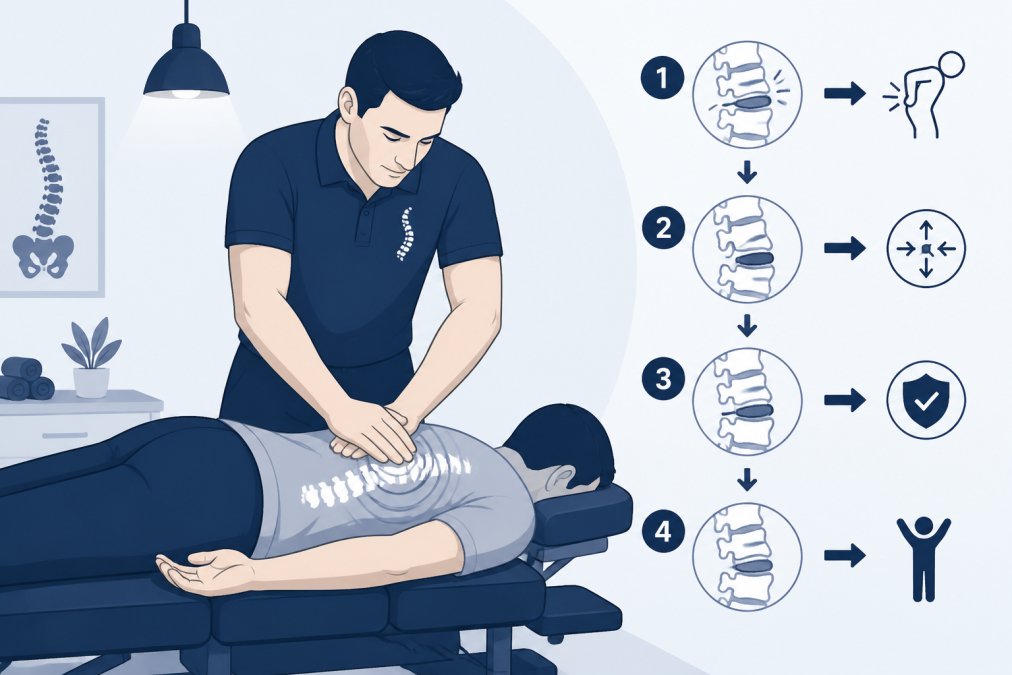
A typical chiropractic approach includes spinal adjustments that apply controlled force to improve alignment and mobility, manual therapy techniques addressing tight muscles and fascia, physical therapy exercises strengthening stabilizer muscles, and lifestyle guidance on posture and ergonomics.
Research shows spinal manipulation is effective for acute and subacute lower back pain, particularly when combined with exercise. For chronic pain, results are more variable. Some patients experience significant relief; others see modest improvement. The quality of the practitioner matters enormously, one who listens carefully and adjusts the treatment plan based on your response delivers better outcomes.
Natural Healing Arts Medical integrates physical therapy, addresses underlying biomechanical issues, and recognizes when chiropractic care alone isn't enough. Rather than scheduling endless appointments without progress, Dr. David Zamikoff and his team adjust the treatment plan based on measurable results.
When Is Back Surgery Medically Necessary
Surgery becomes necessary when conservative treatments have failed AND you have specific structural problems that surgery can fix. Surgery treats anatomical problems causing pain, not pain itself.
Red flags suggesting surgery might be needed include progressive neurological symptoms (worsening weakness, loss of bowel or bladder control), significant functional loss unimproved after 6-12 weeks of conservative care, or imaging findings correlating with your symptoms. Cauda equina syndrome, compression of multiple nerve roots, is a surgical emergency.
Common procedures include discectomy (removing disc material compressing a nerve), laminectomy (removing bone to open the spinal canal), and spinal fusion (joining vertebrae together). Recovery timelines vary: minor procedures may require 2-4 weeks of limited activity, while fusion requires 3-6 months. Success depends on proper patient selection, those with clear structural problems have better outcomes than those undergoing surgery for pain without anatomical justification.
Even successful surgery doesn't immediately restore function. You're still managing healing tissues, inflammation, and rebuilding strength. Realistic expectations matter.
Chiropractor vs Surgery: Comparison Table and Key Differences
The choice between chiropractic care and surgery depends on whether your problem is structural or functional, how long conservative care has been attempted, and whether symptoms are improving or worsening.
| Factor | Chiropractic Care | Surgery |
|---|---|---|
| Best For | Muscle tightness, joint dysfunction, acute/subacute pain, postural issues | Disc herniation compressing nerves, spinal stenosis, instability, progressive neurological loss |
| Recovery Time | Days to weeks; often improves with continued care | Weeks to months; involves restricted activity and rehabilitation |
| Risk Profile | Low risk when performed by qualified practitioner; rare serious complications | Surgical risks include infection, bleeding, nerve damage, anesthesia complications |
| Cost | Generally lower upfront; varies by treatment duration | Typically higher; depends on procedure complexity and hospital setting |
| Long-term Outlook | Addresses underlying dysfunction; results depend on maintaining good habits | Removes specific structural problem; doesn't prevent future issues at other levels |
| When to Start | First-line treatment for most mechanical back pain | After 6-12 weeks of conservative care fails, or for surgical emergencies |
The real decision comes down to specifics. If your MRI shows a large disc herniation compressing a nerve with significant leg pain and weakness unimproved after 8 weeks of physical therapy, surgery becomes reasonable. If your pain is localized to your lower back with no neurological symptoms and you've only tried basic stretching, chiropractic care is the logical first step.
Natural Healing Arts Medical takes diagnostic clarity seriously. Rather than assuming every patient needs ongoing chiropractic care, Dr. Zamikoff evaluates whether your condition will respond to conservative treatment. If findings suggest you need surgery, he'll be direct about that. This honesty distinguishes effective practitioners from those collecting appointment fees.
Non-Surgical Back Pain Treatment Options
Several evidence-based approaches address back pain without surgery, working best in combination.
Physical therapy strengthens core muscles stabilizing your spine, improves flexibility, and retrains movement patterns. A good physical therapist teaches you how to move without aggravating your condition and builds capacity for activities you care about.
Pain management techniques include epidural steroid injections, radiofrequency ablation, and nerve blocks. These aren't permanent solutions but can reduce pain enough to allow rehabilitation participation.
Postural correction and ergonomic modifications address habits that created the problem. Poor desk ergonomics, unsupportive mattresses, or stressful movement patterns accumulate over time. Fixing them prevents recurrence.
Lifestyle factors significantly influence pain levels. Regular movement, healthy weight, stress management, and avoiding prolonged static positions all matter. Someone with a herniated disc who stays active and manages stress often feels better than someone with minimal findings who's sedentary.
The key insight: non-surgical treatment works best when multifaceted. Chiropractic adjustment combined with physical therapy, ergonomic changes, and activity modification produces better results than any single approach.
Chiropractic Success Rates for Chronic Back Pain
Success rates vary depending on how you measure success, treatment duration, and whether other interventions are combined. For acute lower back pain, spinal manipulation shows reasonable effectiveness, with many experiencing significant relief within weeks.
For chronic back pain, results are more complex. Some patients experience substantial improvement; others see modest gains. Factors predicting better outcomes include early intervention, concurrent physical therapy, compliance with home exercises, and addressing lifestyle factors. Patients expecting adjustment alone to fix chronic pain without other changes tend to be disappointed.
Practitioner quality significantly influences results. One who performs thorough assessment, adjusts treatment based on response, and actively involves you in recovery delivers better outcomes than someone following a generic protocol.
If you've been seeing a chiropractor for 8-12 weeks without improvement, something needs to change. Either modify the treatment plan, add interventions, or consider that your problem might require a different approach, potentially including imaging to rule out structural issues.
Natural Healing Arts Medical measures success through measurable progress toward your goals: pain reduction, improved function, better mobility. If you're not moving in that direction, the treatment plan gets reassessed.
Making Your Decision: Chiropractor or Surgery
The decision should follow a logical sequence based on clear understanding of what's wrong, then matching treatment to the problem.

Begin with comprehensive evaluation including detailed pain history, clinical examination assessing range of motion and neurological symptoms, and imaging showing structural findings. Remember that imaging findings don't always correlate with symptoms.
If evaluation suggests a mechanical problem without significant nerve involvement, conservative care is logical. This typically means 6-12 weeks of chiropractic care, physical therapy, and lifestyle modifications. If you're improving, continue the plan. If you've plateaued without reaching functional goals, reassess.
Red flags suggesting you skip conservative care include progressive neurological symptoms, significant functional loss despite conservative treatment, or imaging findings clearly explaining symptoms and amenable to surgical correction. Cauda equina syndrome requires emergency surgical evaluation.
Chronic pain affects mental health; depression and anxiety are common. Some patients become so focused on finding the "right" treatment they delay decisions. Others jump to surgery hoping for quick fixes without trying conservative options. The most effective path involves accepting recovery takes time, committing to a reasonable plan, and maintaining realistic expectations.
Cost and insurance are practical factors. Chiropractic care is often more affordable upfront than surgery, though ongoing costs accumulate. Understand your financial exposure before committing.
Consider your personal tolerance for risk and uncertainty. Surgery carries specific risks but offers possibility of definitively addressing structural problems. Conservative care is lower-risk but may not fully resolve pain. Neither is universally "better", the choice depends on your specific situation and values.
Chronic back pain affects millions of people, and choosing between chiropractic care and surgery can feel overwhelming. Most back pain responds well to comprehensive, well-executed conservative treatment. Natural Healing Arts Medical specializes in thorough, compassionate care, combining spinal adjustments, physical therapy, and personalized treatment plans addressing your specific condition. If you're in the Bradenton area and ready to explore whether chiropractic care can resolve your pain, schedule an appointment with Dr. David Zamikoff and his team. Recognized as one of America's Best Chiropractors for over a decade, they focus on measurable progress toward your wellness goals, not endless appointments.
Frequently Asked Questions
Do chiropractors ever recommend surgery for back pain?
Yes, qualified chiropractors recognize when a patient's condition exceeds the scope of chiropractic care. If diagnostic imaging reveals severe disc herniation, spinal instability, or neurological compromise, a chiropractor may refer you to an orthopedic or neurosurgeon. This demonstrates professional integrity and prioritizes your health over service volume. The decision to pursue surgery should always involve consultation with a qualified spine specialist.
What are the primary risks associated with back surgery?
Common surgical risks include infection, bleeding, blood clots, anesthesia complications, and nerve damage. Specific to spine surgery: failed back surgery syndrome (persistent pain after surgery), implant failure, and loss of spinal mobility. Recovery typically takes 6-12 weeks for basic activities, with full recovery extending 3-6 months. Not all patients experience complete pain relief. Discussing these risks thoroughly with your surgeon before proceeding is essential.
How do I know if my back pain requires a surgical consultation?
Seek surgical evaluation if you experience progressive neurological symptoms (numbness, weakness in legs), loss of bowel or bladder control, severe unrelenting pain unresponsive to 6-12 weeks of conservative care, or imaging evidence of cauda equina syndrome or severe cord compression. Red flags warrant prompt medical assessment. Conservative treatment, including chiropractic care, physical therapy, and non-invasive options, should typically be attempted first unless your condition is immediately life-threatening.
What's the typical recovery timeline for chiropractic care versus back surgery?
Chiropractic care for acute back pain often shows improvement within 2-4 weeks, with chronic conditions requiring 8-12 weeks or longer depending on severity. Most patients return to normal activities quickly. Back surgery recovery is longer: 2-6 weeks for basic function, 3-6 months for full recovery, and 6-12 months before returning to strenuous activity. Chiropractic care generally allows faster return to work and daily activities, making it attractive for those unable to take extended time off.
Why do some medical doctors discourage chiropractic treatment?
Some physicians express caution due to concerns about spinal manipulation in certain conditions (severe osteoporosis, spinal cord compression) or past cases of adverse outcomes. However, evidence-based chiropractic care, when properly indicated and performed by a qualified practitioner, has demonstrated safety and effectiveness for many back pain conditions. The key is ensuring your chiropractor performs proper diagnostic assessment and communicates openly with your primary care physician about your treatment plan.