 comparison
Knee Brace vs Physical Therapy for Osteoarthritis: 2026 Guide
Table of Contents
- Knee Brace vs Physical Therapy: Which Works Better for Osteoarthritis?
- At-a-Glance Comparison: Braces vs Physical Therapy
- What Knee Braces Actually Do for Arthritic Knees
- What Physical Therapy Addresses That Braces Cannot
- How Long Does Physical Therapy Take for Knee Pain?
- Key Exercises for Knee Osteoarthritis You Can Start Today
- The Case for Viscosupplementation for Knee Osteoarthritis
- Why Combine Braces, Therapy, and Other Non-Surgical Options?
- Frequently Asked Questions
Last Updated: September 7, 2026
When knee osteoarthritis makes every stairwell feel like an obstacle course, the first question most people ask is whether a brace or physical therapy is the right path. It is a fair question, but it frames the decision incorrectly. The knee brace vs physical therapy debate is rarely about choosing one over the other; for most patients, the most effective plan combines both alongside other non-surgical options. At Natural Healing Arts Medical, we help patients in Bradenton explore surgery-free paths to relief.
Knee Brace vs Physical Therapy: Which Works Better for Osteoarthritis?
Neither approach wins outright because they treat different parts of the problem. Knee osteoarthritis is the gradual breakdown of cartilage, leading to joint pain, stiffness, and reduced mobility. A knee brace provides biomechanical support that changes how load travels through the joint, while physical therapy rebuilds the strength and stability that protect the knee long-term.
The clinical guidelines are clear that conservative management should come before surgical options. For many patients, the real question is sequencing: a brace can offer immediate symptom relief during daily activity, while physical therapy delivers the lasting functional improvements that reduce reliance on support devices over time.
At-a-Glance Comparison: Braces vs Physical Therapy
| Factor | Knee Brace | Physical Therapy |
|---|---|---|
| Primary purpose | Immediate pain relief and joint unloading | Strength, mobility, and long-term function |
| Time to effect | Immediate upon wearing | Noticeable improvement typically at 4-6 weeks; full benefit at 8-12 weeks |
| Passive or active | Passive support | Active rehabilitation |
| Best for | Moderate to severe unicompartmental OA, daily activity pain | Early OA, post-brace strengthening, post-injection recovery |
| Cost profile | One-time purchase: $300-$800 off-the-shelf; $800-$2,000 custom-fitted | Per-session: $75-$150 before insurance; $20-$60 copay with most plans |
| Typical duration of use | As needed for high-demand activities; often tapered over 3-6 months | 6-12 weeks of structured sessions, with a home exercise program thereafter |
| Risk | Skin irritation, discomfort, improper fit can worsen alignment | Minimal when supervised; soreness is common but transient |
| Insurance coverage | Often covered with prior authorization; Medicare Part B covers 80% after deductible (medicare.gov) | Covered by most plans; Medicare covers 80% of approved amount after deductible |
| Long-term durability | Benefits end when the brace is removed | Muscle strength gains persist for years after treatment ends |
This table matters because it sets realistic expectations. A brace is a tool you wear; physical therapy is a skill you build. Patients who understand the cost and time investment upfront are far less likely to abandon either approach when results do not arrive overnight.
The distinction also informs sequencing. If your primary problem is pain during a specific activity, like walking to the mailbox, a brace offers the fastest relief. If your primary problem is that your knee gives way or feels unstable even at rest, physical therapy should be your first priority because it addresses the muscle weakness causing that instability.
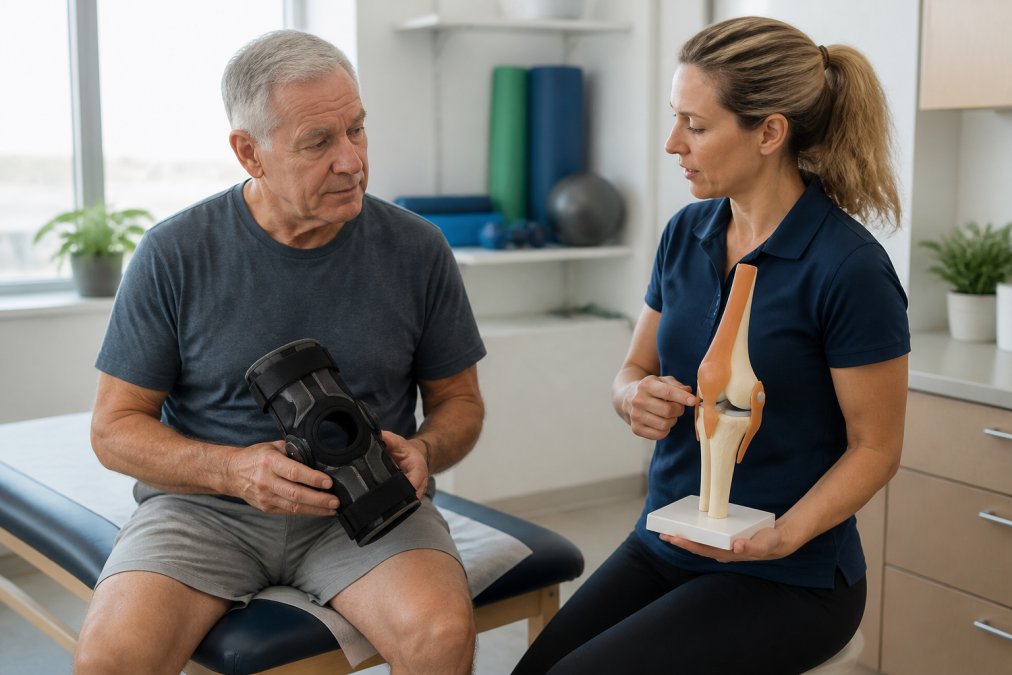
What Knee Braces Actually Do for Arthritic Knees
A knee brace for osteoarthritis does not heal cartilage or reverse joint damage. What it does is redistribute mechanical load away from the damaged compartment of the knee. For patients with medial compartment arthritis, an unloader brace applies a valgus stress that shifts weight to the healthier lateral side of the joint.
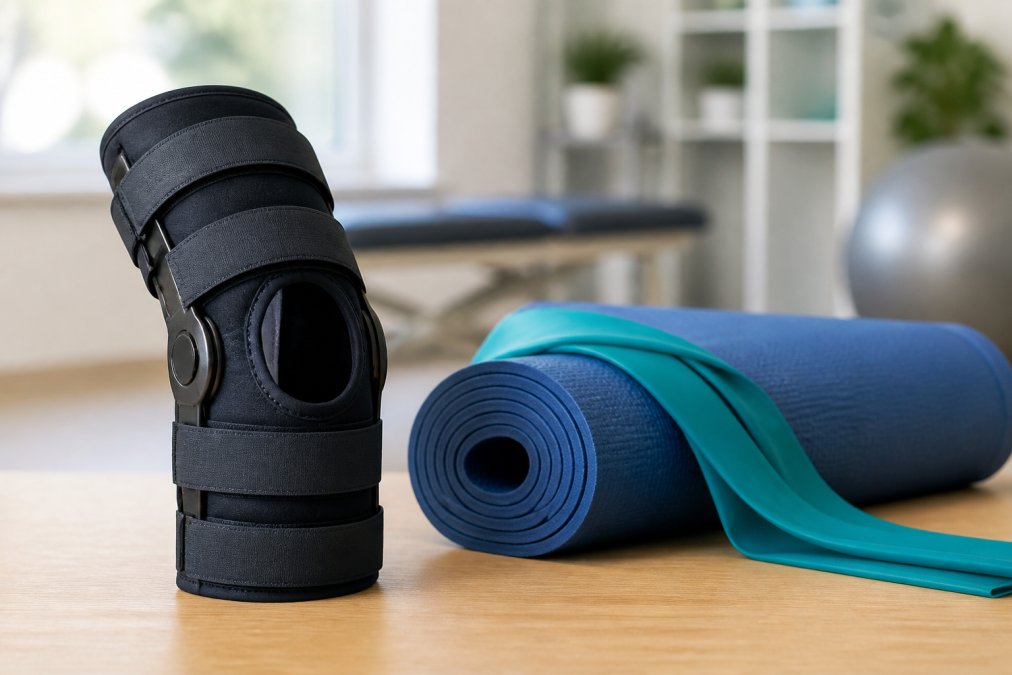
This mechanical offloading translates directly into pain reduction during weight-bearing activities like walking and climbing stairs. Options range from simple compression sleeves that improve proprioception to sophisticated unloader braces like the Ossur Unloader One X, which uses dual dynamic force straps for precise offloading. The right choice depends on the stage of osteoarthritis and which compartment is affected.
What Physical Therapy Addresses That Braces Cannot
Physical therapy targets the root causes of joint dysfunction rather than just the symptoms. Strengthening the quadriceps and hamstrings reduces joint loading because stronger muscles absorb forces that would otherwise stress the articular cartilage. This is the critical gap that braces cannot fill: a brace supports the joint while you stand, but only stronger muscles protect it when you move.
Therapeutic exercise also improves range of motion and fights the muscular atrophy that often accompanies chronic knee pain. According to the American Physical Therapy Association's ChoosePT initiative, customized exercise programs and education on activity modification help patients manage daily pain while building long-term function. PT teaches you how to move in ways that spare the joint, something no wearable device can do.
How Long Does Physical Therapy Take for Knee Pain?
A common question is how long does physical therapy take for knee pain, and the honest answer is that it depends on severity and consistency. Most patients attend sessions one to three times per week for six to twelve weeks, with noticeable improvement typically emerging around the four to six week mark (peer-reviewed research).
The time commitment is the biggest barrier to compliance, and it is worth acknowledging. Unlike a brace that works the moment you strap it on, physical therapy requires repeated effort. However, the payoff is durability. Research consistently shows that the gains from therapeutic exercise persist long after treatment ends, whereas brace benefits vanish the moment you take it off.
Key Exercises for Knee Osteoarthritis You Can Start Today
Exercises for knee osteoarthritis do not require a gym membership or expensive equipment. The goal is low-impact movement that builds strength without aggravating the joint.
- Quad sets: Tighten the thigh muscle while sitting with the leg straight. Hold for five seconds, relax, and repeat ten times.
- Straight leg raises: Lying on your back with one knee bent, lift the other leg six to twelve inches and lower slowly.
- Hamstring curls: Standing or lying, bend the knee to bring the heel toward the buttock, then lower with control.
- Calf stretches: Facing a wall, step one foot back and press the heel down to stretch the lower leg.
- Partial squats: With feet shoulder-width apart, bend the knees to about thirty degrees and return to standing.
These exercises target the quadriceps and hamstrings, the muscle groups that most directly reduce joint loading. A physical therapist can tailor this routine to your specific stage of osteoarthritis and fitness level.
The Case for Viscosupplementation for Knee Osteoarthritis
For patients who need relief beyond bracing and exercise, viscosupplementation for knee osteoarthritis offers a third path. This treatment involves injecting hyaluronic acid directly into the joint to supplement the natural joint fluid that has degraded along with the cartilage. The goal is to restore lubrication and shock absorption, improving mobility and reducing pain.
Viscosupplementation is not a substitute for physical therapy, but it can create a window of reduced pain that makes exercise more tolerable. Many patients find that the combination of injection therapy and a structured exercise program produces better results than either alone. The treatment is well-documented as a non-drug therapy option for patients hoping to delay or avoid surgery.
Why Combine Braces, Therapy, and Other Non-Surgical Options?
The evidence supports a layered approach, but the real challenge is execution. Most patients fail not because the treatments don't work, but because they don't know how to phase them in. A brace that sits in a drawer helps no one, and a therapy program abandoned after two weeks delivers little benefit. The missing piece is a treatment roadmap.
Here is a practical, stage-based integration guide that addresses the most common compliance barriers, skin irritation, time commitment, and frustration with slow progress.
Phase 1: The First Two Weeks, Symptom Control and Baseline
- Start with a brace for high-demand activities. If you have moderate medial compartment arthritis, wear an unloader brace for walking, stair climbing, or standing longer than 30 minutes. For mild OA, a compression sleeve may be enough to improve proprioception and reduce the feeling of instability.
- Begin physical therapy immediately, but focus on isometric exercises. Quad sets and straight leg raises do not require bending the joint, so they won't aggravate pain. The goal is to activate the quadriceps without loading the joint.
- Track your pain score daily. Use a simple 0-to-10 scale before and after activity. This data tells you whether the brace is actually offloading the joint or just masking discomfort.
Compliance barrier addressed: Skin irritation from the brace. Wear the brace over a thin, moisture-wicking sleeve (not cotton) and check for redness after each use. If irritation persists, ask your fitter about a different hinge design or padding material, most unloader braces come with adjustable pads.
Phase 2: Weeks Three to Six, Building Strength While Bracing
- Progress to closed-chain exercises. Partial squats and calf raises begin to load the joint in a controlled way. The brace should stay on during these exercises if your therapist recommends it, but the goal is to gradually reduce reliance on it.
- Increase therapy frequency to 2-3 sessions per week. This is the window where most patients see measurable improvement in quadriceps strength. A common pattern is that pain decreases by 30-50% by week four if you are consistent.
- Use the brace only for longer outings. If you are at home or at a desk, take it off. This prevents muscle deconditioning in the muscles the brace is supporting.
Compliance barrier addressed: Time commitment. If 2-3 clinic visits per week is not feasible, ask your physical therapist for a home exercise program (HEP). Most insurance plans cover a reduced schedule of 1 visit per week with a documented home program. The key is doing the exercises, not just showing up.
Phase 3: Weeks Seven to Twelve, Transitioning Out of the Brace
- Taper brace use during low-impact activities. By this point, your quadriceps and hamstrings should be strong enough to handle daily walking without the brace. Keep it for high-impact or high-demand events like hiking, prolonged standing, or carrying heavy loads.
- Introduce balance and proprioceptive training. Single-leg stands and step-ups challenge the joint in ways that a brace cannot replicate. This is the stage where you are rebuilding the 'muscle intelligence' that protects the knee.
- Reassess your need for viscosupplementation. If pain still limits your ability to exercise at this stage, a hyaluronic acid injection (like Hyalgan) can create a 3-6 month window of reduced pain, allowing you to push through the final phase of strengthening.
Compliance barrier addressed: Frustration with slow progress. If you are not seeing improvement by week six, do not abandon the plan, ask your therapist to adjust the exercise selection or intensity. Plateaus are normal, but they are also a signal that the program needs modification.
The Financial Reality: What This Roadmap Costs
A common question is whether bracing or physical therapy is the better financial investment. The answer depends on your insurance coverage and the stage of your OA.
- Knee brace: A quality off-the-shelf unloader brace typically costs between $300 and $800. Custom-fitted versions can range from $800 to $2,000. Many insurance plans cover a portion if prescribed by a physician, but prior authorization is often required. Medicare Part B covers knee braces when deemed medically necessary, but you may be responsible for 20% of the approved amount.
- Physical therapy: A typical course of 12-18 sessions at $75-$150 per session (before insurance) totals $900-$2,700. With most commercial insurance, copays range from $20-$60 per visit, bringing your out-of-pocket cost to $240-$1,080 for the full course. Medicare covers 80% of the approved amount after your Part B deductible is met.
- The long-term comparison: A brace is a one-time purchase, but it does not build any lasting strength. Physical therapy is a larger upfront investment, but the muscle gains persist for years. Most practitioners find that patients who complete a full PT course reduce their need for future bracing and are more likely to delay or avoid knee replacement surgery, which costs $30,000-$50,000 out-of-pocket.
At Natural Healing Arts Medical, Dr. David Zamikoff coordinates viscosupplementation with physical therapy during the treatment program, so patients do not have to navigate these phases alone. The practice accepts most health insurance and Medicare, with flexible payment plans available.
Frequently Asked Questions
Should I wear a knee brace if I have osteoarthritis?
A knee brace can help if you have unicompartmental osteoarthritis, meaning wear and tear concentrated on one side of the joint. An unloader brace shifts pressure away from the damaged area, reducing pain during weight-bearing activities. Compression sleeves work better for mild discomfort and swelling. However, braces do not strengthen the muscles that stabilize your knee. Most orthopedic guidelines recommend bracing as a complement to physical therapy, not a replacement. A clinician can help you decide which brace type fits your specific symptoms and activity level.
What type of knee support is best for osteoarthritis?
The best support depends on where your arthritis is located. For medial compartment arthritis, an unloader brace provides significant pain relief by shifting load to the lateral side. For mild or patellofemoral arthritis, a compression sleeve often provides sufficient symptom relief without the bulk. A professional fitting matters, especially with unloader braces, to ensure the straps apply force correctly.
Can physical therapy reverse knee osteoarthritis damage?
No. Physical therapy cannot reverse cartilage loss or regrow tissue affected by osteoarthritis. What it does is reduce pain and improve function by strengthening the quadriceps and hamstrings, improving range of motion, and correcting gait patterns. Stronger muscles absorb more shock and reduce the load on your knee joint. Many patients experience significant symptom relief and avoid surgery for years. Think of physical therapy as managing the condition and slowing progression, not curing the underlying structural damage.
How long does physical therapy take for knee pain?
A typical physical therapy program for knee osteoarthritis runs 6 to 12 weeks, with one to three sessions per week. Many patients notice measurable improvement in pain and mobility within four weeks of consistent attendance and daily home exercise. Response depends on your starting strength, the severity of your arthritis, and how faithfully you complete prescribed exercises. Your therapist will reassess your progress and adjust the plan, potentially tapering visits as you transition to an independent home maintenance program.
Choosing between a knee brace and physical therapy for osteoarthritis is the wrong question. The real challenge is building a coordinated plan that layers immediate relief with long-term rehabilitation. If you are exploring non-surgical options and want a team that coordinates your care rather than sending you down a single path, schedule an appointment with Natural Healing Arts Medical to discuss whether viscosupplementation and a structured therapy program fit your goals.