 ultimate-guide
Knee Osteoarthritis: What It Is and How to Treat It
Table of Contents
- What Is Knee Osteoarthritis?
- Causes, Risk Factors, and the Four Stages
- Natural Ways to Manage Osteoarthritis
- Exercises for Knee Osteoarthritis
- Viscosupplementation for Knee Osteoarthritis
- Mental Health, Daily Living Aids, and Maintenance
- Conclusion
- Frequently Asked Questions
Last Updated: September 16, 2026
What Is Knee Osteoarthritis?
Knee osteoarthritis is a degenerative joint disease in which the articular cartilage that cushions the knee gradually breaks down, causing pain, stiffness, and reduced range of motion. At Natural Healing Arts Medical, we explain that it is not simply "wear and tear" but an active disease process involving inflammation, joint effusion, and changes to the synovial fluid. (Source: the National Institute of Arthritis and Musculoskeletal and Skin Diseases (NIAMS))
The knee is the body's largest weight-bearing joint, making it vulnerable to osteoarthritis. Cartilage has no blood supply, so once it thins, the body cannot easily rebuild it; as it wears down, the joint space narrows and bone-on-bone friction can develop, which is why early intervention matters.
How Knee Osteoarthritis Affects the Joint
Osteoarthritis changes the entire joint, not just the cartilage. Synovial fluid lubricates less effectively, the joint capsule can tighten, and surrounding muscles, especially the quadriceps, often weaken from disuse. Many patients also develop crepitus, a grinding or crackling sensation.
X-rays can show joint space narrowing and bone spurs, but imaging findings do not always match symptoms: some people with significant changes feel little pain, while others with mild changes have severe discomfort. Clinical evaluation matters more than a single image.
Common Symptoms and Warning Signs
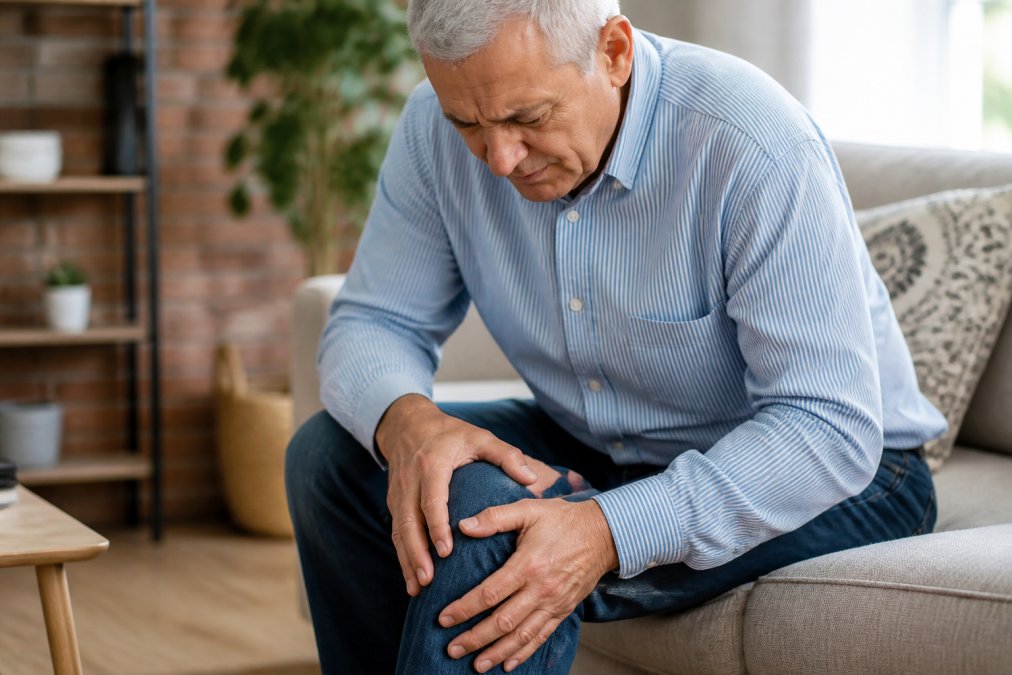
The most common symptoms of knee osteoarthritis include:
- Pain that worsens with activity and improves with rest
- Stiffness, especially in the morning or after sitting for long periods
- Reduced range of motion
- Swelling or joint effusion after activity
- A grinding sensation (crepitus) during movement
- Weakness or a feeling that the knee may give way
Many people dismiss early stiffness as normal aging and wait until pain interferes with daily life before seeking care, by which point the condition has often progressed further than necessary.
Causes, Risk Factors, and the Four Stages
Knee osteoarthritis develops from a combination of mechanical, biological, and lifestyle factors. The most significant risk factors include:
- Age: Risk rises after 45, and the prevalence climbs steeply after 60.
- Body mass index (BMI): Excess weight increases load on the knee joint. Every pound of body weight translates to roughly three to four pounds of force across the knee during walking (pubmed.ncbi.nlm.nih.gov).
- Previous injury: ACL tears, meniscus damage, or fractures raise risk years later, even after the acute injury heals.
- Genetics: Family history plays a role, particularly in early-onset cases.
- Repetitive stress: Occupations involving kneeling, squatting, or heavy lifting.
- Biomechanics: Misalignment (bow-legged or knock-kneed posture) or gait abnormalities concentrate force unevenly across the joint.
- Sex: Women are more likely to develop the condition, especially after menopause.
- Muscle weakness: Weak quadriceps reduce the knee's ability to absorb shock.
The Four Stages of Knee Osteoarthritis
Clinicians describe knee osteoarthritis in four stages using the Kellgren-Lawrence grading system, applied to weight-bearing X-rays. Treatment differs by stage, so accurate assessment comes first.
Stage 1 (Doubtful/Minor)
- X-ray findings: Possible minor osteophyte (bone spur) formation; joint space appears normal.
- What's happening: Cartilage is beginning to soften, but the joint still functions normally.
- Typical experience: Occasional stiffness or mild ache after heavy activity. Many people have no symptoms at all.
- Treatment focus: Education, activity modification, quadriceps strengthening, and weight management if BMI is elevated.
Stage 2 (Mild)
- X-ray findings: Definite osteophytes; joint space may be minimally narrowed.
- What's happening: Cartilage loss is measurable but the joint surfaces are still separated.
- Typical experience: Pain after long walks, stairs, or prolonged sitting; morning stiffness lasting under 30 minutes is common.
- Treatment focus: Structured physical therapy, low-impact aerobic exercise, over-the-counter analgesics as needed, and bracing for specific activities.
Stage 3 (Moderate)
- X-ray findings: Multiple osteophytes, definite joint space narrowing, and some sclerosis of the bone beneath the cartilage.
- What's happening: Cartilage loss is significant; the joint surfaces are approaching each other.
- Typical experience: Pain with routine daily activities, swelling after activity, and reduced walking distance. Crepitus becomes noticeable.
- Treatment focus: Combination therapy, physical therapy, weight loss, topical or oral anti-inflammatories, intra-articular injections, and assistive devices. This is the stage where viscosupplementation and corticosteroid injections are most often considered.
Stage 4 (Severe)
- X-ray findings: Large osteophytes, marked joint space narrowing, severe sclerosis, and deformity of the bone ends.
- What's happening: Cartilage is largely gone; bone-on-bone contact occurs.
- Typical experience: Constant pain, significant stiffness, and reduced ability to bear weight.
Why Staging Matters for Your Treatment Plan
Staging changes what your clinician recommends.
Natural Ways to Manage Osteoarthritis
Natural ways to manage osteoarthritis focus on reducing inflammation, protecting the joint, and maintaining functional mobility.
Weight Management: The Highest-Leverage Change
Weight loss is the single most impactful non-surgical intervention for knee osteoarthritis, and the reason is mechanical.
Anti-Inflammatory Dietary Protocol
This is the most underused tool in chronic pain management, and it costs nothing to try.
Low-Impact Exercise and Activity Modification
Exercise is the foundation of every effective osteoarthritis plan.
Heat, Cold, and Topicals
- Heat (moist heating pad, warm shower, paraffin bath) is best for morning stiffness and muscle tightness.
Orthotics, Footwear, and Bracing
- Proper footwear: Supportive, well-cushioned shoes with a stable heel reduce impact.
Sleep, Stress, and the Inflammation Connection
Poor sleep and chronic stress both raise inflammatory markers and lower pain tolerance.
Exercises for Knee Osteoarthritis
Effective therapeutic exercise for knee osteoarthritis includes:
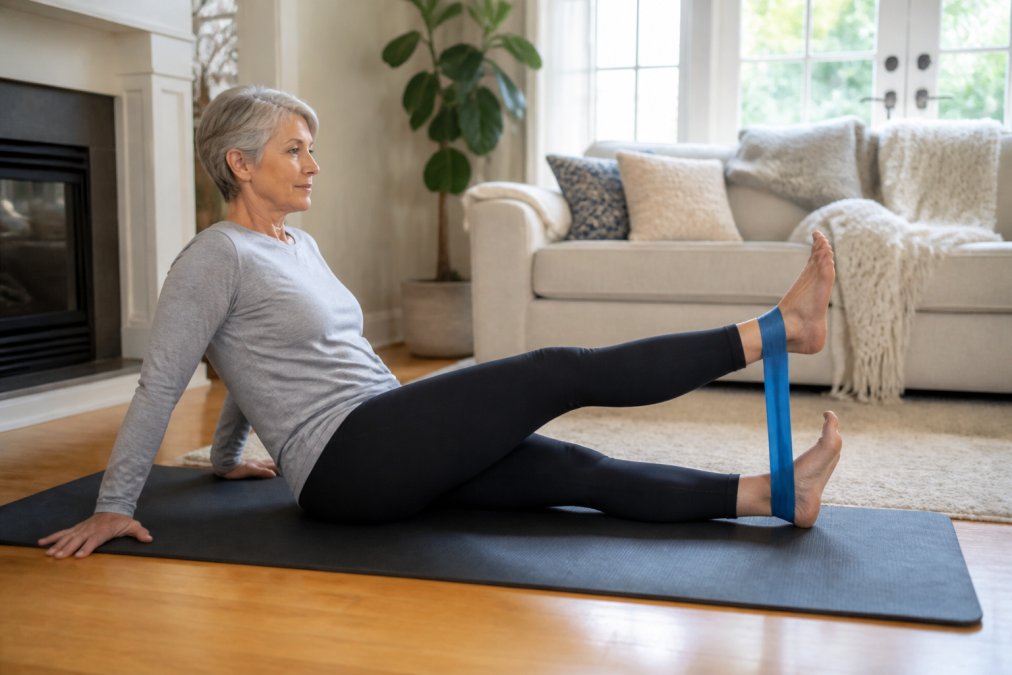
- Straight leg raises: 2-3 sets of 10 per leg, daily
- Quad sets: Press the back of the knee into the floor, hold 5 seconds
- Wall sits: Hold 20-30 seconds, working up to 1 minute
- Step-ups: Use a low step, 10 reps per leg
- Hamstring curls: Strengthen the muscles behind the knee
- Water aerobics: Buoyancy removes joint stress while providing resistance
Viscosupplementation for Knee Osteoarthritis
Viscosupplementation for knee osteoarthritis is a surgery-free treatment that injects a gel-like substance into the joint to supplement natural synovial fluid, improving lubrication, cushioning the joint, and reducing pain.
What to Expect During Treatment
Treatment is performed in the office and takes only a few minutes.
Mental Health, Daily Living Aids, and Maintenance
- Raised toilet seats and shower chairs reduce deep bending
- Reachers and grabbers prevent repeated stooping
- Canes or walking poles offload the joint and improve stability
- Compression sleeves can reduce swelling during activity
- Knee braces provide support during specific tasks
Conclusion
Knee osteoarthritis is progressive, but it is not a sentence to surgery.
Frequently Asked Questions
What is the best thing to do for osteoarthritis in your knee?
The most effective approach combines several strategies. Low-impact exercise like swimming or cycling helps maintain range of motion and strengthens quadriceps muscles. Weight management reduces stress on the joint. Physical therapy can improve biomechanics and gait. For persistent pain, treatments like corticosteroid injections or viscosupplementation may provide relief. A doctor can help determine which combination works best for your stage of knee osteoarthritis.
Does osteoarthritis knee pain ever go away?
Knee osteoarthritis is a degenerative joint disease, so it does not disappear completely. However, symptoms can be managed effectively. Many people experience significant pain reduction through exercise, weight loss, and treatments like viscosupplementation. The goal is to improve functional mobility and quality of life. Flare-ups may still occur, but a maintenance plan can minimize their frequency and intensity.
What are the four stages of osteoarthritis in the knee?
Knee osteoarthritis progresses through four stages. Stage 1 shows minor wear with little pain. Stage 2 involves more bone spur growth and noticeable stiffness. Stage 3 brings joint space narrowing and frequent pain during activity. Stage 4 is severe, with cartilage nearly gone and bone-on-bone friction causing constant discomfort. Treatment options vary by stage, from lifestyle changes in early stages to joint replacement in advanced cases.
What should you not do with knee osteoarthritis?
Avoid high-impact activities like running, jumping, or deep squats that increase joint stress. Do not ignore pain or push through it, as this can worsen inflammation. Skip prolonged sitting or standing without breaks. Avoid excessive weight gain, which adds pressure on the joint. Do not rely solely on medication without addressing lifestyle factors. Always consult a healthcare provider before starting any new treatment for knee osteoarthritis.
How does viscosupplementation help with knee pain?
Viscosupplementation involves injecting hyaluronic acid into the knee joint to supplement synovial fluid. This improves lubrication and cushioning, reducing bone-on-bone friction. It can relieve pain and improve range of motion for months. Viscosupplementation for knee osteoarthritis is a surgery-free option often used when other treatments have not provided enough relief. Results vary, and a consultation can determine if it is right for you.
What natural ways can help manage osteoarthritis?
Natural ways to manage osteoarthritis include low-impact exercise, weight management, and anti-inflammatory diets rich in fruits, vegetables, and omega-3s. Physical therapy and quadriceps strengthening improve joint stability. Heat and cold therapy can ease stiffness. Assistive devices like canes or orthotics reduce joint stress. Some people find relief with supplements like glucosamine, though evidence is mixed. Always discuss natural approaches with your doctor.
Can chiropractic care help with knee osteoarthritis?
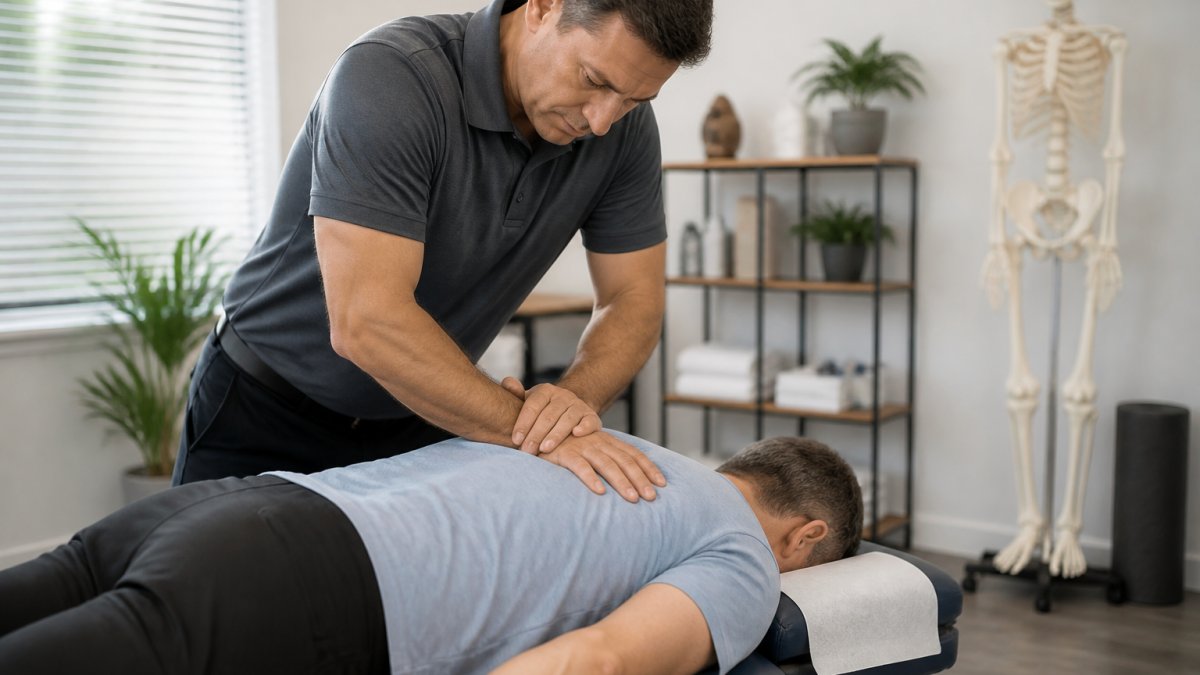
Chiropractic care can complement other treatments by improving joint alignment and reducing biomechanical stress. It may help with pain modulation and functional mobility. However, it is not a cure for cartilage loss. A chiropractor can also recommend exercises and lifestyle modifications. For knee osteoarthritis, a comprehensive plan may include chiropractic adjustments alongside viscosupplementation or physical therapy. Consult a qualified professional for personalized advice.
This article is for general information only and is not a substitute for an individual consultation with a qualified healthcare professional.