 how-to
Does Acupuncture Really Help Chronic Lumbar Spine Pain?
Last Updated: November 8, 2026
Quick Summary
Acupuncture for chronic lumbar spine pain can ease pain and improve function, and the research shows clinically meaningful benefit over no treatment. Its advantage over sham needling is smaller and less consistent, and results vary by person. Most courses run about 6 to 12 sessions, with progress reassessed early, while acupuncture lumbar pain should never delay urgent medical evaluation.
- Reviews generally find acupuncture reduces pain and disability compared with no treatment.
- Real acupuncture beats sham acupuncture, but the gap is often modest.
- A typical course runs from about 6 to 12 sessions over several weeks.
- Most practitioners reassess progress after the first few visits before continuing.
- Leg weakness, bladder or bowel changes, or fever need urgent medical assessment, not needles.
Table of Contents
- What Acupuncture Is and How It May Affect Chronic Lumbar Spine Pain
- What the Research Says About Acupuncture for Chronic Low Back Pain
- How Many Acupuncture Sessions for Back Pain Are Typically Used
- Acupuncture Points for Lower Back Pain and Where Needles Are Placed
- Acupuncture Side Effects for Back Pain and Safety Considerations
- Preparing for Your First Session and Choosing a Licensed Acupuncturist
- Scheduling a Consultation to See Whether Acupuncture Fits Your Care Plan
- Frequently Asked Questions
What Acupuncture Is and How It May Affect Chronic Lumbar Spine Pain
Acupuncture is a treatment in which a trained practitioner inserts very thin needles into specific points on the body. For people with chronic lumbar spine pain, the goal is to ease pain and improve daily function without surgery or long-term medication. Many patients turn to acupuncture for lower back pain because it is considered a non-invasive, complementary option.
Researchers are still working out how acupuncture for chronic lumbar spine pain actually works. Current theories suggest that needling may change how the nervous system processes pain signals. National Center for Complementary and Integrative Health overview of acupuncture
Here is what patients commonly hope to get from treatment:
- Less pain intensity during daily activities
- Better mobility and easier movement
- Improved sleep and rest
- Fewer days lost to pain
Results vary from person to person. Expecting a single session to resolve long-standing back pain is unrealistic, and gradual change over several weeks is common.
What the Research Says About Acupuncture for Chronic Low Back Pain
The evidence base for acupuncture in chronic low back pain is larger than most patients expect, and it is worth understanding how the studies are built before reading the headlines.
- Acupuncture versus no treatment or a waiting list. These trials ask whether acupuncture helps at all compared with doing nothing. Most find that people receiving acupuncture report lower pain intensity and better function than those on a waiting list.
- Acupuncture versus usual medical care. These trials compare acupuncture with what a patient would otherwise receive, such as medication, advice, or physical therapy. Results are more modest, and some trials show similar outcomes when usual care is already active.
- Acupuncture versus sham acupuncture. Sham needling uses retractable needles or needles placed at non-points. This design tests whether the specific points and needle stimulation matter beyond the ritual of treatment. Reviews generally find real acupuncture outperforms sham, but the gap is often smaller than the gap between acupuncture and no treatment.
- Acupuncture versus other active therapies. These trials compare acupuncture with exercise, massage, or spinal manipulation. Findings are mixed, and many suggest comparable short-term relief rather than clear superiority for any one approach.
systematic review of acupuncture for chronic low back pain The most-cited reviews pool dozens of trials and generally conclude that acupuncture produces clinically meaningful reductions in pain and pain-related disability compared with no treatment, with smaller and less consistent advantages over sham. A recurring pattern is that the difference between real and sham acupuncture is statistically real but modest, which is one reason researchers debate how much of the benefit comes from needle placement versus expectation, attention, and the treatment context.
Several trials follow patients with acupuncture lumbar pain for six months to a year. The pattern is that early responders often keep some benefit for months after a course ends, while non-responders rarely improve with more of the same treatment. That is why most practitioners build in a reassessment point after the first several sessions rather than committing to a long course up front.
Watch out: Study quality varies widely. Some trials are small, some use different point prescriptions, and some do not blind participants well. Treat any single trial as one data point and read the pooled reviews for the fuller picture.
A practical way to translate the research is to set expectations around function, not just pain scores. Trials that measure disability, walking tolerance, and return to normal activity tend to show the same direction of benefit as pain scales, and those outcomes matter more for daily life than a single number on a 0-to-10 scale.
How Many Acupuncture Sessions for Back Pain Are Typically Used
Most treatment plans for back pain involve a course of sessions rather than a single visit. A typical course may run from about 6 to 12 sessions, often spread over several weeks. Many practitioners reassess progress after the first few visits before deciding whether to continue.
The right number depends on several factors:
- How long the pain has lasted
- How severe the symptoms are
- How the patient responds to early sessions
- Whether acupuncture is used alone or with other care
Practitioners usually recommend a clear check-in point. If a patient notices no improvement after a reasonable course, it may be time to try a different approach. This is a good time to talk with a healthcare provider about other options.
The number of sessions in a typical course depends on several factors, summarised below.
| Factor | Effect on course length | Note |
|---|---|---|
| Typical course | About 6 to 12 sessions | Often spread over several weeks |
| Duration of pain | Affects planned course | Longer-standing pain is considered |
| Severity of symptoms | Affects planned course | More severe symptoms are considered |
| Early response | Guides continuation | Many reassess after the first few visits |
| Use with other care | Affects planned course | Alone or combined with other care |
Acupuncture Points for Lower Back Pain and Where Needles Are Placed
Acupuncture points used for lower back pain are typically found along the lower back, buttocks, legs, and sometimes the hands or feet. To see how acupuncture is applied to disc-related pain specifically, read our guide on using acupuncture for herniated disc pain relief. Practitioners choose points based on their training, the pattern of symptoms, and the patient's overall health history.

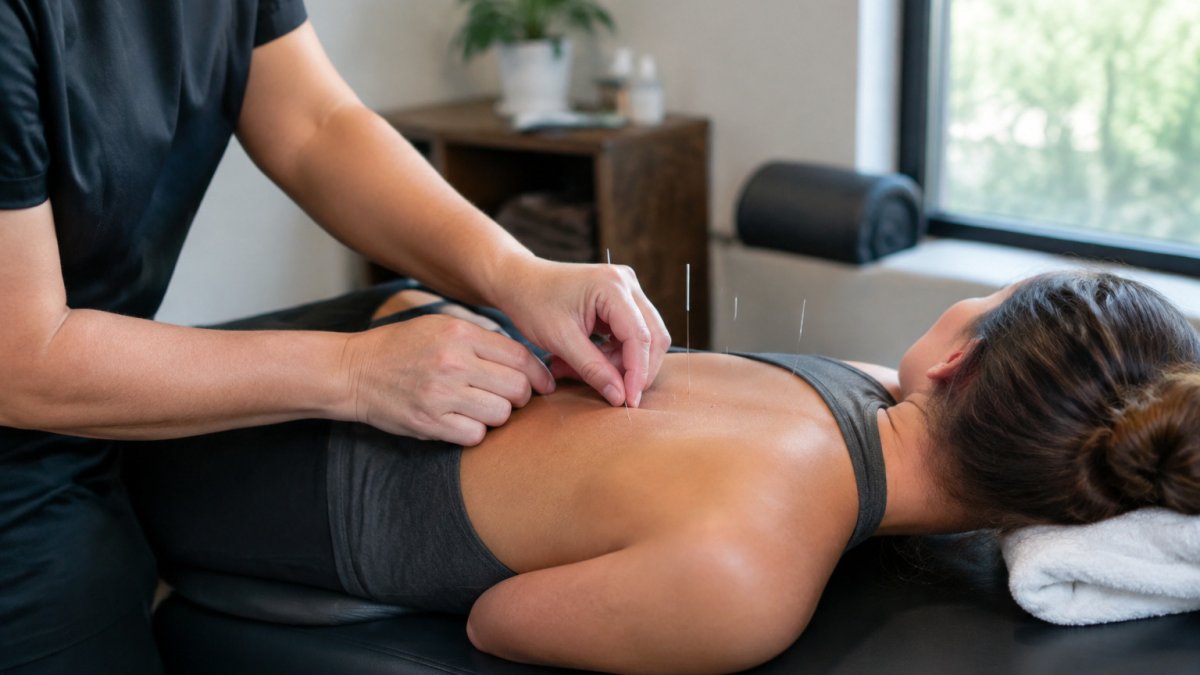
During treatment, the practitioner usually places needles into the chosen points and leaves them in place for a set period, often 15 to 30 minutes. Some patients feel a brief dull ache or tingling when a needle is placed. Many describe the sensation as mild pressure.
The exact mix varies widely between practitioners and treatment styles.
Acupuncture Side Effects for Back Pain and Safety Considerations
Acupuncture is generally considered low risk when it is performed by a trained, licensed provider using sterile, single-use needles. Most side effects are mild, local, and short-lived.
Common side effects include:
- Soreness or a small bruise at needle sites, usually resolving within a day or two
- A tiny drop of blood or a small mark when a needle is withdrawn
- Temporary tiredness or lightheadedness after a session, especially if the patient skipped a meal
- Mild aching at a point that can last a few hours
Serious side effects are rare but possible. They include infection from non-sterile needles, pneumothorax from deep needling over the chest, and bleeding in people with clotting problems. The strongest protection is provider selection and sterile technique, not the treatment itself. FDA information on acupuncture needles and safety
Certain people should speak with a doctor before starting acupuncture, including those who take blood thinners, have a bleeding disorder, use a pacemaker, are pregnant, or have a compromised immune system. Diabetic patients should mention neuropathy and check their feet for irritation after sessions.
Watch out: Back pain that comes with new leg weakness, numbness in the saddle area, loss of bladder or bowel control, fever, unexplained weight loss, or pain after a fall or injury needs urgent medical evaluation. These are red flags for conditions such as cauda equina syndrome, fracture, or infection, and acupuncture is not a substitute for that assessment. Do not delay care to try a course of needles first.
Choosing a qualified provider is the single most effective safety step. Look for a current state license to practice acupuncture, certification from a recognized national board, and a clean, clinical treatment space. Ask how needles are stored and disposed of, and confirm that the practitioner uses single-use, sterile needles opened in front of you. A good practitioner will welcome these questions and explain the plan without pressure.
Preparing for Your First Session and Choosing a Licensed Acupuncturist
Good preparation makes your first visit go more smoothly. Before you go, consider these steps:
- Write down when your pain started and what makes it better or worse.
- List all medications and supplements you take.
- Bring any recent imaging reports or medical notes.
- Wear loose, comfortable clothing that allows access to your back and legs.
- Eat a light meal beforehand, and avoid arriving exhausted.
When choosing a practitioner, look for:
- A current state license to practice acupuncture
- Certification from a recognized national board
- Clean, sterile practices and single-use needles
- Willingness to explain the treatment plan clearly
Ask questions before you book. A good practitioner will answer them without pressure.
Scheduling a Consultation to See Whether Acupuncture Fits Your Care Plan
Acupuncture works best as part of a broader plan. Many patients use it alongside physical therapy, exercise, or medical care. A consultation gives you a chance to talk through your symptoms, your goals, and whether acupuncture is a good match.
You can book a consultation to talk through your back pain options or read our detailed guide to acupuncture for chronic back pain first. For a closer look at the evidence on muscle-related pain, see what research shows about acupuncture and muscle spasms.
If you are weighing other options, compare when physical therapy may be the better first step. Pricing and insurance coverage depend on your provider and plan, so check with the clinic directly for current details.
Frequently Asked Questions
Can acupuncture help chronic lumbar spine pain?
Some clinical studies and systematic reviews suggest acupuncture may modestly reduce pain intensity and improve function for people with chronic low back pain, compared with usual medical care or no treatment. Results vary between people, and the benefit is generally moderate rather than dramatic. Acupuncture is best viewed as one option within a broader plan that may include imaging, medication, physical therapy and exercise. A consultation with a qualified clinician can help determine whether it is appropriate for your situation.
How many acupuncture sessions for back pain are usually needed?
Clinical trials of acupuncture for chronic low back pain have commonly used courses of roughly 8 to 12 sessions over several weeks, often with weekly visits. Some people notice changes earlier, while others need a full course to judge benefit. If there is little improvement after a reasonable course, a clinician may recommend reassessing the plan rather than continuing indefinitely. Your provider can suggest a number of sessions based on your condition and response.
What are the side effects of acupuncture for back pain?
Acupuncture is generally considered low risk when performed by a licensed practitioner using sterile, single-use needles. Common effects include mild soreness, minor bruising or bleeding at needle sites, and temporary tiredness. Serious adverse events are uncommon but can occur, so practitioners should screen for conditions such as bleeding disorders or pregnancy. No treatment is completely risk-free, so discuss your medical history before starting.
Can acupuncture help lower back pain and sciatica?
Some studies have examined acupuncture for low back pain with leg symptoms, but the evidence for sciatica specifically is more limited and less consistent than for non-radicular back pain. Sciatica can also signal nerve compression that needs medical evaluation, especially if it involves weakness, numbness in the groin area, or bowel or bladder changes. If you have leg symptoms, see a physician first to rule out urgent causes before pursuing acupuncture.