 how-to
Is Acupuncture Effective for Muscle Spasms? What Evidence Shows
Last Updated: November 6, 2026
Quick Summary
Acupuncture may help some people with muscle spasms, but the evidence is mixed. Most research studies acupuncture for general pain rather than spasms specifically, so results depend on the cause, the body area, and how long the spasm has lasted. Is acupuncture effective for muscle spasms in your case is best judged after a trial period with a qualified practitioner.
- Most acupuncture research measures general pain, not muscle spasms directly.
- Results vary by cause, body area, and how long the spasm has lasted.
- A common plan is two to three sessions per week for two to four weeks, then reassessment.
- Seek medical care for spasms lasting over a few weeks, or with numbness, weakness, or bladder or bowel changes.
Table of Contents
- Acupuncture for Muscle Spasms: What the Evidence Shows
- Acupuncture for Muscle Spasms in the Back
- What Immediately Helps Muscle Spasms
- How Acupuncture Releases Muscle Tension
- Acupuncture Risks and Side Effects
- When Muscle Spasms Need Medical Evaluation
- Booking a Consultation to Assess Your Spasms at Natural Healing Arts Medical
- Frequently Asked Questions
Acupuncture for Muscle Spasms: What the Evidence Shows
Is acupuncture effective for muscle spasms? The honest answer is "sometimes, for some people." Muscle spasms are sudden, involuntary tightenings of muscle fibers, and they often show up in the low back, neck, and shoulders. Many patients ask whether needles can release that tension, and the research gives a mixed but useful picture. (Source: a systematic review and meta-analysis)
Acupuncture is a treatment in which thin, sterile needles are inserted at specific points on the body. Practitioners use it mostly to ease pain, and spasms are one of the symptoms it is often used for. The evidence for pain relief is stronger than the evidence for spasms specifically, and that difference matters.
- Acupuncture is most often studied for general pain, not for spasms alone.
- Results vary by cause, body area, and how long the spasm has lasted.
- Many people report short-term relief, while lasting change is less clearly shown.
Evidence specific to muscle spasms versus general pain research
Most of the research on acupuncture looks at pain, such as back pain, neck pain, or osteoarthritis. Far fewer studies measure muscle spasms directly. That gap is important. A study showing that acupuncture reduces back pain does not automatically prove it stops a spasm.
When reading the evidence, look for a few things:
- Did the study measure spasms, tension, or range of motion, or only pain scores?
- Was there a comparison group, such as sham needling or no treatment?
- How many people took part, and for how long were they followed?
Clinical reviews of acupuncture for pain have reported modest benefits, but the quality of individual trials varies. Treat broad claims about spasms with caution until the research is more specific.
Acute versus chronic spasms
A sudden spasm after a strain or a long day at a desk is different from a spasm that comes back for months. Acute spasms often settle on their own within days or weeks. Chronic spasms, which last longer, may point to an underlying problem that needs a medical evaluation.
Acupuncture is generally discussed as a way to manage symptoms in both situations, but the expectations differ. For a short-term spasm, many people notice a change within a few sessions. For a chronic problem, a practitioner will usually set a longer plan and reassess progress over time.
Acupuncture for Muscle Spasms in the Back
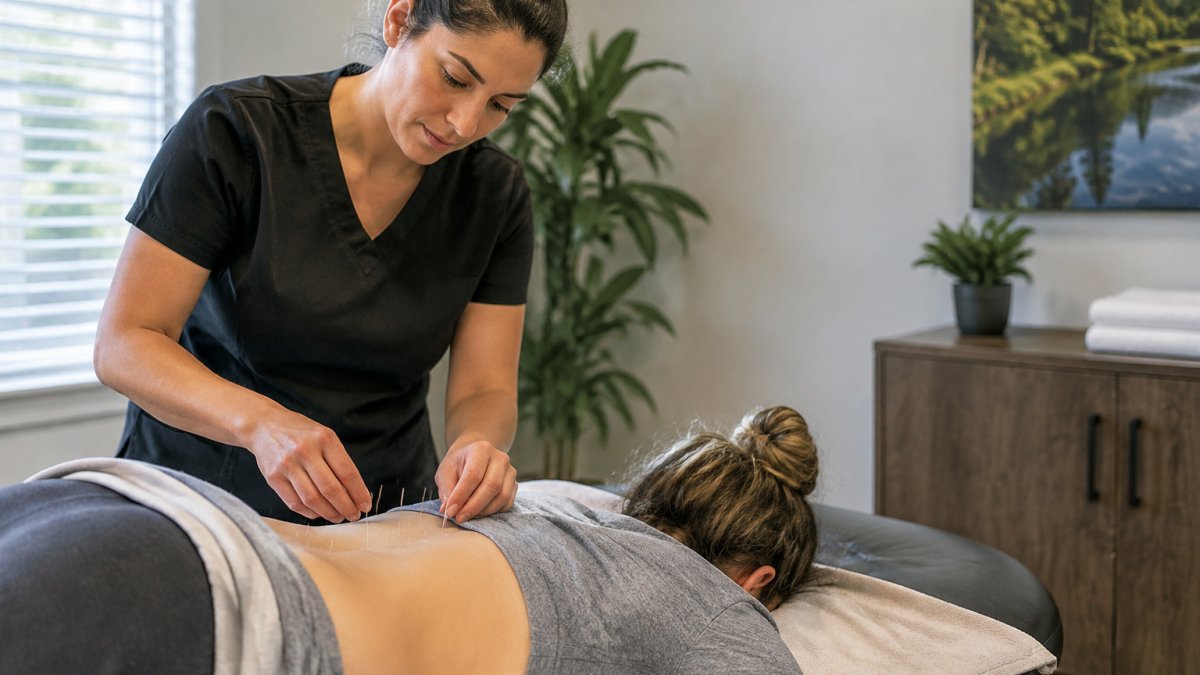
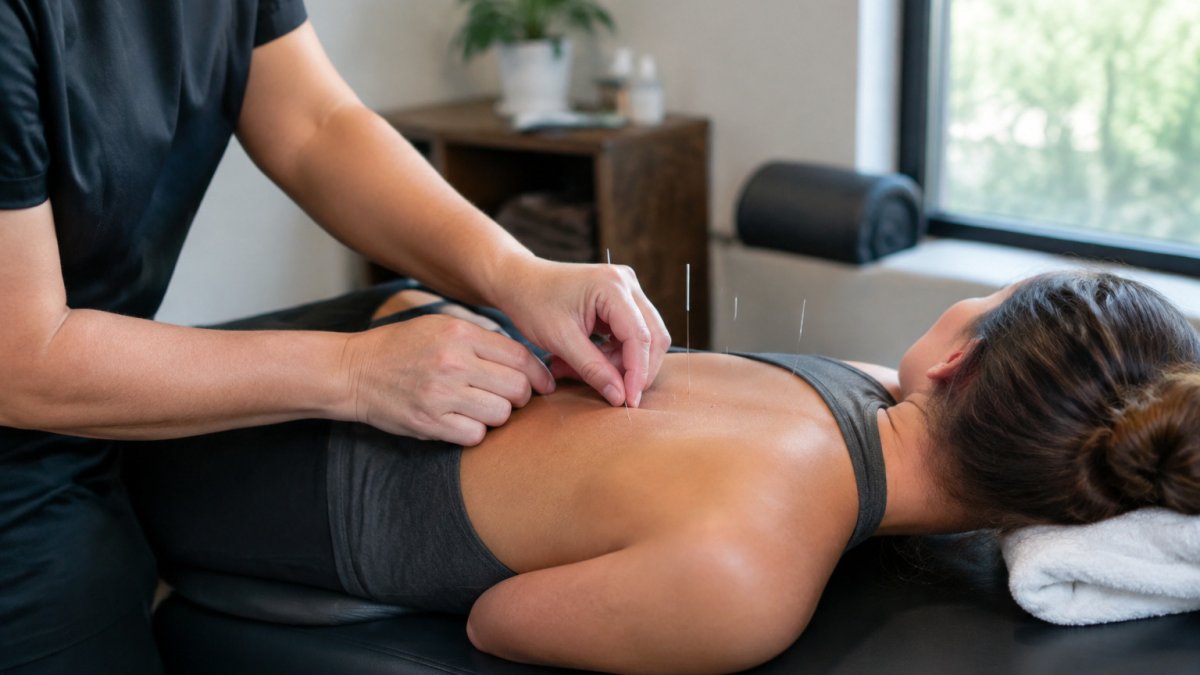
Back spasms are one of the most common reasons people try acupuncture. The low back, in particular, tends to tighten after lifting, sitting too long, or sleeping in an awkward position. In these cases, a practitioner may place needles near the painful area and at points along the same nerve or muscle pathway, and may add electrical stimulation to the needles, a technique called electroacupuncture, for a stronger effect.
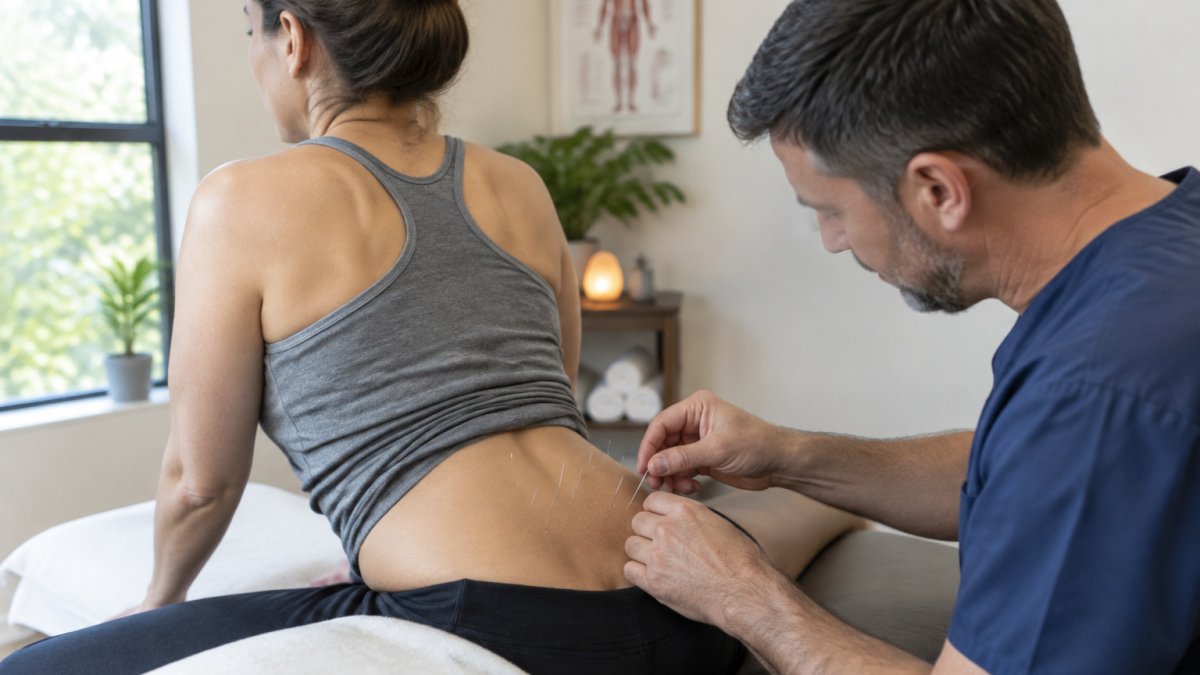
A typical session involves lying still on a treatment table while the needles stay in place for about 20 to 30 minutes. Some people feel a brief dull ache or tingling when a needle is placed. Most describe the sensation as mild. A licensed practitioner should be able to explain how the points were chosen.
What a course of treatment usually looks like:
- First visit: history, examination of the area, and a discussion of goals. Many practitioners treat on the first visit if it is appropriate.
- Trial period: a common pattern is two to three sessions per week for two to four weeks, then a reassessment. Some people notice a change within the first few sessions; others do not.
- Reassessment: if there is no meaningful change in pain, tightness, or function after a reasonable trial, most practitioners will change the plan or refer you elsewhere rather than continue indefinitely.
- Maintenance: if it helps, visits are usually spaced further apart over time.
How acupuncture fits with other care matters as much as the needles. For back spasms, the usual comparison is not acupuncture versus nothing; it is acupuncture alongside or instead of stretching, physical therapy, over-the-counter pain relievers such as NSAIDs, heat, and activity modification. Acupuncture is often best understood as one part of a broader plan. A common mistake is expecting one session to fix a long-standing problem, or using acupuncture to avoid needed imaging or physical therapy when symptoms are persistent.
If a practitioner promises a fixed number of sessions will cure a chronic back spasm, or discourages you from getting a medical evaluation for worsening symptoms, get a second opinion.
What Immediately Helps Muscle Spasms
While you are waiting for a treatment plan, some simple steps may ease a spasm right away. These are general measures, not medical advice for your specific case:
- Apply gentle heat for about 15 to 20 minutes to relax the muscle.
- Stretch slowly, holding each position without bouncing.
- Move gently instead of staying completely still, since short walks often help.
- Change position if sitting or lying makes the spasm worse.
- Stay hydrated and rest well, since fatigue can make tension worse.
If a spasm is severe, does not improve, or comes with numbness, weakness, or loss of bladder or bowel control, seek medical care right away. (Source: the National Center for Complementary and Integrative Health (NCCIH))
How Acupuncture Releases Muscle Tension
Practitioners often explain acupuncture's effect on muscle tension in several ways. The science behind these ideas is still being studied, so think of them as proposed explanations rather than proven facts.
Proposed mechanisms: pain-spasm-pain cycle, blood flow and endorphins
One common idea is the pain-spasm-pain cycle. Pain makes a muscle guard and tighten, which causes more pain, which causes more tightening. Acupuncture may interrupt that loop by changing how the nervous system signals pain.
Other proposed mechanisms include:
- Blood flow: Needling may increase circulation to the treated area, which could help tissues recover.
- Endorphins: Some researchers suggest needling triggers the release of the body's natural pain-relieving chemicals.
- Muscle relaxation: Needles may encourage a muscle to release tension, though this effect is not consistently measured.
These explanations are plausible, but they are not yet firmly established for muscle spasms in particular.
The article outlines several proposed mechanisms for how acupuncture may ease muscle tension, though none are firmly established for spasms.
| Proposed mechanism | What it suggests | Evidence status |
|---|---|---|
| Pain-spasm-pain cycle | Needling may interrupt the loop | Plausible, not established |
| Blood flow | Needling may increase circulation | Plausible, not established |
| Endorphins | Needling may release natural pain relievers | Plausible, not established |
| Muscle relaxation | Needles may encourage release of tension | Not consistently measured |
Acupuncture Risks and Side Effects
Acupuncture is generally considered low risk when performed by a trained practitioner. Still, it is not risk-free. Possible side effects include:
- Soreness, bruising, or minor bleeding at needle sites
- Lightheadedness, especially during the first visit
- Rarely, infection if needles are not sterile
- Rarely, injury to deeper structures if needling is done incorrectly
Acupuncture may not be a good fit for everyone. People who take blood thinners, have a bleeding disorder, are pregnant, or have a pacemaker should talk with their doctor first. Anyone with a serious or unexplained condition should get a medical evaluation before starting treatment.
When Muscle Spasms Need Medical Evaluation
Some spasms are minor, but others signal a problem that needs professional attention. See a doctor promptly if you have:
- A spasm that lasts more than a few weeks without improvement
- Severe pain after an injury or fall
- Numbness, tingling, or weakness in a leg or arm
- Fever, unexplained weight loss, or pain that wakes you at night
- Loss of bladder or bowel control
These symptoms can point to conditions such as a herniated disc or nerve compression, which need proper diagnosis before any treatment is chosen.
Booking a Consultation to Assess Your Spasms at Natural Healing Arts Medical
If your spasms keep coming back or are interfering with daily life, a consultation is a sensible next step. A visit lets a qualified professional look at your history, examine the area, and discuss whether acupuncture or another approach makes sense for your situation. You can book a consultation to assess your back pain and learn more about how acupuncture is used for the back. If a herniated disc may be involved, see how acupuncture is used for herniated disc pain relief.
Reach out to schedule an appointment and discuss what may be causing your spasms.
Frequently Asked Questions
Will acupuncture stop muscle spasms?
Acupuncture may ease muscle spasms for some people, and some studies report short-term relief, but the evidence specific to spasms is limited and mixed. Results vary by cause, body area and whether the spasm is acute or chronic. It is best viewed as one option that may be combined with other care. A qualified practitioner can discuss whether it is a reasonable choice for your situation during a consultation.
What is the downside of acupuncture?
The most common downsides are mild soreness, bruising or a small amount of bleeding at needle sites, and temporary lightheadedness. Serious complications are uncommon when treatment is performed by a trained practitioner using sterile, single-use needles. Acupuncture may not be appropriate for everyone, including people with bleeding disorders or who take blood thinners. Discuss your health history before starting.
When should muscle spasms be evaluated by a healthcare professional?
A spasm that is severe, lasts more than a few days, keeps coming back, or comes with numbness, weakness, loss of bladder or bowel control, fever, or a recent injury should be evaluated promptly. These signs can point to conditions that need diagnosis rather than symptom relief. A licensed healthcare professional can examine you and recommend the right next step.