 how-to
Benefits of Turmeric for Knee Inflammation
Table of Contents
- What Turmeric and Curcumin Do for Knee Inflammation
- The Evidence: Curcumin for Knee Osteoarthritis
- How to Use Turmeric Powder for Inflammation
- How Long Does Turmeric Take to Reduce Inflammation?
- Turmeric Side Effects and Interactions to Know
- Where Turmeric Fits in Your Knee Osteoarthritis Care Plan
- Frequently Asked Questions
Last Updated: October 21, 2026
What Turmeric and Curcumin Do for Knee Inflammation
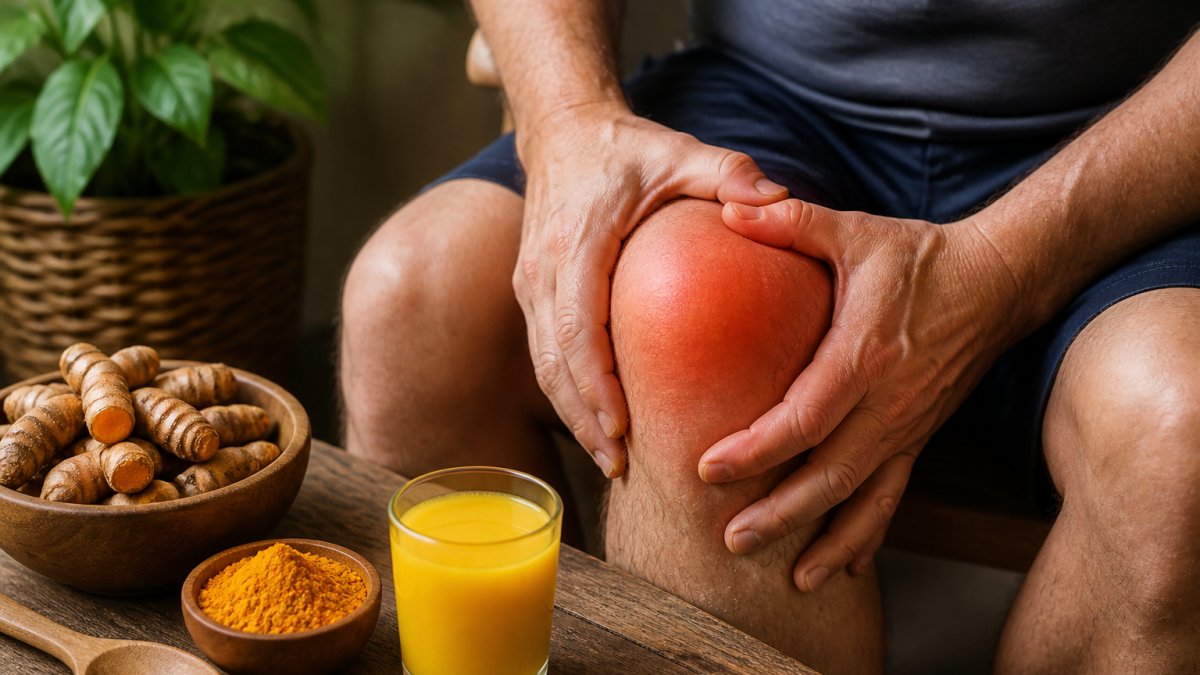
Turmeric is a golden spice made from the root of Curcuma longa, a plant in the ginger family. Curcumin is the main active compound inside it, and it is the part most studied for joint health. At Natural Healing Arts Medical, we get asked about turmeric for knee inflammation almost weekly, so here is the honest version.
Curcumin is a polyphenol with anti-inflammatory properties. It appears to interfere with several inflammatory pathways in the body, including the ones that drive swelling and stiffness in a knee joint.
That sounds promising. But there is a catch most articles skip: plain turmeric powder contains very little curcumin by weight, and your body absorbs even less of it.
- Turmeric = the whole ground spice, roughly 2-5% curcumin
- Curcumin extract = concentrated, standardized to a specific curcumin percentage
- Bioavailability = how much actually reaches your bloodstream
Curcumin on its own is poorly absorbed. Piperine, a compound in black pepper, is often added to supplements to improve absorption.
The Evidence: Curcumin for Knee Osteoarthritis
The research on curcumin for knee osteoarthritis is real but modest. Several clinical trials have compared curcumin extracts to placebo in adults with knee osteoarthritis, and many report short-term improvement in pain scores and stiffness scores.
Here is the honest framing. The benefit is usually modest, not dramatic. It shows up over weeks, not days.
What the evidence does not show is a cure. Curcumin does not rebuild cartilage. It does not replace physical therapy, weight management, or medical care for knee osteoarthritis.
| What curcumin may help | What it will not do |
|---|---|
| Modest pain reduction | Rebuild worn cartilage |
| Less morning stiffness | Replace medical treatment |
| Slight gains in physical function | Work overnight |
One more thing worth knowing: many trials use a concentrated extract at a specific dose, not kitchen turmeric. Results from a supplement study do not automatically transfer to a spoonful of powder in your food.
How to Use Turmeric Powder for Inflammation
Cooking with turmeric is safe and easy, but do not expect supplement-level effects. Food amounts deliver small doses of curcumin. Think of it as a supportive habit, not a treatment.
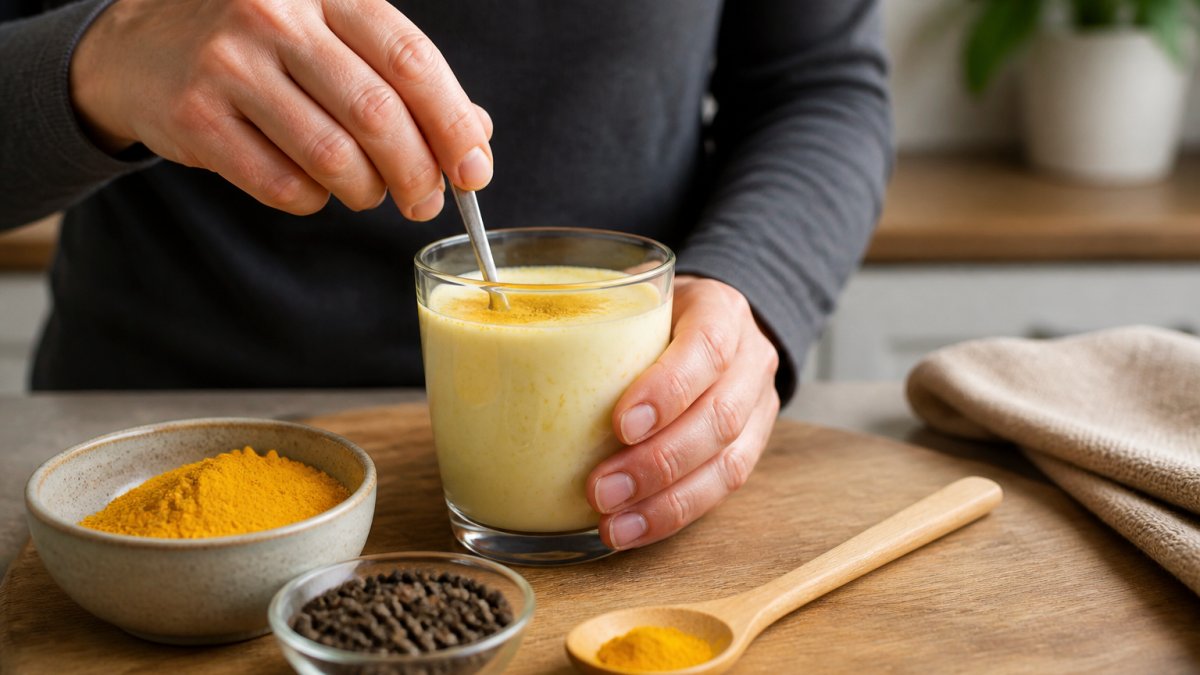
A practical daily routine looks like this:
- Start small: 1/2 to 1 teaspoon of ground turmeric per day, split across meals
- Add fat: curcumin is fat-soluble, so pair it with olive oil, ghee, or whole milk
- Add black pepper: a pinch of piperine may improve absorption
- Use heat: simmer it into soups, curries, rice, or scrambled eggs
- Stay consistent: daily use matters more than large occasional doses
A simple golden milk: warm one cup of milk, whisk in 1/2 teaspoon turmeric and a pinch of black pepper, and add a little honey.
Powder in Food vs. a Supplement: Two Different Tools
The most common mistake we see is treating a spoonful of spice the same as a studied extract. They are not interchangeable, and the numbers make that clear.
- Ground spice: typically about 2-5% curcumin by weight. A teaspoon of powder weighs roughly 2-3 grams, so it delivers on the order of 40-150 mg of curcumin, and only a fraction of that is absorbed.
- Standardized extract: concentrated to a stated curcumin percentage (often 95% curcuminoids) and studied in trials at doses commonly in the 500-1,500 mg per day range, frequently split into two or three doses.
- Enhanced-absorption formulas: some products pair curcumin with piperine (black pepper extract) or use a delivery system such as phospholipid or micellar formulations. These are designed to raise blood levels, which is why the label matters more than the front of the bottle.
So if your goal is the kind of effect reported in clinical trials, food turmeric is a pleasant supporting habit, not a substitute for a properly dosed extract. If your goal is simply to add anti-inflammatory foods to your plate, the spice is a fine, low-cost choice.
A Step-by-Step Way to Try It
- Decide which tool you are using. Food turmeric for general diet quality, or a standardized curcumin extract if you want to test the studied effect. Do not blur the two.
- Read the supplement label before buying. Look for a stated curcuminoid content, a per-serving dose, and either piperine or a named absorption technology. A capsule that lists only "turmeric powder" is spice in a pill.
- Pick a realistic dose and hold it steady. Many trials use divided doses across the day rather than one large dose. Splitting intake with meals also reduces stomach upset.
- Take it with food that contains some fat. Curcumin is fat-soluble, and a meal with olive oil, dairy, or eggs supports absorption.
- Set a fair trial period. Give consistent daily use four to eight weeks before judging it, and eight to twelve weeks before deciding it is not working for you.
- Keep a simple symptom log. Rate knee pain and morning stiffness on a 0-10 scale once a week. Memory is unreliable, and a log tells you whether the change is real.
- Do not stack products. Two "joint blend" supplements can quietly double a dose and add duplicate ingredients.
Setting Realistic Expectations
Even in the best trials, the average improvement in knee pain scores is modest, the kind of change some people notice in daily life and others do not. Curcumin is not a rescue pain reliever for a flare-up. It is a steady, low-risk add-on that may shave a little off pain and morning stiffness over weeks. If you are looking for same-day relief, this is the wrong tool, and knowing that up front saves money and disappointment.
How Long Does Turmeric Take to Reduce Inflammation?
Most people who respond to curcumin notice changes in stiffness and discomfort within four to eight weeks of consistent daily use. Some trials report effects earlier; others show none at all.
That timeline matters. Turmeric is not a pain reliever you take after a flare-up. It works, if it works, through steady daily intake.
If you have used a curcumin supplement at a proper dose for eight to twelve weeks and notice nothing, that is useful information. Talk to your doctor before increasing the dose or stacking products.
Turmeric Side Effects and Interactions to Know
Turmeric is generally well tolerated in food amounts. Side effects from supplements are usually mild: stomach upset, nausea, diarrhea, or heartburn. Taking curcumin with food and splitting the dose across the day reduces most of these complaints.
The bigger issue is interactions, and this is where a supplement stops being a casual purchase. Curcumin can affect blood clotting and how the body processes certain drugs.
- Blood thinners and antiplatelet drugs: warfarin, clopidogrel, and similar medications. Curcumin may add to the blood-thinning effect, which raises bleeding risk.
- Diabetes medication: curcumin may add to blood sugar lowering, so monitor if you are on insulin or a sulfonylurea.
- Stomach acid reducers: proton pump inhibitors and similar drugs may reduce curcumin absorption, which blunts the point of taking it.
- Gallbladder issues: turmeric can trigger symptoms in people with gallstones or bile duct problems.
- Liver concerns: rare reports of liver injury with high-dose curcumin supplements exist, so anyone with liver disease should ask before starting.
The Surgery Rule
Stop curcumin supplements at least two weeks before any scheduled surgery, and tell your surgeon and anesthesiologist that you take them. The concern is additive bleeding risk during and after the procedure. This applies to dental surgery and minor procedures too, not just major operations. Restart only when your surgeon says it is fine.
Who Should Ask Before Starting
Check with your doctor or pharmacist first if you:
- Take a blood thinner, antiplatelet drug, or any prescription medication
- Have gallstones, liver disease, or a bleeding disorder
- Are pregnant or breastfeeding
- Are scheduled for surgery or a procedure
- Are considering a high-dose extract rather than food amounts
A pharmacist is often the fastest, most reliable resource for a interaction check, and most will do it at no cost.
When Knee Symptoms Need Medical Assessment, Not a Supplement
Some knee problems should not wait on a supplement trial. See a clinician promptly for:
- Sudden severe swelling or a rapidly filling joint effusion
- A knee that locks, gives way, or cannot bear weight
- Redness and warmth with fever, this can signal infection and is urgent
- Pain after an injury that does not settle within a few days
- Night pain or unexplained weight loss alongside knee pain
- Calf swelling, warmth, or shortness of breath, which can signal a blood clot
These signs point to problems turmeric cannot touch, and delay is the real risk.
Where Turmeric Fits in Your Knee Osteoarthritis Care Plan
Turmeric belongs in the "may help a little" column of your knee osteoarthritis plan. It does not belong in the "replaces treatment" column. That distinction protects your knees and your wallet.
Standard care for knee osteoarthritis usually includes:
- Physical therapy and targeted strengthening
- Weight management to reduce joint load
- Anti-inflammatory medication like NSAIDs, used as directed
- Injections or other procedures when symptoms warrant
At Natural Healing Arts Medical, we offer surgery-free treatment for knee osteoarthritis using viscosupplementation with Hyalgan, paired with physical therapy during the treatment program. We accept most health insurance and Medicare, and we offer flexible payment plans. Turmeric can sit alongside that care, not in place of it.
Some knee symptoms need medical assessment, not a supplement. See a clinician promptly for:
- Sudden severe swelling or joint effusion
- A knee that locks, gives way, or cannot bear weight
- Redness and warmth with fever
- Pain after an injury that does not settle
Frequently Asked Questions
Does turmeric help with knee osteoarthritis pain?
Research suggests turmeric extracts may modestly reduce knee osteoarthritis pain and stiffness in some people, though results vary and the benefit is generally small. Curcumin, the active compound in turmeric, is studied most often. It is not a replacement for standard care such as physical therapy, weight management, or treatments your doctor recommends. If knee pain is limiting your daily activity, a consultation can help you decide whether turmeric fits alongside your current plan.
How long does it take for turmeric to reduce swelling?
Most clinical trials that showed benefit used curcumin extracts for 4 to 12 weeks before measuring pain and stiffness scores. Some people notice changes within a few weeks, while others see little difference. Turmeric is not a fast-acting anti-inflammatory like an NSAID, so give it a fair trial of several weeks and track your symptoms. Stop and talk to your doctor if you notice side effects or no improvement.
Is turmeric safe to take with other medications?
Turmeric and curcumin supplements can interact with blood thinners such as warfarin, with diabetes medications, and with some drugs processed by the liver. High doses may also irritate the stomach or cause digestive upset. Tell your doctor and pharmacist about any supplement you take, especially if you are on prescription medication or have gallstones, liver disease, or are scheduled for surgery. Do not stop prescribed medication on your own.
What are the side effects of turmeric or curcumin supplements?
Common side effects include stomach upset, nausea, diarrhea, and heartburn, especially at higher doses. Curcumin can also increase the risk of bleeding when combined with anticoagulants and may reduce iron absorption. Some people are allergic to turmeric. Choose supplements from reputable brands, follow the label dose, and check with your doctor before starting, particularly if you have a health condition or take daily medication.
Knee inflammation that keeps returning is a signal, not a nuisance. If turmeric alone is not enough, we can help you build a plan that addresses the cause. At Natural Healing Arts Medical, Dr. David Zamikoff and our team offer surgery-free knee osteoarthritis treatment with viscosupplementation, physical therapy built into the program, and insurance-friendly options. Schedule an appointment and find out what your knees actually need.