 how-to
Chiropractic Adjustment for Herniated Disc: A Patient's Guide
Table of Contents
- What Is a Herniated Disc and How Does It Cause Pain
- Signs of a Herniated Disc You Shouldn't Ignore
- How Chiropractic Adjustment Works for Disc Injuries
- Non-Surgical Herniated Disc Relief: What to Expect
- Safety Protocols and When Chiropractic Care Is Not Appropriate
- Recovery Time for Herniated Disc and Supporting Your Healing
- When to See a Doctor Instead of a Chiropractor
- Conclusion
- Frequently Asked Questions
Last Updated: August 26, 2026
What Is a Herniated Disc and How Does It Cause Pain
A herniated disc occurs when the soft inner material of a spinal disc pushes through a tear in the outer layer, potentially pressing on nearby nerves and causing pain, numbness, or weakness. This condition, also called a ruptured or slipped disc, commonly affects the lower back and neck, where spinal mobility is greatest. At Natural Healing Arts Medical, we work with patients daily who are managing discogenic pain and seeking non-invasive relief options.
The spine contains cushioning discs between vertebrae that absorb shock and allow movement. When a disc herniates, the displaced material can irritate nerve roots, leading to radiculopathy (pain radiating down the arm or leg) or localized back pain. Most herniated discs result from gradual wear and tear, repetitive strain, poor posture, or sudden trauma. Importantly, many people have herniated discs without symptoms; pain typically develops only when the disc material compresses a nerve root or irritates surrounding tissues.
Signs of a Herniated Disc You Shouldn't Ignore
Recognizing symptoms early allows for faster intervention and better outcomes. Common signs include localized back or neck pain, pain radiating into the arms or legs, numbness or tingling in the extremities, and muscle weakness in the affected area. Some patients report a sharp, burning sensation that worsens with certain movements or positions.
Red flag symptoms requiring urgent medical attention include severe pain unresponsive to rest, progressive neurological symptoms (worsening weakness or numbness), loss of bladder or bowel control, or cauda equina syndrome symptoms (severe pain in both legs, numbness in the groin or buttocks). These indicate potential nerve root compression requiring immediate imaging and medical evaluation.
Pain patterns provide diagnostic clues. Pain worsening when bending forward, sitting for long periods, or lying down often suggests nerve root irritation. Keeping a symptom log noting when pain increases, what relieves it, and how it affects daily function provides valuable information for your healthcare provider.
How Chiropractic Adjustment Works for Disc Injuries
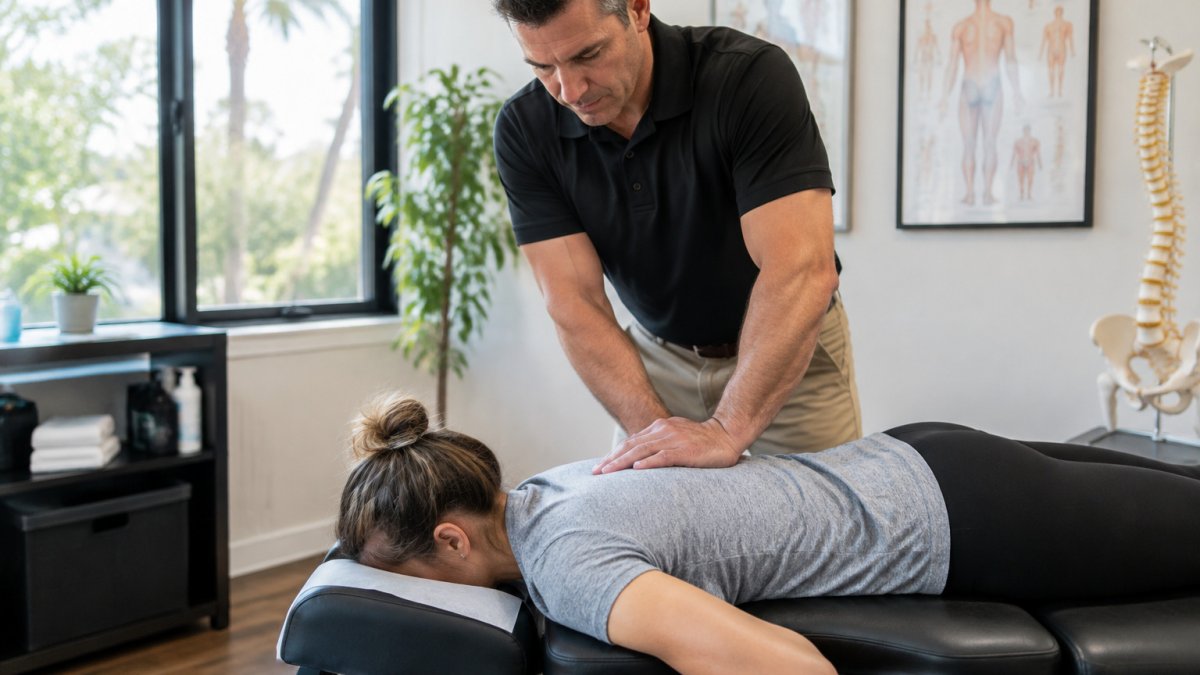
Chiropractic adjustment for herniated disc involves manual techniques designed to reduce nerve irritation, restore vertebral alignment, and improve spinal biomechanics. When a disc herniates, surrounding muscles often tighten protectively, creating additional pressure on nerves. Manual therapy addresses this by releasing muscle tension, improving joint mobility, and reducing neurological irritation.

Chiropractic care for disc injuries emphasizes conservative care, treating the condition without surgery. This approach aligns with evidence-based safety protocols that prioritize the least invasive intervention first. Many patients experience meaningful relief through chiropractic adjustment combined with therapeutic exercise and postural correction, avoiding the risks and recovery time associated with surgery.
Flexion-Distraction Technique
Flexion-distraction is a specialized, low-force technique particularly effective for herniated disc treatment. The patient lies on a motorized table that gently stretches and decompresses the spine through controlled flexion movements. This traction-based exercise creates negative pressure within the disc space, potentially drawing herniated material back toward the center and relieving nerve compression.
The technique works by reducing intradiscal pressure. When pressure decreases, the herniated nucleus pulposus can retract, moving away from the nerve root. Simultaneously, the stretching motion opens the spaces between vertebrae (neural foramina), giving compressed nerves more room and reducing irritation.
Flexion-distraction typically involves 15-20 minute sessions performed over multiple visits (peer-reviewed research). The motion is slow, rhythmic, and controlled, making it well-tolerated by most patients. Many experience immediate symptom relief during or shortly after treatment, though lasting improvement usually requires a series of sessions combined with home exercises and postural modifications.
This technique is contraindicated in certain situations, advanced osteoporosis, acute fractures, or severe instability, which is why proper clinical diagnosis through imaging studies is essential before beginning treatment.
Spinal Manipulation and Manual Therapy
Spinal manipulation involves applying controlled force to vertebrae to restore proper alignment and joint mobility. Manual therapy complements manipulation by addressing soft tissue restrictions through hands-on techniques that release muscle tension, improve tissue mobility, and reduce inflammation around the affected nerve.
The combination of manipulation and manual therapy addresses multiple aspects simultaneously. Restoring vertebral alignment reduces mechanical stress on the herniated disc. Releasing muscle tension reduces secondary nerve compression. Improving biomechanics prevents the movement patterns that originally caused the injury.
Evidence-based safety protocols require careful assessment before manipulation. Certain neurological signs, imaging findings, or patient presentations contraindicate spinal manipulation, which is why the initial consultation and examination are critical.
Non-Surgical Herniated Disc Relief: What to Expect
Non-surgical treatment for herniated disc typically follows a progressive approach, starting with conservative care and advancing based on response. Most patients experience meaningful improvement within 4-8 weeks of consistent treatment, though individual timelines vary (peer-reviewed research).
The typical treatment plan includes chiropractic adjustment, therapeutic exercise, postural correction, and activity modification. Many patients benefit from integrating physical therapy alongside chiropractic care, creating a comprehensive approach that addresses the structural problem, muscular support, and movement patterns.
Early in treatment, the focus is symptom relief and reducing nerve irritation. As pain decreases, attention shifts toward rebuilding strength, improving stability, and correcting the biomechanical issues that contributed to the herniation. Activity modification plays a crucial role, certain movements aggravate a herniated disc while others promote healing. Your chiropractor provides specific guidance on activities to avoid and movements to emphasize during recovery.
Safety Protocols and When Chiropractic Care Is Not Appropriate
Evidence-based safety protocols are fundamental to responsible chiropractic care for herniated discs. These protocols begin with thorough history-taking and physical examination, often followed by imaging studies (X-rays or MRI) to confirm the diagnosis and rule out contraindications.
Certain conditions contraindicate chiropractic manipulation: fractures, severe osteoporosis, active infection, cauda equina syndrome, or signs of spinal cord compression. Patients with these conditions require medical intervention, not chiropractic adjustment. This is why professional assessment before beginning treatment is non-negotiable.
Red flags warranting medical referral include progressive neurological symptoms despite treatment, loss of bowel or bladder control, severe pain unresponsive to conservative care after 6-8 weeks, or imaging findings indicating surgical-level compression. A responsible chiropractor recognizes these situations and refers the patient to appropriate medical specialists.
Patient selection matters tremendously. Patients with mild to moderate herniated discs and no neurological compromise respond well to chiropractic care. Those with severe compression, progressive nerve damage, or structural instability typically require surgical evaluation. Natural Healing Arts Medical follows rigorous safety protocols, beginning with comprehensive assessment and imaging review before initiating any treatment.
Recovery Time for Herniated Disc and Supporting Your Healing
Recovery time varies considerably based on severity, location, patient age, and consistency with treatment. Mild to moderate cases often improve within 4-8 weeks of regular chiropractic care combined with therapeutic exercise. More severe cases may require 8-12 weeks or longer for full functional recovery.

The recovery process follows phases: the acute phase (weeks 1-3) focuses on reducing pain and inflammation; the subacute phase (weeks 3-6) emphasizes restoring mobility and beginning strengthening exercises; the chronic phase (weeks 6+) concentrates on rebuilding strength and preventing recurrence.
Supporting your healing requires active participation beyond office visits. Therapeutic exercises prescribed by your chiropractor target the specific muscles supporting your spine. Performing these exercises consistently, typically 3-5 times weekly, accelerates recovery and prevents relapse. Posture correction is equally important, poor posture contributed to the herniation and will perpetuate the problem if not addressed.
Activity modification during recovery prevents re-injury. Your chiropractor identifies your specific aggravating movements and recommends alternatives. As healing progresses, you gradually return to normal activities under professional guidance.
| Recovery Phase | Timeline | Focus | Expected Outcome |
|---|---|---|---|
| Acute | Weeks 1-3 | Pain reduction, inflammation control | Symptom improvement, reduced nerve irritation |
| Subacute | Weeks 3-6 | Mobility restoration, gentle strengthening | Increased function, decreased medication use |
| Chronic | Weeks 6+ | Strength building, stability, prevention | Return to normal activities, reduced recurrence risk |
When to See a Doctor Instead of a Chiropractor
Certain situations require medical evaluation rather than chiropractic care. See a medical doctor immediately if you experience sudden severe pain, progressive neurological symptoms despite conservative care, loss of bladder or bowel control, severe pain unresponsive to 6-8 weeks of conservative treatment, or imaging findings indicating severe nerve compression or spinal cord involvement.
Medical doctors provide diagnostic imaging (MRI, CT scans), advanced imaging interpretation, and surgical evaluation when indicated. They can prescribe medications for pain management and inflammation control, order nerve conduction studies to assess nerve damage, and perform surgical procedures when conservative care fails.
The relationship between chiropractic and medical care is complementary, not competitive. Many patients benefit from coordinated care where both professionals contribute their expertise. Communication between your chiropractor and physician enhances treatment effectiveness by allowing both to adjust their approach based on the complete clinical picture.
Conclusion
Chiropractic adjustment for herniated disc offers a non-invasive pathway to relief for many patients experiencing discogenic pain and nerve irritation. When appropriate, mild to moderate herniation without severe neurological compromise, evidence-based chiropractic techniques like flexion-distraction and spinal manipulation combined with therapeutic exercise often produce meaningful improvement within weeks.
The key to success lies in proper assessment, evidence-based treatment selection, and active patient participation in recovery. Natural Healing Arts Medical specializes in exactly this approach: comprehensive evaluation, targeted chiropractic adjustment, integration with physical therapy, and personalized guidance for lasting recovery. Dr. David Zamikoff and the team have helped countless patients achieve their wellness objectives and restore freedom of movement without surgery.
If you're experiencing herniated disc symptoms and want to explore non-surgical relief options, schedule a consultation to discuss whether chiropractic care suits your specific situation. The American Chiropractic Association provides additional resources on chiropractic treatment for spinal conditions. Your path to recovery starts with proper diagnosis and a treatment plan matched to your individual needs.
Frequently Asked Questions
Are chiropractors effective for treating herniated discs?
Chiropractic adjustment can provide relief for some people with herniated discs, particularly when combined with physical therapy and conservative care. Techniques like flexion-distraction and spinal manipulation address nerve irritation and reduce discogenic pain. However, effectiveness varies based on the severity of the disc injury, location, and individual response. A qualified chiropractor will assess your condition through clinical diagnosis and imaging studies to determine if chiropractic adjustment is appropriate for your specific situation.
What are the most common signs of a herniated disc?
Common signs include localized back or neck pain, radiating pain down the arm or leg (radiculopathy), numbness or tingling in affected areas, muscle weakness, and difficulty with certain movements. Pain often worsens with bending, lifting, or prolonged sitting. Some people experience nerve root compression symptoms like sharp, shooting pain. If you notice progressive neurological symptoms or loss of bowel/bladder control (cauda equina syndrome), seek immediate medical attention rather than chiropractic care.
How long does recovery take from a herniated disc?
Recovery time for herniated disc varies widely depending on severity, location, and treatment approach. Many people experience symptom relief within 2-6 weeks with conservative care including chiropractic adjustment, physical therapy, and lifestyle modifications. More severe cases may require 8-12 weeks or longer. Functional improvement often continues gradually over several months. Your chiropractor will establish a personalized treatment timeline during your initial consultation and adjust it based on your response to therapy.
Is chiropractic adjustment safe for a herniated disc, or could it make it worse?
When performed by a qualified chiropractor using evidence-based safety protocols, chiropractic adjustment can be safe for many herniated disc cases. However, certain conditions contraindicate adjustment, including severe nerve compression, cauda equina syndrome, or unstable vertebral alignment. A thorough clinical diagnosis with imaging studies helps determine safety. Your chiropractor should explain contraindications and never proceed if red flag symptoms are present. If you have concerns about your specific condition, discuss them openly before treatment begins.