 how-to
Chiropractic Adjustments for Posture Correction
Table of Contents
- How Chiropractic Adjustments Support Posture Correction
- What a Posture Assessment by a Chiropractor Reveals
- Building a Posture Correction Treatment Plan
- Posture Correction Exercises That Support Adjustments
- How to Improve Posture at Home Between Visits
- Safety, Evidence, and Realistic Expectations
- Comparing Care Options and Choosing a Provider
- Frequently Asked Questions
Last Updated: October 18, 2026
How Chiropractic Adjustments Support Posture Correction
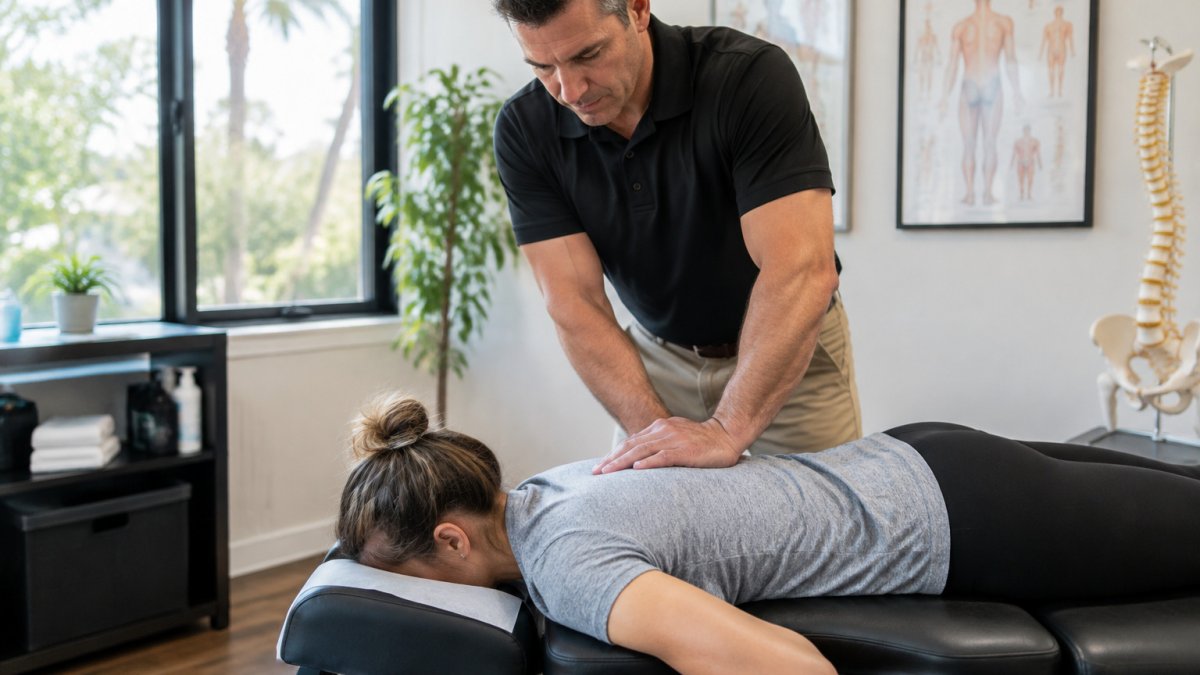
Chiropractic adjustments for posture correction restore motion in stiffened joints, letting the spine settle closer to a balanced position. At Natural Healing Arts Medical, we treat posture correction as a process, not a single crack of the back: the adjustment is one piece, alongside mobility work, strength, and daily habits.
No adjustment holds a new position on its own, your muscles decide whether the change lasts, which is why we build every plan around what you do between visits.
Spinal manipulation, the formal term for an adjustment, applies a controlled force to a spinal joint to reduce pain, increase range of motion, and free stiff tissue. Poor posture usually starts with joints that stopped moving well; the body compensates, and the compensation becomes your default stance.
What a Posture Assessment by a Chiropractor Reveals
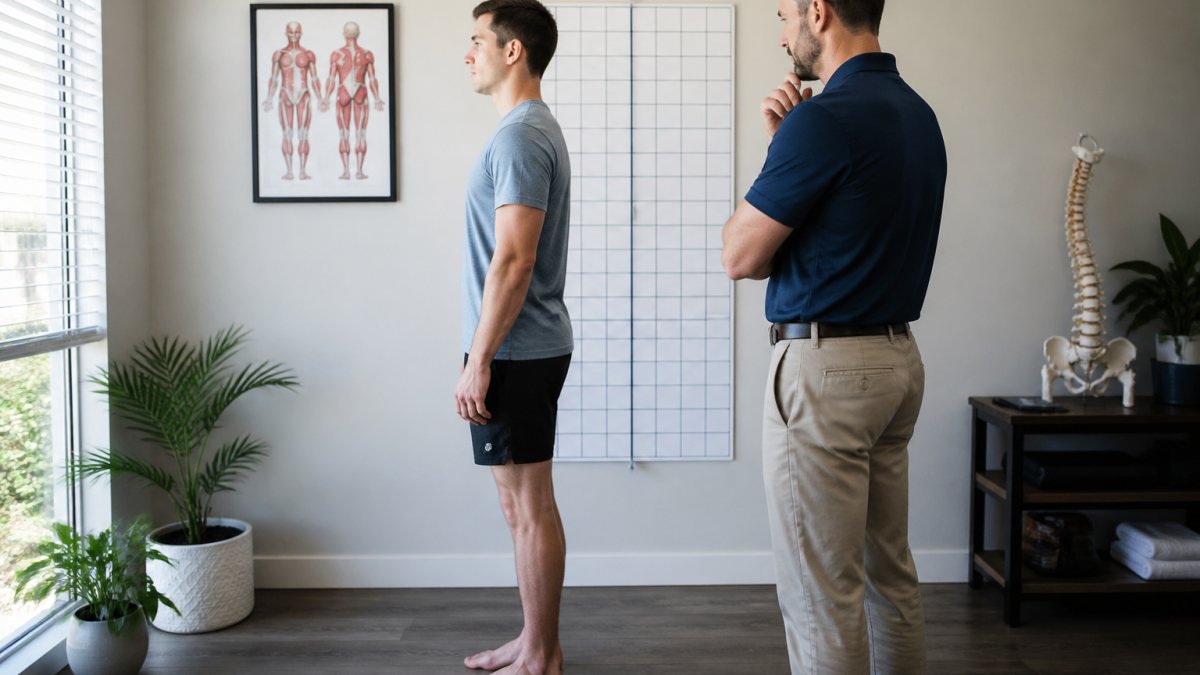
A posture assessment by a chiropractor reveals where your spine deviates from a neutral line and which joints have lost motion. It is a measurement, not a guess.
Postural Distortions and Misalignment Patterns
A postural distortion is a repeatable shift away from neutral alignment, such as a forward head, rounded shoulders, or one hip sitting higher than the other. These patterns rarely appear alone. A forward head often pairs with rounded shoulders, and both load the neck.
Common patterns we see:
- Forward head carriage, where the ear sits ahead of the shoulder
- Rounded upper back with tight chest muscles
- Anterior pelvic tilt, which arches the lower back
None are emergencies; they are clues about which tissues are tight and which are weak.
Functional Testing and Range of Motion
Range of motion testing shows how your spine and joints actually move, not just how they look standing still. We check spinal motion in each region, hip mobility, and how you bend, twist, and reach.
The findings drive the plan: a stiff mid-back and tight hips call for different work than a hypermobile spine with weak support muscles. A generic routine misses the mark because the same thrust on every visit ignores what the test just told us.
Building a Posture Correction Treatment Plan
A posture correction treatment plan is a written sequence of visits, exercises, and checkpoints matched to your assessment findings. It should name what we are changing and how we will know it changed.
Here is how we structure one:
- Find the driver. Identify the stiff joints and weak muscles behind the pattern.
- Set a measurable goal. Example: increase neck rotation or reduce standing forward head position.
- Adjust the restricted segments. Spinal manipulation restores motion where it is limited.
- Add soft tissue work. Massage techniques can release guarded muscle.
- Assign corrective exercises. Daily work at home builds the support the new position needs.
- Recheck at set intervals. Retest the same measures to confirm progress.
A realistic plan includes maintenance care later, spaced further apart. Posture habits took years to build and take weeks to months to reshape.
Posture Correction Exercises That Support Adjustments
Posture correction exercises are the daily work that makes an adjustment hold: the adjustment opens a window, and exercise keeps it open. The useful version is a progression, mobility first, then strength, then movement training under load.
We assign the work in three buckets, in order:
- Mobility first: chest opener stretches, thoracic rotation, hip flexor stretching
- Strength second: rows for the mid-back, chin tucks for deep neck flexors, glute bridges for the hips
- Movement training last: carrying, reaching overhead, and sitting-to-standing with attention to alignment
A Sample Weekly Progression
A common pattern is mobility daily for the first two weeks with strength work three days a week. Once range of motion stops improving, shift toward strength and movement training. Exact numbers depend on your assessment, but these starting points are typical:
- Chest opener: doorway stretch, 2 sets of 30 seconds per side, once or twice daily
- Thoracic rotation: seated or side-lying, 8 to 10 slow reps per side, once daily
- Hip flexor stretch: half-kneeling, 2 sets of 30 seconds per side, once daily
These are starting doses, not prescriptions; a provider should adjust them to your findings. The principle holds: small daily mobility work, strength on nonconsecutive days, and load increased only when the movement feels easy and pain-free.
Match the Exercise to the Finding
A common mistake is stretching what is already loose: if your mid-back is flexible but your chest is tight, stretching the back further does nothing. Match the exercise to the finding:
- Forward head and rounded shoulders: prioritize chin tucks, rows, and chest openers; avoid aggressive neck stretching
- Anterior pelvic tilt: prioritize glute bridges, dead bugs, and hip flexor stretching; avoid repeated back extension
- Uneven shoulders or hips: prioritize single-arm rows, side planks, and single-leg work to address asymmetry
Adherence decides the outcome more than technique: five minutes daily beats a long session once a week. Pick two or three moves, do them consistently, and add load only when the movement feels easy.
When to Stop or Ask
Stop an exercise and ask your provider if it produces sharp pain, numbness, tingling, or dizziness. Muscle fatigue and mild soreness are expected. Nerve symptoms are not. If a movement consistently makes your symptoms worse, it is the wrong dose or the wrong exercise for your current stage.
How to Improve Posture at Home Between Visits
How to improve posture at home comes down to three levers: your setup, your movement breaks, and your awareness cues, none require equipment.
Start with the workstation. Screen at eye level. Feet flat. Static positions, even good ones, wear tissue down. (Source: the National Center for Health Statistics)
Try these habits:
- Set a phone reminder to check head position twice a day
- Take a short walk after long sitting blocks
- Raise your monitor so you look straight ahead
A practical at-home self-assessment: stand with your back to a wall, heels a few inches out, and check whether your head, upper back, and hips touch comfortably.
Safety, Evidence, and Realistic Expectations
Spinal manipulation carries real risks, though serious adverse events are uncommon, and the evidence for chiropractic care in posture correction is mixed. Some studies show gains in range of motion and pain relief; fewer show lasting structural change.
What we can say with confidence:
- Adjustments can reduce pain and improve mobility in the short term
- Strength and mobility work drive the lasting change
- Posture is partly structural and partly habitual
Set expectations around function, not perfection. Better movement, less pain, and the ability to stand taller through a workday are realistic goals. A perfectly straight spine is not.
What Research Does and Does Not Show
Studies on spinal manipulation commonly report short-term improvements in pain and range of motion for neck and low back complaints. Studies measuring posture directly, such as forward head angle or thoracic curve, are fewer and often small: some show measurable change after care combined with exercise, others show change that fades without ongoing work.
To read any claim you encounter, ask whether the outcome was pain, function, or structure. Pain and function are realistic targets; structure is a much higher bar, and the evidence is thinner.
Common Temporary Effects
Most people feel something after an adjustment. Common temporary effects:
- Mild soreness in the treated area for a day or two, similar to after exercise
- Temporary fatigue or a feeling of looseness
- Minor headache after neck manipulation in some people
These usually resolve on their own. Ice or heat, gentle movement, and hydration are reasonable responses. Report anything that persists beyond a few days or worsens.
Rare Serious Risks
Serious adverse events are uncommon but real. The most discussed is vertebral artery dissection after neck manipulation, which is rare and difficult to study. Other rare risks include fracture in people with weakened bone and worsening of a disc or nerve problem. The National Center for Complementary and Integrative Health publishes plain-language guidance on spinal manipulation and its known risks.
When to Seek Medical Evaluation First
Some situations call for medical assessment before any spinal manipulation. Tell your provider, and consider seeing a physician first, if you have:
- Severe osteoporosis or a known fracture
- Spinal cord compression or cauda equina symptoms, such as loss of bladder or bowel control, saddle numbness, or progressive leg weakness
- Recent significant trauma, such as a fall or motor vehicle collision
These are reasons for caution or a different approach, not automatic disqualifiers. A careful provider screens for them first and refers when needed.
Timelines and Progress Tracking
Expect some change within the first few visits, and expect the plan to run weeks, not days. Track progress with the same measures used at the assessment:
- A pain score at rest and with activity
- How long you can sit or stand before symptoms start
- Neck rotation or other range-of-motion numbers
Comparing Care Options and Choosing a Provider
Choosing a provider matters as much as the technique. Ask direct questions before you commit.
| What to check | Good sign | Warning sign |
|---|---|---|
| Assessment | Measures range of motion and posture | No exam before adjusting |
| Plan | Written goals and recheck dates | Same routine every visit |
| Exercise | Home program assigned | Adjustment only, no homework |
| Safety | Screens for red flags | Dismisses your concerns |
| Communication | Explains findings clearly | Rushes you through |
A provider who listens and adjusts the plan to your findings is worth more than one with the fanciest table.
At Natural Healing Arts Medical, Dr. David Zamikoff builds each plan from an exam and retests at set intervals.
If posture-related discomfort comes with knee osteoarthritis, we also provide surgery-free viscosupplementation using Hyalgan. The American Chiropractic Association offers background on what chiropractic care involves and how to evaluate a provider.
Poor posture rarely fixes itself, and waiting usually makes the pattern more stubborn.
Frequently Asked Questions
Can a chiropractor help with poor posture?
A chiropractor can help by assessing spinal alignment, joint mobility, and muscle tension, then combining manual therapy with corrective exercises and home habits. Adjustments may reduce stiffness and improve range of motion, but they work best as part of a broader posture correction plan. Lasting change usually requires strengthening supporting muscles and changing daily posture habits. Ask about a posture assessment by a chiropractor so your treatment plan targets your specific postural distortions rather than a generic routine.
Can chiropractic adjustments permanently correct posture?
Adjustments alone rarely produce permanent posture correction. They can improve joint mobility and reduce pain, which makes it easier to hold better alignment, but permanence depends on exercise adherence, daily habits, and how long the posture pattern has existed. A realistic posture correction treatment plan pairs in-office care with posture correction exercises and home changes. Expect gradual functional improvement over weeks to months, and discuss measurable milestones with your provider rather than assuming a fixed number of visits.
What exercises can help improve posture between chiropractic visits?
Focus on strengthening supporting muscles and stretching tight areas. Common options include chin tucks, shoulder blade squeezes, wall angels, thoracic extensions over a foam roller, and hip flexor stretches. Do a short set daily rather than one long session weekly. If you are learning how to improve posture at home, keep a simple log so your chiropractor can adjust the plan. Stop any exercise that causes sharp pain, numbness, or nerve irritation symptoms and report it at your next visit.
How long does it take to notice a change in posture?
Many people notice less stiffness and easier standing within a few weeks of consistent care and exercise. Visible postural alignment changes usually take longer, often several months, because muscles and movement patterns adapt slowly. Progress depends on the cause of the misalignment, exercise adherence, and daily posture habits. A posture assessment by a chiropractor at the start and again later gives you a comparison point, so you can track range of motion and functional improvement instead of judging by feel alone.