 how-to
Chiropractic Care for Posture Correction: A Complete Guide
Table of Contents
- How Chiropractic Care Improves Posture
- Common Causes of Poor Posture
- Forward Head Posture Exercises and Corrective Stretches
- Ergonomic Tips for Desk Workers
- How Long Does Posture Correction Take
- Signs You Need Posture Correction
- The Psychological and Physical Benefits of Better Posture
- What to Expect During Chiropractic Care for Posture Correction
- Frequently Asked Questions
Chiropractic Care for Posture Correction: A Complete Guide
Last Updated: August 4, 2026
Poor posture affects millions of Americans, contributing to chronic pain, reduced mobility, and diminished quality of life. At Natural Healing Arts Medical in Bradenton, Florida, we've spent years helping patients understand how chiropractic care for posture correction can fundamentally transform their physical health. This guide covers everything you need to know about using chiropractic adjustments, corrective exercises, and lifestyle changes to restore proper spinal alignment and eliminate postural dysfunction.
Poor posture creates a cascade of biomechanical problems: compressed discs, pinched nerves, muscle imbalances, and chronic pain radiating through the neck, shoulders, and lower back. The good news: chiropractic care addresses the root cause, not just the symptoms.
How Chiropractic Care Improves Posture
Proper posture depends on spinal alignment, the precise positioning of vertebrae that allows your nervous system to function without interference. When vertebrae shift out of position (vertebral subluxation), muscles compensate by tightening, ligaments weaken, and your body develops asymmetrical movement patterns. Chiropractic adjustments restore vertebral alignment, releasing nerve pressure and allowing muscles to relax.
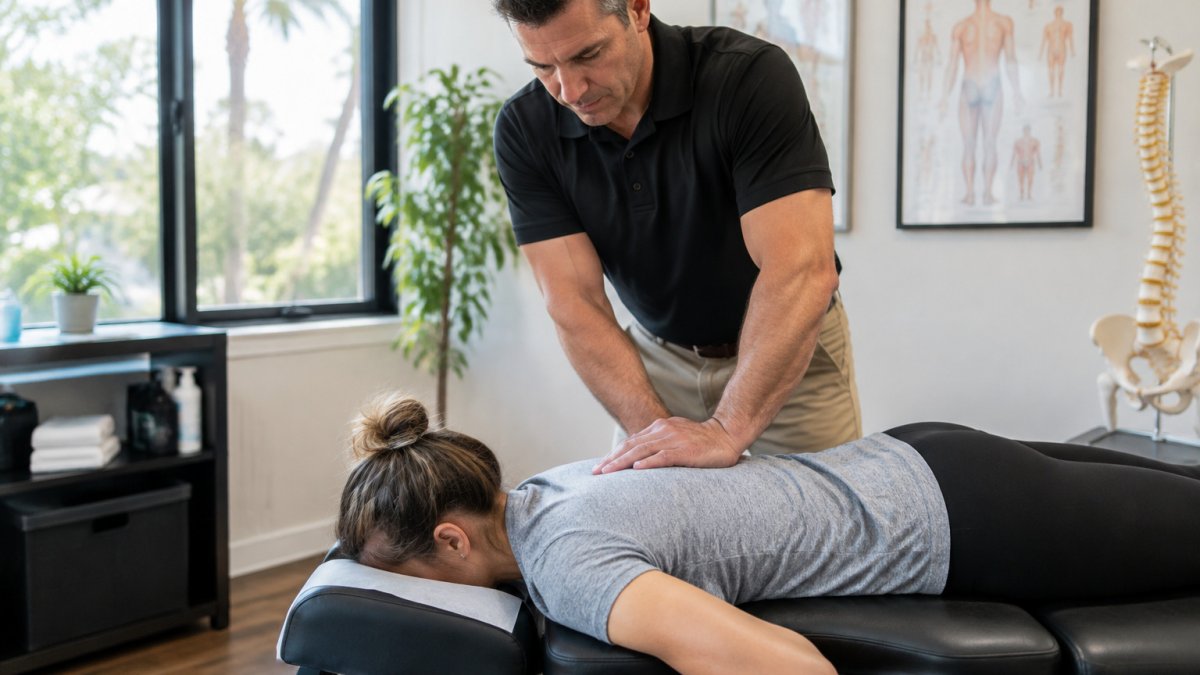
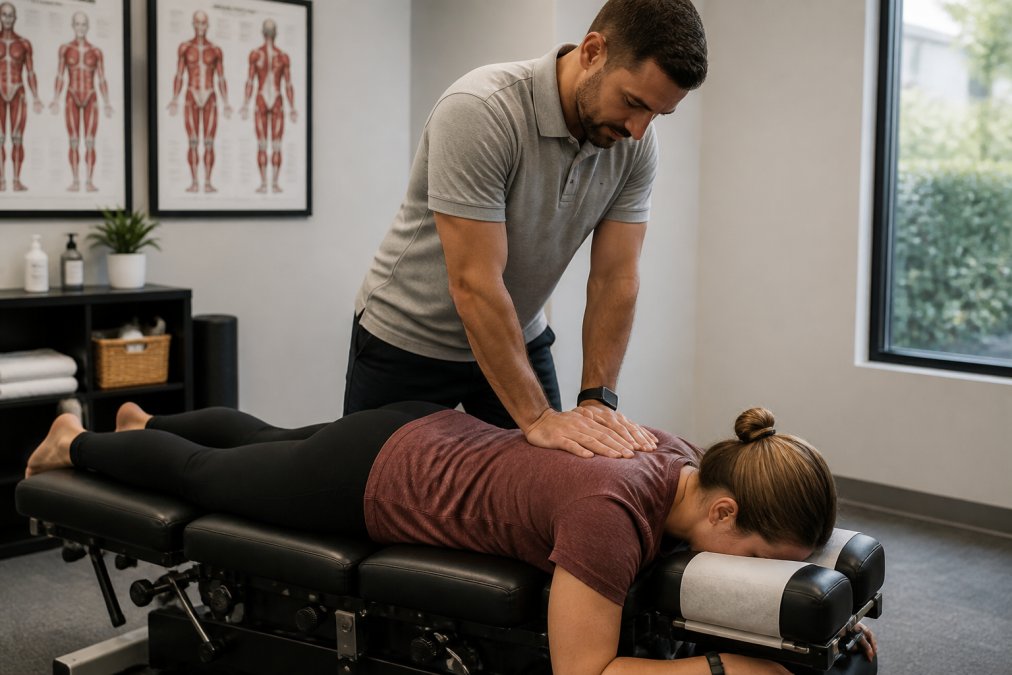
The adjustment is a controlled, high-velocity thrust applied to a specific vertebra, mobilizing the joint and triggering neuromuscular re-education, your nervous system essentially "relearns" proper positioning. Over time, as alignment improves and muscles strengthen, your body maintains better posture without conscious effort.
Spinal Alignment and Vertebral Subluxation
Vertebral subluxation occurs when vertebrae move slightly out of alignment, restricting range of motion and compressing nerves. Chiropractic adjustments restore vertebrae to proper position, immediately reducing nerve pressure and allowing muscles to relax. The adjustment also stimulates mechanoreceptors (sensory nerve endings in your joints), sending signals to your brain about body position, crucial proprioceptive feedback for maintaining posture.
When subluxations are corrected, the spine regains its natural curves: a gentle forward curve in the cervical spine, a backward curve in the thoracic spine, and a forward curve in the lumbar spine. These curves act as shock absorbers and distribute load evenly across discs and joints. Poor posture flattens these curves, concentrating stress on specific discs and accelerating degeneration.
Correcting Forward Head Posture
Forward head posture, where your head juts forward relative to your shoulders, is the most common postural problem, especially among desk workers. For every inch your head moves forward, it effectively adds 10 pounds of stress to your neck. After months or years, this creates chronic neck pain, tension headaches, and thoracic kyphosis.
Chiropractic care addresses forward head posture through cervical spine adjustments and corrective exercises. Adjustments restore the natural cervical curve, while exercises strengthen the deep neck stabilizers that hold your head in proper alignment. Without strengthening these muscles, your head will drift forward again within weeks.
Common Causes of Poor Posture
Poor posture rarely stems from laziness. Instead, it results from muscle imbalances, spinal misalignment, repetitive movement patterns, or ergonomic dysfunction.
Desk work is the primary culprit for modern postural problems. Sitting for 8+ hours daily trains your muscles to hold a forward head position. Your chest muscles shorten, your upper back muscles weaken, and your thoracic spine loses mobility.
Muscle imbalances develop when some muscles work overtime while others atrophy. Tight hip flexors and weak glute muscles tilt your pelvis forward, increasing lumbar lordosis and compressing your lower back discs. Tight pectoralis muscles pull your shoulders forward, creating rounded shoulders and forward head posture.
Spinal trauma from car accidents, falls, or sports injuries can misalign vertebrae and damage soft tissue, creating long-term postural dysfunction.
Forward Head Posture Exercises and Corrective Stretches
Chiropractic adjustments restore alignment, but exercises and stretches make that alignment stick. Your chiropractor will prescribe specific movements based on your postural assessment.

Chin Tucks are the most important exercise for forward head posture. Stand with your back against a wall, feet 6 inches away. Without tilting your head, gently draw your chin straight back, creating a double chin. Hold for 2 seconds, release, and repeat for 15 reps. This activates the deep cervical flexors that stabilize your head position.
Upper Trap Stretches counteract tension in your upper trapezius muscle. Sit upright, reach your right hand over your head, and gently pull your head toward your right shoulder. Hold for 30 seconds. Repeat on the left side, 2-3 times daily.
Doorway Pec Stretches lengthen the pectoralis muscles that pull your shoulders forward. Stand in a doorway with your forearm against the frame at shoulder height. Step forward until you feel a stretch across your chest. Hold for 30 seconds on both sides, 2-3 times daily.
Thoracic Extensions restore mobility to your thoracic spine. Lie on your back with a foam roller positioned horizontally under your mid-back. Support your head with your hands and gently extend backward over the roller, opening your chest. Hold for 2-3 seconds and repeat for 15 reps, 3-4 times weekly.
Neuromuscular Re-education Techniques
Neuromuscular re-education retrains your nervous system to recognize and maintain proper posture. Your brain has spent months or years learning your current postural pattern and needs deliberate practice to learn a new one.
Exercises like chin tucks and scapular squeezes activate specific muscles that have been dormant, sending repeated signals to your brain about what proper alignment feels like. Over 4-6 weeks of consistent practice, your brain "rewires" and begins to maintain proper posture without conscious effort.
Mirror feedback is another powerful re-education technique. Stand in front of a mirror and consciously adjust your posture: shoulders back, chest open, chin tucked, ears over shoulders. Notice how this position feels. Repeat this 2-3 times daily for 1-2 minutes.
Ergonomic Tips for Desk Workers
Ergonomics is the science of designing your work environment to match your body's natural biomechanics. Poor ergonomics forces your body into compromised positions for 8+ hours daily, accelerating postural dysfunction. Even perfect chiropractic care won't help if you spend your day hunched over a laptop.

Workstation Setup and Daily Habits
Your monitor should be positioned so the top of the screen is at eye level when sitting upright with relaxed shoulders. Your keyboard and mouse should be positioned so your elbows are at 90 degrees and your wrists are neutral.
Your chair should support your lumbar spine's natural curve. Adjust the seat height so your feet rest flat on the floor and your hips are slightly higher than your knees.
Stand and move every 30 minutes. Sitting for more than 30 consecutive minutes deactivates your glute muscles and tightens your hip flexors, disrupting your posture.
Take frequent breaks to perform chin tucks and shoulder rolls. Set a phone reminder every hour if needed.
How Long Does Posture Correction Take
The timeline depends on the severity of your postural dysfunction, how long you've had it, your age, and how consistently you do your exercises. Acute postural problems typically respond within 4-6 weeks of 2-3 chiropractic visits per week combined with daily exercises. Chronic postural problems may require 12-16 weeks of consistent care. Your chiropractor will reassess your posture every 2-3 weeks and adjust the treatment plan based on your progress.
The first 2-3 weeks focus on pain reduction and initial alignment restoration. The next 4-6 weeks focus on stabilization, your muscles strengthen and your nervous system learns proper positioning. By week 8-12, your postural correction should feel automatic.
Post-Adjustment Recovery and Maintenance
After a chiropractic adjustment, avoid heavy lifting, intense exercise, or activities that stress the spine for 24 hours. Some people experience mild soreness for 24-48 hours after an adjustment, which is normal. Apply ice for 15 minutes if sore, and perform your prescribed stretches gently.
Once your posture is corrected, maintenance visits are crucial. Most people need 1-2 chiropractic visits per month to maintain alignment. Your daily activities constantly challenge your spinal alignment, and regular adjustments prevent subluxations from recurring.
Your exercises don't stop after your posture is corrected. Maintenance exercises should become part of your daily routine for life, taking 10-15 minutes daily to prevent relapse.
Signs You Need Posture Correction
You don't need to wait until you're in pain to seek posture correction. Early intervention prevents years of chronic pain and accelerated spinal degeneration.
Chronic neck or shoulder pain is the most common indicator of postural dysfunction. If you experience daily neck stiffness, tension headaches, or shoulder pain, your posture is almost certainly contributing.
Tension headaches that originate at the base of your skull often stem from tight upper trapezius muscles and cervical misalignment caused by forward head posture.
Limited range of motion in your neck or shoulders suggests muscle tightness and spinal restriction. If you can't turn your head fully to one side or reaching overhead causes pain, your postural alignment is compromised.
Visible postural distortion, rounded shoulders, forward head position, or excessive lumbar curve, is obvious. Stand sideways in front of a mirror. Your ears should be over your shoulders, your shoulders over your hips, and your hips over your ankles.
The Psychological and Physical Benefits of Better Posture
Improving your posture delivers benefits extending far beyond pain relief. Research from the American Psychological Association on posture and mood demonstrates that upright posture correlates with improved mood, confidence, and resilience to stress.
Physical benefits are equally significant. Proper spinal alignment reduces nerve impingement, allowing your nervous system to function optimally. Better posture also improves breathing, rounded shoulders and forward head posture restrict your rib cage, limiting oxygen intake. Correcting posture expands your lung capacity and oxygen delivery.
Long-term, corrected posture prevents degenerative disc disease, bone spurs, and arthritis. Proper alignment distributes load evenly, preserving disc and joint health for decades.
What to Expect During Chiropractic Care for Posture Correction
Understanding the treatment process removes anxiety and helps you commit to the full program. Chiropractic care for posture correction follows a predictable progression: assessment, treatment, and maintenance.
Initial Postural Assessment and Treatment Planning
Your first visit includes a comprehensive postural assessment. Your chiropractor will observe you standing, walking, and moving in various directions. They'll measure your spinal curves using X-rays or digital imaging, assess your range of motion, and palpate your spine to identify subluxations.
Based on the assessment, they'll recommend a treatment frequency and duration. Most people with moderate postural dysfunction require 2-3 visits per week for 6-8 weeks, then 1-2 visits per week for another 4-8 weeks.
Common Mistakes to Avoid
The most common mistake is skipping exercises because you feel better. Pain relief and postural correction are different things. Your pain is gone because inflammation is reduced, but your muscles are still weak and your nervous system hasn't fully adapted. Stopping exercises leads to relapse within 2-3 months.
Another mistake is inconsistent treatment frequency. Postural correction requires regular stimulus to your nervous system. Consistency matters more than intensity.
Many people also make ergonomic mistakes that undo their chiropractic progress by returning to their old workstation setup or resuming activities that stress their spine.
Finally, avoid expecting overnight results. Posture correction is a gradual process. Your body has spent months or years learning your current postural pattern. Changing it takes time, patience, and consistency.
Poor posture is one of the most correctable sources of chronic pain, yet millions of people live with unnecessary discomfort because they don't understand how chiropractic care addresses the root cause. At Natural Healing Arts Medical in Bradenton, our chiropractors combine spinal adjustments, corrective exercises, and ergonomic guidance to restore proper alignment and eliminate postural dysfunction. Dr. David Zamikoff and our team have helped thousands of patients achieve lasting posture correction through evidence-based, compassionate care. If you're experiencing neck pain, headaches, or postural distortion, schedule a consultation with Natural Healing Arts Medical to begin your posture correction journey. We accept most insurance plans and Medicare, and we offer flexible payment options to make care accessible.
| Stage | Duration | Frequency | Focus |
|---|---|---|---|
| Initial Assessment | 1 visit | Week 1 | Evaluation and treatment planning |
| Acute Phase | 3-4 weeks | 2-3x weekly | Pain reduction and initial alignment |
| Stabilization Phase | 4-8 weeks | 1-2x weekly | Muscle strengthening and nervous system adaptation |
| Maintenance Phase | Ongoing | 1-2x monthly | Preventing relapse and maintaining alignment |
Frequently Asked Questions
How does chiropractic care for posture correction actually work?
Chiropractic care addresses posture problems by correcting spinal alignment and vertebral subluxation through targeted adjustments. These adjustments restore proper joint mobilization and range of motion, allowing your spine to return to its natural curvature. Combined with corrective exercises and neuromuscular re-education, chiropractic care helps your body maintain better alignment in daily life. A postural assessment identifies your specific misalignments, and your treatment plan targets the root causes rather than just symptoms.
How long does posture correction take with chiropractic care?
The timeline for posture correction varies based on how long you've had poor posture, the severity of spinal misalignment, and how consistently you follow your treatment plan. Most people notice initial improvements within 2-4 weeks of regular adjustments. However, lasting postural change typically requires 8-12 weeks or longer of ongoing treatment combined with home exercises and ergonomic adjustments. Post-adjustment recovery and maintenance are critical, your chiropractor will create a personalized schedule and teach you exercises to support long-term alignment restoration.
What forward head posture exercises should I do between chiropractic visits?
Effective exercises for forward head posture include chin tucks, neck strengthening stretches, and shoulder blade squeezes. These corrective exercises target muscle imbalance and help restore proper cervical spine alignment. Your chiropractor will recommend specific therapeutic stretches and neuromuscular re-education techniques tailored to your condition. Consistency matters more than intensity, performing these exercises daily for 10-15 minutes supports the work done during adjustments and prevents postural fatigue. Your treatment plan should include clear instructions and frequency guidelines.
Can chiropractic care for posture correction help with my desk job headaches?
Yes. Desk job headaches often result from poor posture, forward head position, and muscle tension in the cervical spine and shoulders. Chiropractic adjustments restore spinal alignment and reduce nerve impingement that contributes to headaches. Combined with ergonomic tips for desk workers and corrective exercises, chiropractic care addresses the underlying biomechanics causing your pain. Proper workstation setup, regular breaks, and postural awareness significantly improve outcomes. Many professionals experience reduced headache frequency within the first few weeks of treatment.