 how-to
Chiropractic Care for Knee Osteoarthritis: A How-To Guide
Table of Contents
- What Chiropractic Care Can Do for Knee Osteoarthritis
- How Chiropractic Techniques Address Knee Pain and Joint Function
- Viscosupplementation for Knee Pain: A Non-Surgical Option
- Exercises for Knee Osteoarthritis You Can Do at Home
- Non-Surgical Knee Osteoarthritis Treatment: What to Expect
- Combining Chiropractic Care With Medical Treatment and Nutrition
- Safety, Realistic Timelines, and When Chiropractic Care May Not Be Appropriate
- Frequently Asked Questions
Last Updated: September 25, 2026
What Chiropractic Care Can Do for Knee Osteoarthritis
Chiropractic care knee osteoarthritis addresses joint pain and stiffness through non-invasive techniques designed to restore function and reduce inflammation for chronic cases. At Natural Healing Arts Medical in Bradenton, we aim to help patients find relief without surgery by focusing on the root cause of knee pain rather than just treating symptoms. (Source: the National Institute of Arthritis and Musculoskeletal and Skin Diseases (NIAMS))
Knee osteoarthritis develops when cartilage breaks down, causing joint stiffness, swelling, and chronic pain. Surgery isn't the only answer.
Chiropractic care works by:
- Restoring proper joint alignment and biomechanics
- Reducing muscle spasms and tension around the knee
- Improving range of motion through targeted mobilization
- Decreasing inflammation and synovial fluid buildup
Chiropractic treatment targets underlying joint dysfunction.
How Chiropractic Techniques Address Knee Pain and Joint Function
Chiropractic treatment uses specific hands-on methods to improve how your knee joint moves and functions. The goal is to reduce pain while rebuilding strength and stability in the affected area.
Manual Manipulation and Joint Mobilization
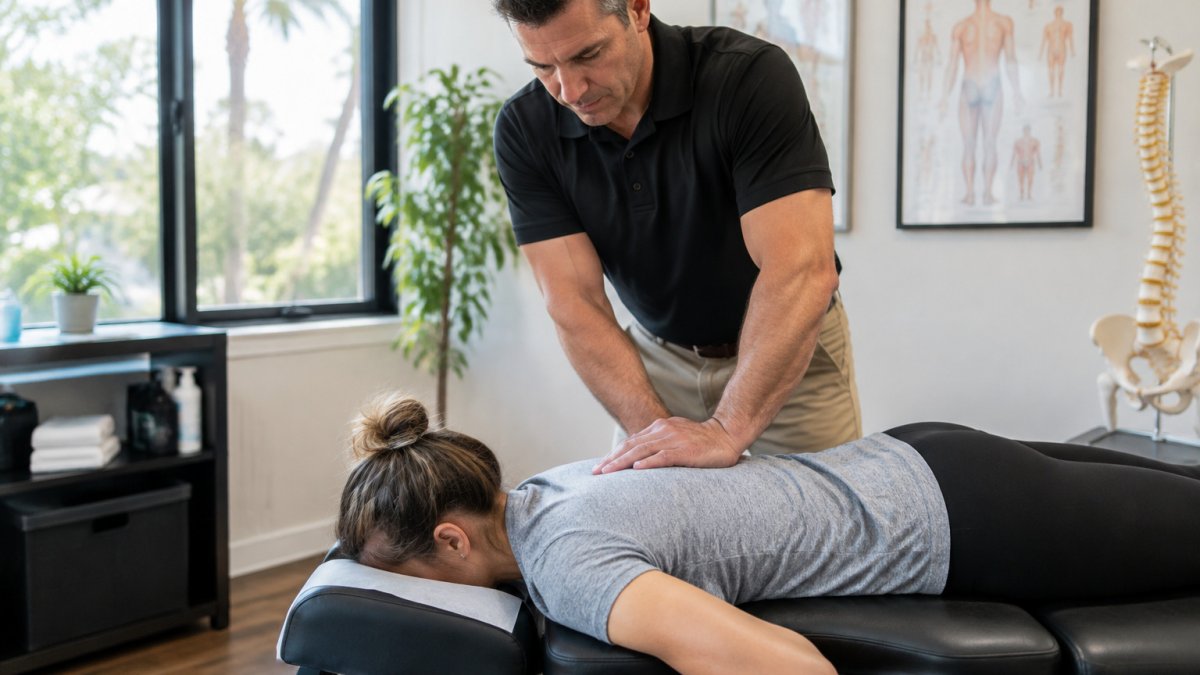
Manual manipulation applies controlled pressure to restore proper alignment and movement. Misaligned joints stress surrounding structures; correction aims to reduce strain. Your chiropractor assesses your specific dysfunction before treatment to ensure a personalized approach.
Benefits include:
- Improved range of motion
- Reduced joint stiffness
- Better load distribution across the knee
- Decreased pain during daily activities
Soft Tissue Therapy and Muscle Spasm Relief
Muscle spasms around the knee protect the damaged joint but limit movement and increase pain. Soft tissue therapy releases this tension.
Techniques include:
- Deep tissue massage to loosen tight muscles
- Trigger point therapy to release knots
- Myofascial release to improve tissue mobility
- Stretching protocols to restore flexibility
Tight muscles worsen alignment; releasing tension reduces pain and improves function. Increased blood flow delivers oxygen and nutrients to damaged tissues, supporting healing.
Viscosupplementation for Knee Pain: A Non-Surgical Option
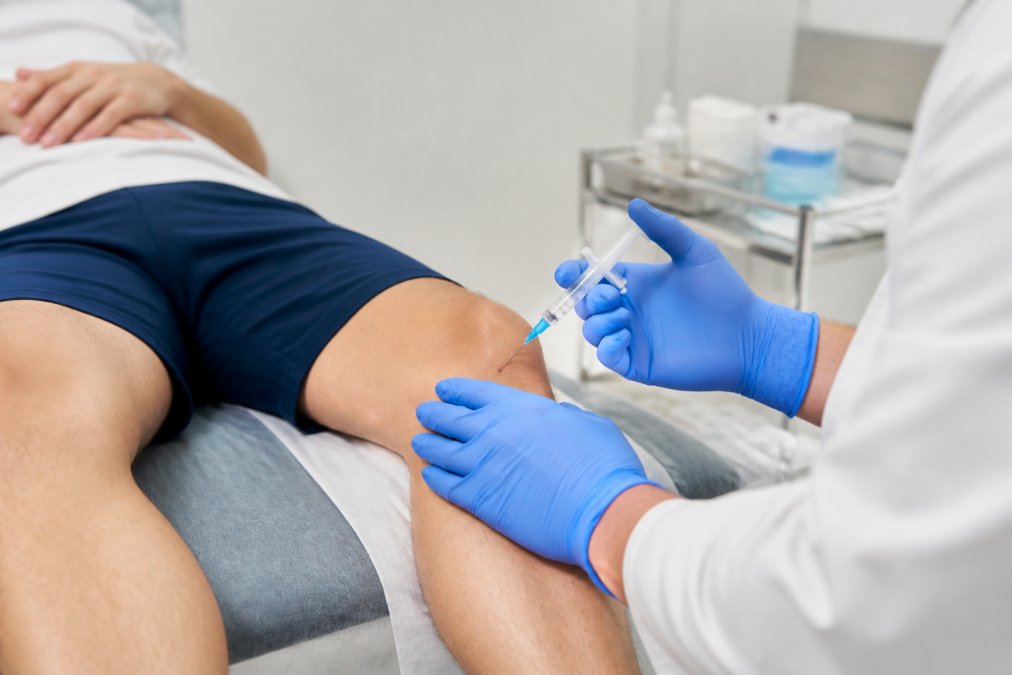
Viscosupplementation is an injectable treatment that restores lubrication to the knee joint. Natural Healing Arts Medical offers this specialized, surgery-free treatment using Hyalgan to provide long-lasting pain relief and restore freedom of movement.
The procedure injects hyaluronic acid to mimic natural synovial fluid, reducing friction between bone surfaces and decreasing inflammation. Patients may experience relief after a series of injections.
The treatment is quick and minimally invasive:
- Takes 15-20 minutes per injection
- Usually requires 3-5 injections spaced one week apart
- No downtime, you can return to normal activities immediately
- Results may appear within a few weeks
Viscosupplementation can be combined with chiropractic care knee osteoarthritis treatment and exercise. The injections aim to improve the joint environment while manual therapy aims to restore proper movement patterns.
Exercises for Knee Osteoarthritis You Can Do at Home
Home exercises maintain progress, prevent stiffness, and strengthen supporting muscles.
Range of Motion and Strengthening Exercises
Range of motion exercises keep your knee mobile and prevent stiffness.
Effective exercises include:
- Seated knee extensions: straighten your leg while sitting, hold 2 seconds, repeat 10 times
- Straight leg raises: lie on your back, tighten your thigh muscle, lift your leg 6 inches, hold 3 seconds
- Heel slides: lie on your back, slowly bend your knee by sliding your heel toward your buttock
- Wall squats: stand with your back against a wall, slide down to a comfortable depth, hold 10 seconds
- Calf raises: stand and slowly rise onto your toes, hold 2 seconds, repeat 15 times
These exercises build quadriceps and hamstring muscles to support the joint and reduce stress on cartilage. Start with 2-3 sets, three times weekly, increasing gradually. Consistency matters more than intensity.
Daily Movement and Functional Activities
Daily movement prevents stiffness. Walking maintains joint function without excessive impact. Walk 20-30 minutes daily on flat surfaces, use stairs slowly, avoid prolonged sitting, apply ice after activity, and wear supportive shoes. Movement stimulates synovial fluid production for natural lubrication (Checking your browser). Consistent, gentle activity matters more than intensity.
Non-Surgical Knee Osteoarthritis Treatment: What to Expect
Understanding treatment timelines and session frequency helps set realistic goals and removes uncertainty.
Typical Treatment Duration and Session Frequency
An initial intensive phase may involve 2-3 visits weekly for 4-6 weeks, then 1-2 weekly for 2-4 weeks, followed by maintenance visits.
Measurable Milestones: What Improvement Looks Like
In the initial weeks, pain may decrease, and movement may improve. Over several weeks, range of motion may improve, and daily activities may become easier. With consistent care, long-term relief may stabilize, and maintenance visits with home exercise can help prevent regression.
When to Expect Plateaus and How to Break Through Them
Plateaus around week 4-6 are normal and indicate adaptation. Your chiropractor may progress exercises, add new techniques, or recommend physical therapy. Communicate if you feel stuck; practitioners can modify plans.
Red Flags: When to Seek Additional Medical Evaluation
Seek immediate medical attention if pain worsens despite treatment, swelling increases, you cannot bear weight, severe night pain occurs, signs of infection appear, locking/catching worsens, or numbness/tingling develops. These may indicate ligament tears, meniscus damage, or advanced cartilage loss requiring imaging or orthopedic evaluation.
Combining Chiropractic Care With Medical Treatment and Nutrition
Best outcomes combine chiropractic care with medical treatment, physical therapy, and proper nutrition.
When to See a Chiropractor and What Happens During Your Visit
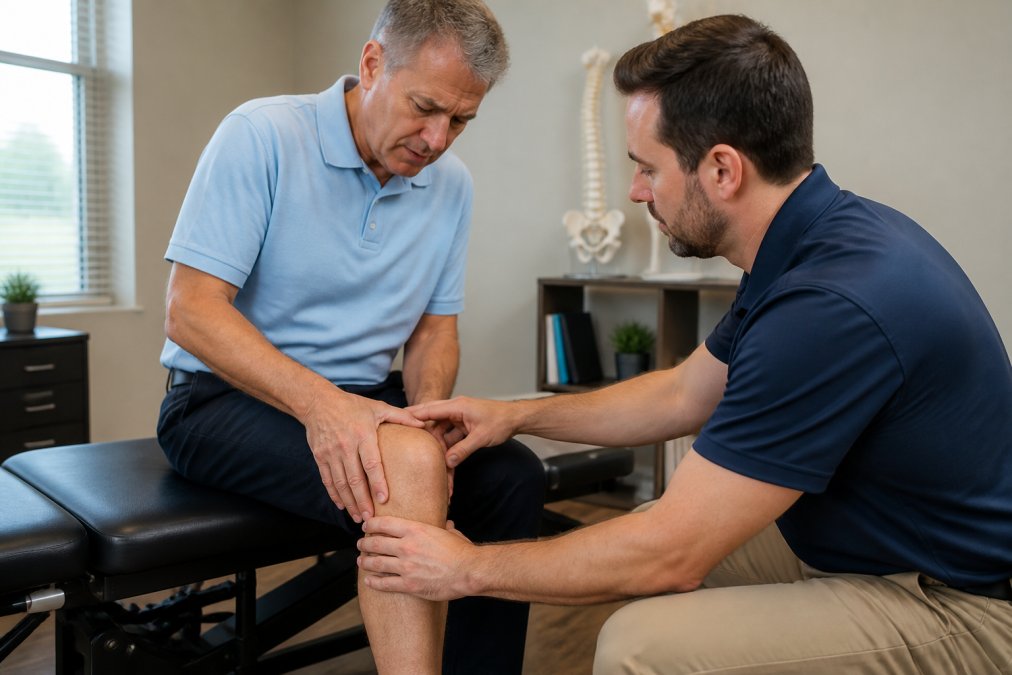
Evaluation begins with detailed pain history (onset, triggers, previous treatments) and examination including knee alignment, muscle strength, gait analysis, range of motion, and orthopedic tests. This identifies root causes; hip or ankle dysfunction can contribute to knee pain.
Dietary Support and Supplementation for Joint Health
Certain nutrients support cartilage repair and reduce inflammation: fatty fish (omega-3s), leafy greens (antioxidants, vitamin K), berries (anti-inflammatory), nuts and seeds (healthy fats), bone broth (collagen, amino acids), and turmeric and ginger (natural anti-inflammatory).
Safety, Realistic Timelines, and When Chiropractic Care May Not Be Appropriate
Chiropractic care is generally safe when performed by qualified professionals, but certain conditions require caution, modification, or referral to specialists.
Contraindications: When Chiropractic Care Is Not Recommended
Severe Osteoporosis: Fragile bones face high fracture risk from manipulation. Obtain imaging and medical clearance before treatment. Modified techniques (soft tissue therapy, gentle mobilization, exercise) may be safe with physician approval.
How to Know If Your Condition Is Appropriate for Chiropractic Care
Before starting, your chiropractor should take detailed medical history, perform orthopedic testing, review imaging, explain what chiropractic care can and cannot do, provide a written plan with realistic goals, and coordinate with your primary care physician. If steps are skipped or a cure is promised without assessment, that's a red flag.
Common Side Effects and What's Normal
Minor side effects are common: mild soreness (resolves 24-48 hours), temporary stiffness, mild bruising, and temporary fatigue. Contact your chiropractor immediately if you experience severe pain, worsening swelling, new numbness/tingling, or inability to move the knee.
Realistic Expectations: What Chiropractic Care Can and Cannot Do
Chiropractic care for knee osteoarthritis aims to provide relief for patients, but it has limits:
What Chiropractic Care Can Do:
- Reduce pain and inflammation
- Improve range of motion and joint function
- Decrease muscle tension and spasms
- Improve gait and biomechanics
- Delay or prevent the need for surgery in mild-to-moderate cases
- Enhance quality of life and functional ability
What Chiropractic Care Cannot Do:
- Reverse cartilage damage (cartilage does not regenerate once lost)
- Cure osteoarthritis (it's a chronic, degenerative condition)
- Guarantee you'll never need surgery
- Work without your participation (home exercises and lifestyle changes are essential)
- Replace necessary medical interventions like joint replacement in severe cases
Frequently Asked Questions
Can chiropractic care fix knee osteoarthritis?
Chiropractic care cannot reverse osteoarthritis, but it can reduce pain, improve joint function, and slow progression through joint mobilization, soft tissue therapy, and prescribed exercises. Patients may experience significant relief in range of motion and pain levels with consistent treatment. Results depend on the severity of your condition and how closely you follow home-care protocols. A consultation with a qualified chiropractor can help determine whether chiropractic treatment is appropriate for your specific situation.
How does viscosupplementation work for knee osteoarthritis?
Viscosupplementation injections add hyaluronic acid to the knee joint, lubricating the cartilage and reducing friction between bones. This helps restore synovial fluid quality, which naturally breaks down in osteoarthritis. The treatment typically provides pain relief and improved joint function for several months. Patients may notice results within a few weeks, with effects potentially lasting several months depending on individual response and activity level.
What are the best exercises for knee osteoarthritis at home?
Effective home exercises include seated knee extensions, gentle walking, water aerobics, and isometric leg exercises that build strength without high impact. Range of motion exercises like knee bends and straight-leg raises help maintain flexibility. Start slowly and avoid exercises that cause sharp pain. A chiropractor can recommend a personalized exercise program based on your pain level and functional goals, ensuring you perform movements correctly to avoid injury.
Is chiropractic care safe if I have severe knee osteoarthritis?
Chiropractic care can be safe for severe osteoarthritis when provided by a qualified professional who performs a thorough evaluation first. However, certain conditions, such as severe cartilage loss, bone-on-bone contact, or inflammatory arthritis, may require different approaches or contraindicate certain techniques. Your chiropractor should discuss your medical history, imaging results, and any previous treatments before beginning care. Always inform your chiropractor about all your symptoms and any medications you're taking.