 how-to
Chiropractic for Desk Job Neck Pain: Relief Guide
Table of Contents
- Why Desk Workers Experience Chronic Neck Pain
- Understanding Tech Neck Symptoms and Postural Strain
- How Chiropractic Adjustments Address Cervical Spine Alignment
- Ergonomic Desk Setup Tips to Prevent Further Strain
- Desk-Side Stretches for Office Neck Pain Relief
- Chiropractic Adjustment Frequency and Treatment Plans
- Long-Term Maintenance and Workplace Wellness
- Frequently Asked Questions
Last Updated: August 13, 2026
Why Desk Workers Experience Chronic Neck Pain
Desk workers face a unique challenge: their job itself creates conditions for chronic neck pain through accumulated strain from poor posture, inadequate ergonomics, and minimal movement breaks.
When you sit at a desk, your head naturally drifts forward. For every inch your head moves forward, the effective weight your neck must support increases by approximately ten pounds. This forward head posture places tremendous stress on your cervical spine, the seven vertebrae supporting your neck. Over time, the muscles, ligaments, and joints deteriorate from repeated strain.
The problem compounds because desk work is sedentary. Your upper trapezius muscles tighten from sustained contraction while deep stabilizer muscles weaken from disuse. This muscular imbalance creates postural strain radiating through your neck, shoulders, and upper back.
At Natural Healing Arts Medical, we see this pattern constantly in our Bradenton practice. Desk workers often arrive with chronic discomfort that developed gradually over months or years, describing dull, persistent tension that worsens throughout the day. The good news: this type of neck pain responds well to chiropractic for desk job neck pain when combined with ergonomic corrections and targeted stretching.
Understanding Tech Neck Symptoms and Postural Strain
Tech neck is excessive forward head posture caused by prolonged screen time and poor workstation setup. It describes both the posture and the cluster of symptoms resulting from it.
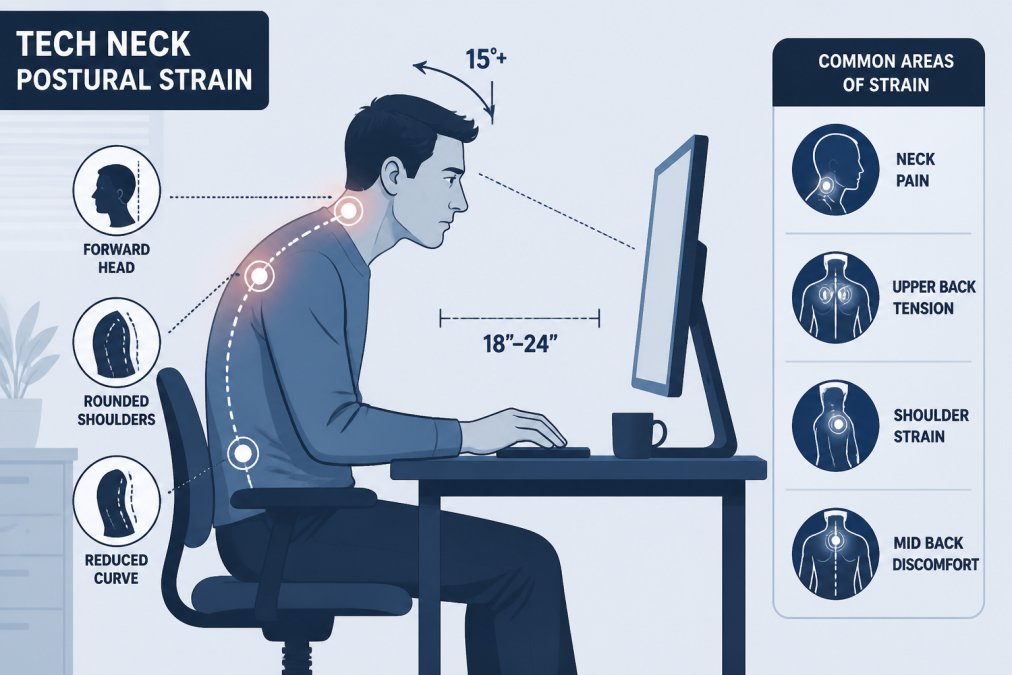
Common symptoms include neck pain worsening throughout the day, stiffness when turning your head, tension headaches at the skull's base, and shoulder pain radiating into your arms. Some experience tingling or numbness in their fingers, indicating postural strain affecting nerve function. Others report reduced range of motion or pain when tilting their head backward.
Forward head posture shifts your center of gravity forward, forcing posterior neck muscles to work constantly. Your cervical spine vertebrae gradually shift out of alignment, a condition chiropractors call vertebral subluxation. This misalignment irritates surrounding soft tissue, compresses nerves, and restricts joint function.
Tech neck develops slowly from correctable habits, unlike whiplash or disc injuries from heavy lifting. This makes it ideal for chiropractic adjustment combined with ergonomic intervention and stretching. Early intervention prevents muscular adaptation, ligament stiffness, and nervous system changes that make chronic pain difficult to reverse.
How Chiropractic Adjustments Address Cervical Spine Alignment
Chiropractic for desk job neck pain works by restoring proper alignment to your cervical spine and relieving muscular tension from postural strain. A chiropractic adjustment is a controlled manipulation of a vertebra that has shifted out of its normal position.
Misaligned cervical vertebrae restrict normal neck joint range of motion and irritate surrounding nerves and soft tissue. A chiropractor applies controlled force to return the misaligned vertebra to its proper position, restoring joint function and reducing nerve irritation.
The adjustment provides immediate relief for many patients by restoring normal joint mechanics. However, a single adjustment doesn't permanently fix desk job neck pain, your cervical spine will gradually shift back toward its habitual position unless you change the ergonomic and postural habits causing the problem. Chiropractic care works best paired with ergonomic improvements and consistent stretching.
Natural Healing Arts Medical combines chiropractic adjustments with physical therapy to address both structural misalignment and muscular dysfunction. Dr. David Zamikoff helps patients understand how daily habits contribute to pain and guides them toward sustainable solutions.
Benefits of chiropractic adjustment for desk workers include improved neck range of motion, reduced muscle tension and stiffness, relief from tension headaches, better spinal alignment, and reduced nerve irritation. Many patients report significant pain decrease within the first few weeks of treatment, particularly when implementing ergonomic changes.
Ergonomic Desk Setup Tips to Prevent Further Strain
Your workstation setup directly determines whether your desk job creates or prevents neck pain. Poor ergonomics force your cervical spine into positions generating postural strain. Correcting your setup is often as important as receiving chiropractic adjustments.
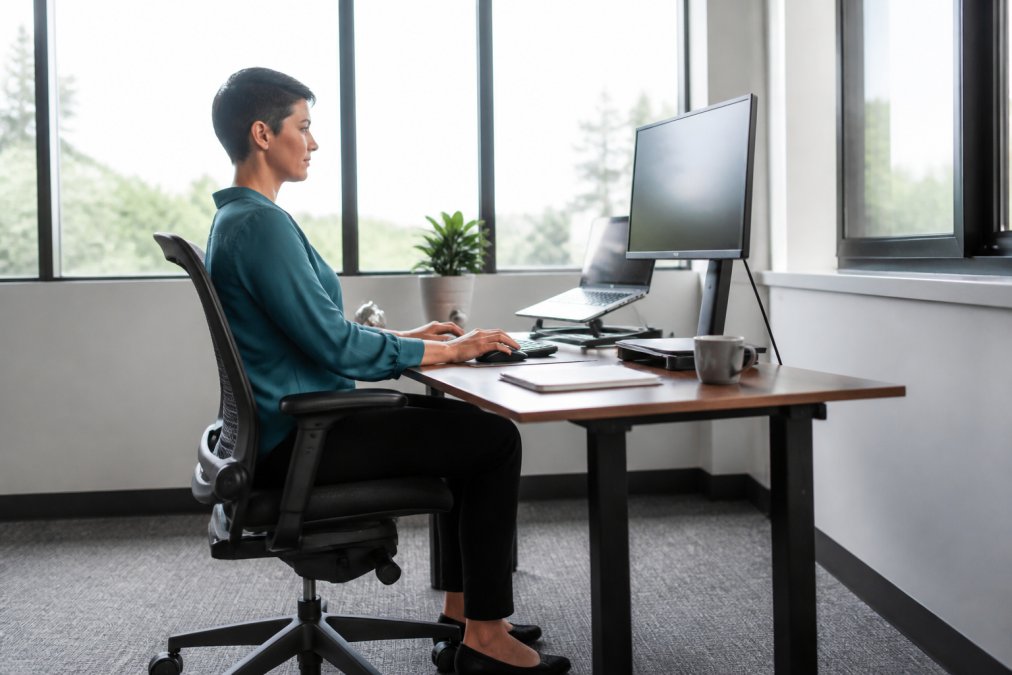
Position your monitor so your eyes naturally gaze slightly downward at the screen's center. The top should be at or slightly below eye level, approximately an arm's length away (20-26 inches). This keeps your head neutral rather than forced forward or backward.
Position your keyboard and mouse so your elbows remain at roughly 90 degrees and your wrists stay neutral. Your shoulders should remain relaxed, not elevated. Many desk workers position their keyboard too high or far away, forcing forward reach and shoulder elevation that creates upper trapezius tension.
Your chair is your workstation's foundation. Choose one supporting your spine's natural curve with seat height allowing feet flat on the floor and knees at roughly 90 degrees. Your lower back should be supported by the chair's lumbar curve; add a lumbar roll if needed.
Use a document holder if you frequently reference papers, positioning documents at the same height and distance as your monitor to prevent constant downward and forward looking.
Take frequent breaks every 30 minutes to stand, walk, and stretch. This prevents muscles from locking in shortened positions and gives your cervical spine periodic relief. Consider a standing desk or converter allowing position alternation throughout the day, though standing ergonomics require equally correct monitor, keyboard, and mouse positioning.
Desk-Side Stretches for Office Neck Pain Relief
Targeted stretching complements chiropractic adjustments and ergonomic improvements, addressing specific muscular tightness from desk work and restoring normal cervical spine range of motion.
Neck Flexion Stretch: Gently lower your chin toward your chest, feeling a mild stretch along your neck's back. Hold for 20-30 seconds. Perform 2-3 times daily.
Lateral Neck Stretch: Tilt your head toward your right shoulder with relaxed shoulders. Hold for 20-30 seconds, then repeat on the other side. Do this 2-3 times per side daily.
Upper Trapezius Stretch: Place your right hand over your head, gently pulling toward your right shoulder while your left arm hangs at your side. Hold for 20-30 seconds, then repeat on the other side. Perform daily.
Shoulder Rolls: Roll your shoulders backward in controlled motion, up toward ears, then back, then down. Perform 10 backward rolls, then 10 forward rolls.
Chin Tucks: Sit upright and gently pull your chin backward, creating a slight double-chin appearance. Hold for 5 seconds. Perform 10-15 repetitions, 2-3 times daily. This activates deep cervical stabilizer muscles and corrects forward head posture.
Doorway Chest Stretch: Stand in a doorway with your forearm against the frame at shoulder height. Step forward gently until you feel a chest and front shoulder stretch. Hold for 20-30 seconds. Perform 2-3 times daily.
Perform stretches at least once daily, ideally twice. Hold each only to mild tension, never to pain. Gentle, sustained stretching is far more effective than bouncing or forcing.
Chiropractic Adjustment Frequency and Treatment Plans
Adjustment frequency depends on condition severity, pain duration, and your consistency implementing ergonomic and stretching recommendations.
For acute desk job neck pain, many patients benefit from twice-weekly adjustments for 2-4 weeks, allowing your chiropractor to address structural misalignment while your body adapts to corrected positioning. As improvement occurs, frequency typically decreases.
For chronic postural strain persisting months or years, treatment often begins with 1-2 weekly adjustments for 4-8 weeks. Most patients notice significant improvement within 3-4 weeks of consistent care combined with ergonomic changes and stretching, though complete resolution often requires 8-12 weeks.
After acute symptoms resolve, maintenance adjustments, typically monthly or every 6-8 weeks, prevent recurrence. Dr. Zamikoff develops individualized treatment plans based on your cervical spine alignment, range of motion, and work habits, ensuring appropriate care without unnecessary visits.
Long-Term Maintenance and Workplace Wellness
Resolving current neck pain requires ongoing attention to ergonomics, posture, and spinal health. Most desk workers maintaining improvement from chiropractic care find consistent effort necessary.
Develop postural awareness throughout your day. When you catch yourself reverting to forward head posture, consciously correct it. This habit awareness gradually retrains postural reflexes, making good posture more automatic after several months.
Continue stretching even after pain resolves. Performing stretches 3-4 times weekly prevents muscular tightness from returning, far easier than dealing with recurrent pain.
Vary your movement throughout the day. Alternate between sitting and standing if possible, and take brief walking breaks hourly. These variations distribute stress across different spinal structures rather than concentrating it in one area.
Maintain your ergonomic setup by periodically reviewing monitor height, keyboard position, and chair support. Small ergonomic drifts accumulate into significant postural problems over months.
Consider periodic maintenance adjustments, typically monthly or every 6-8 weeks, to catch minor misalignments before they become symptomatic. Encourage your employer to implement workplace wellness programs including ergonomic assessments, stretching breaks, and postural health education.
Chronic neck pain from desk work doesn't have to be permanent. The combination of chiropractic adjustments, ergonomic improvements, and consistent stretching addresses root causes of postural strain rather than merely masking symptoms. Natural Healing Arts Medical specializes in helping desk workers achieve lasting relief through comprehensive, compassionate care. Dr. David Zamikoff and his team focus on understanding how your specific work habits contribute to pain and guide you toward sustainable solutions that restore range of motion, reduce muscle tension, and improve overall spinal health. If desk job neck pain has affected your quality of life or productivity, schedule a consultation to develop a personalized treatment plan tailored to your situation.
Frequently Asked Questions
How do I know if chiropractic care will work better than physical therapy for my desk job neck pain?
Chiropractic for desk job neck pain focuses on restoring cervical spine alignment and joint function through adjustments, while physical therapy emphasizes muscle strengthening. Many people benefit from combining both approaches. A qualified chiropractor will evaluate your specific postural strain and musculoskeletal issues to determine whether adjustments, ergonomic changes, or integrated treatment will address your condition. The key is finding a provider who listens to your concerns and tailors the approach to your needs rather than applying the same treatment to every patient.
How often should you see a chiropractor for posture-related pain from desk work?
Chiropractic adjustment frequency depends on the severity of your condition and how your body responds to treatment. Initial visits may occur 2-3 times per week to address acute postural strain and tech neck symptoms, then transition to maintenance visits every 2-4 weeks. Some desk workers benefit from monthly adjustments combined with ergonomic changes and stretches for office neck pain. Your chiropractor will develop a personalized plan based on your symptoms, work environment, and goals for long-term spinal health.
Is it safe for a chiropractor to work on your neck?
Chiropractic adjustments to the cervical spine are generally safe when performed by a licensed, qualified professional who properly evaluates your condition first. Your chiropractor will assess your spinal alignment, range of motion, and any underlying issues before treatment. Techniques vary from manual adjustments to gentler mobilization methods. Discuss any previous injuries, disc issues, or concerns about your neck with your provider before treatment. A reputable chiropractor prioritizes your safety and explains the approach they're using.
Can stretches for office neck pain actually prevent the need for chiropractic care?
Regular stretches for office neck pain, combined with proper ergonomic desk setup tips and frequent position changes, can reduce tension and prevent some postural strain. However, if your cervical spine alignment has already shifted due to prolonged sitting or tech neck symptoms, stretching alone may not restore proper joint function. Chiropractic adjustments address vertebral alignment and joint mobility that stretching cannot achieve. The most effective approach combines professional adjustments with daily stretches, ergonomic improvements, and workplace wellness habits to support long-term spinal health.