 how-to
Chiropractic Treatment for Whiplash Recovery
Table of Contents
- What Is Whiplash and How Chiropractic Care Treats It
- Symptoms of Whiplash After a Car Accident
- Spinal Manipulation and Soft Tissue Therapy Techniques
- Chiropractic Adjustment for Neck Pain and Range of Motion
- Whiplash Recovery Timeline: What to Expect
- Therapeutic Exercises and Home Care During Recovery
- Insurance, Documentation, and Treatment Planning
- Frequently Asked Questions
Last Updated: September 1, 2026
What Is Whiplash and How Chiropractic Care Treats It
Whiplash is a neck injury from sudden head jerking, typically during motor vehicle accidents. This rapid acceleration-deceleration motion strains soft tissues, ligaments, and muscles in the cervical spine, causing inflammation and restricted movement. At Natural Healing Arts Medical, we aim to help patients achieve their wellness objectives through effective, compassionate treatment options.
The cervical spine contains seven vertebrae that support your head and enable motion. When whiplash occurs, these structures can shift out of alignment, a condition chiropractors call vertebral subluxation. This misalignment pressures nerves and restricts blood flow to injured tissues, prolonging healing. Chiropractic care addresses the root cause rather than just masking pain symptoms.
Chiropractic treatment restores proper spinal alignment, reduces nerve pressure, and promotes natural healing. Unlike pain medications that temporarily relieve symptoms, spinal manipulation and soft tissue therapy address underlying structural damage. Recovery depends on injury severity and individual healing capacity.
Symptoms of Whiplash After a Car Accident
Whiplash symptoms often develop within hours or days following an accident. The most common symptom is neck stiffness and pain, ranging from mild discomfort to severe movement limitation. Many patients report difficulty turning their head or looking up and down without sharp pain.
Whiplash frequently causes headaches and migraines originating at the skull's base and radiating across the head, sometimes accompanied by dizziness or balance problems. Misaligned vertebrae irritate nerves controlling blood flow and muscle tension in the head and upper neck region.
Shoulder and upper back pain commonly accompany whiplash as the injury extends beyond the neck. Muscle tension spreads across the trapezius and rhomboid muscles, creating painful tightness that worsens with certain movements. Some patients experience tingling or numbness in the arms and hands, indicating nerve compression from spinal misalignment.
Less obvious symptoms include fatigue, concentration difficulties, and mood changes. The body's inflammatory response drains energy reserves, and chronic pain disrupts sleep quality.
Red Flag Symptoms Requiring Immediate Medical Attention
Certain symptoms warrant immediate emergency evaluation before beginning chiropractic treatment. Severe headache with neck stiffness, loss of consciousness or memory gaps, weakness or paralysis in the arms or legs, difficulty swallowing or speaking, numbness across the chest, or loss of bowel/bladder control all suggest serious spinal cord or neurological involvement. Your chiropractor will screen for these red flags during the initial consultation and refer you for emergency imaging and medical evaluation if any are present.
Diagnostic Imaging and Clinical Assessment
Before beginning treatment, your chiropractor performs a thorough clinical assessment including range-of-motion testing, palpation of the cervical spine to identify misalignments, and neurological screening to assess nerve function. Based on these findings, diagnostic imaging may be recommended.
X-rays are the most common first-line imaging for whiplash. They reveal vertebral alignment, identify fractures or dislocations, and show the natural curve of the cervical spine. A straightened cervical curve (loss of lordosis) is common in whiplash and indicates soft tissue damage. Your chiropractor will explain whether imaging is necessary based on your symptom severity and clinical findings.
MRI imaging provides detailed visualization of soft tissues, including ligaments, discs, and spinal cord. MRI is ordered when X-rays are inconclusive, nerve compression symptoms are severe, or disc injury is suspected. Your chiropractor will explain whether imaging is necessary based on your symptom severity and clinical findings.
Spinal Manipulation and Soft Tissue Therapy Techniques

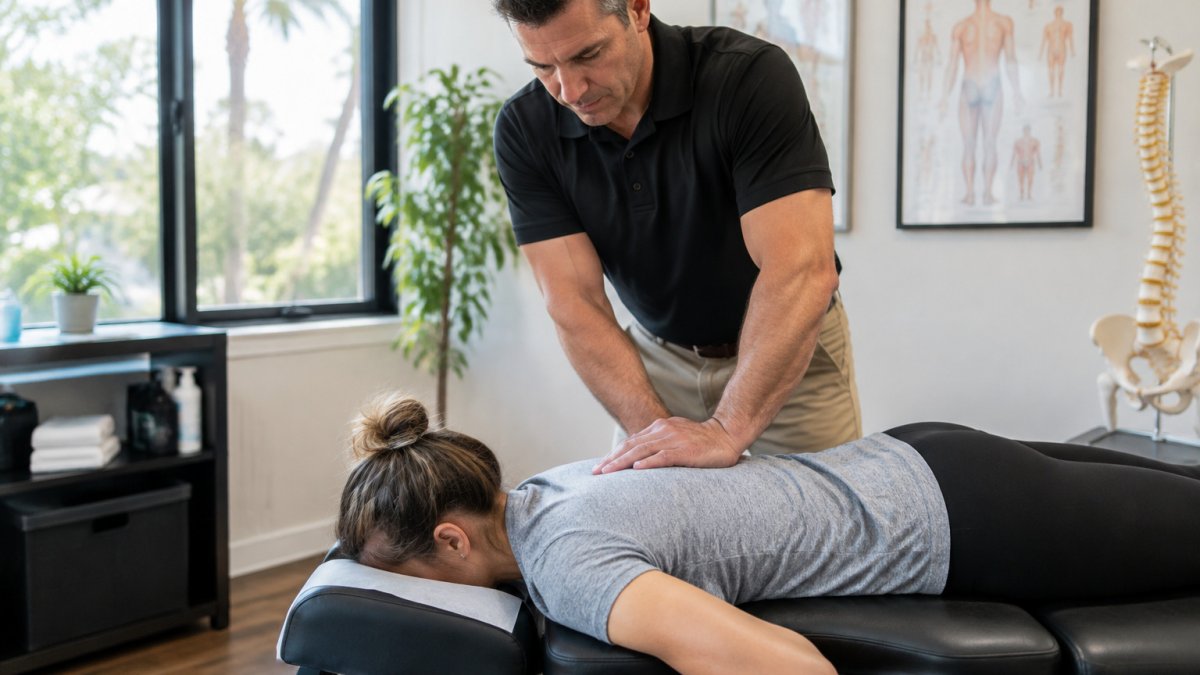
Spinal manipulation is the cornerstone of chiropractic treatment for whiplash recovery. This technique applies controlled force to vertebrae that have shifted out of alignment, restoring normal positioning and reducing nerve pressure. When done correctly, manipulation produces an audible pop, the sound of gas bubbles releasing from joint fluid, and immediate relief for many patients.
The process begins with thorough clinical assessment to identify misalignments and confirm manipulation is appropriate for your specific injury pattern. Some whiplash cases involve disc injuries or nerve compression requiring modified techniques or additional therapeutic approaches.
Soft tissue therapy complements spinal manipulation by addressing muscle tension and inflammation. Trigger point therapy targets knots in the neck and shoulder muscles, releasing tension that restricts movement and perpetuates pain. Myofascial release techniques use slower, broader strokes to lengthen muscle fibers and reduce muscular restriction throughout the neck and upper back.
Therapeutic massage increases circulation to injured tissues, bringing oxygen and nutrients necessary for healing. It also breaks up scar tissue that forms during inflammation, preventing permanent stiffness. Combining spinal manipulation with soft tissue therapy can lead to pain relief and functional recovery.
Chiropractic Adjustment for Neck Pain and Range of Motion
Chiropractic adjustment restores normal cervical spine function and eliminates neck pain at its source. When vertebrae return to proper position, nerve pressure decreases, inflammation begins to resolve, and the body's natural healing mechanisms accelerate.
Range of motion typically improves as alignment improves. Patients notice they can turn their head further without pain, look up and down more comfortably, and perform daily activities with less restriction.
Adjustment techniques vary based on your injury pattern and comfort level. Some patients respond well to traditional high-velocity, low-amplitude adjustments that produce the characteristic cracking sound. Others prefer gentler mobilization techniques that gradually move vertebrae back into alignment without forceful thrusting. Your chiropractor will discuss which approach suits your injury and preferences.
Consistent adjustment appointments are critical during acute whiplash recovery. This schedule allows your chiropractor to monitor healing progress, adjust techniques as needed, and reinforce proper spinal alignment.
Whiplash Recovery Timeline: What to Expect
Whiplash recovery varies significantly based on injury severity, overall health, previous neck injuries, and how quickly you begin treatment. Most minor whiplash cases show noticeable improvement with consistent chiropractic care, though complete recovery often takes time as tissues heal and normal function fully returns.
The Critical First 72 Hours: Immediate Post-Accident Protocol
The first three days after a whiplash injury are crucial for minimizing long-term complications. Immediately after the accident, apply ice to the neck and upper back for 15-20 minutes every 2-3 hours to reduce inflammation (the CDC). Avoid aggressive movement; keep your neck in a neutral, comfortable position. Prolonged immobilization beyond 48 hours can delay recovery by weakening supporting muscles (peer-reviewed research).
Schedule a chiropractic evaluation within 24-72 hours of the accident, even if symptoms are mild. Early assessment allows your chiropractor to document baseline findings, order diagnostic imaging if necessary, and begin gentle soft tissue therapy to prevent inflammation from becoming chronic. This timing is also critical for insurance documentation.
During these first 72 hours, avoid activities that stress the neck: do not drive long distances, avoid heavy lifting, and minimize screen time. Sleep on a supportive pillow that keeps your neck aligned with your spine.
The Acute Phase: Weeks 1-2 (Peak Inflammation)
Inflammation peaks during the first 1-2 weeks after injury, and pain is usually most severe during this phase. Your chiropractor focuses on reducing inflammation through gentle soft tissue therapy, trigger point release, and careful adjustment.
Expect limited range of motion and significant pain with certain movements. This is normal and typically improves as acute inflammation begins to subside.
The Healing Phase: Weeks 2-6 (Tissue Repair and Functional Recovery)
Inflammation gradually subsides during weeks 2-6, and tissue repair accelerates. Most patients experience functional improvements during this phase. Range of motion increases noticeably, headaches become less frequent, neck pain decreases, and sleep quality typically improves.
Your chiropractor will introduce more active soft tissue techniques and may begin teaching therapeutic exercises to strengthen neck muscles.
By week 4-6, most patients notice improvement in function and may return to light work duties, resume driving without pain, and participate in gentle exercise.
The Rehabilitation Phase: Weeks 6-12+ (Strengthening and Prevention)
The rehabilitation phase focuses on restoring full strength, improving postural control, and preventing recurrent injury. Therapeutic exercises become increasingly important. Your chiropractor will teach movements that strengthen neck stabilizer muscles, improve cervical spine proprioception, and restore normal movement patterns.
You should perform therapeutic exercises at home, gradually increasing intensity as your strength improves.
By week 8-12, most patients have returned to normal activities. Individual recovery timelines differ based on age, previous neck injuries, overall fitness level, stress levels, sleep quality, and adherence to home care recommendations.
Chronic Whiplash: When Recovery Extends Beyond 12 Weeks
Approximately 10-15% of whiplash patients develop chronic symptoms lasting beyond 12 weeks (peer-reviewed research). Risk factors include older age, high-impact accidents, pre-existing neck conditions, and delayed treatment initiation.
If you are not experiencing significant improvement by week 8-10, your chiropractor may recommend additional diagnostic imaging to rule out disc herniation or other structural complications. They may modify your treatment approach, incorporating more intensive soft tissue therapy, different adjustment techniques, or referral to other specialists if necessary. Chronic whiplash often requires consistent, evidence-based chiropractic care combined with dedicated home exercise and ergonomic modifications.
Therapeutic Exercises and Home Care During Recovery

Therapeutic exercises are essential for accelerating whiplash recovery and preventing chronic pain. Your chiropractor will teach you specific movements designed to strengthen neck muscles, improve flexibility, and restore normal movement patterns. These exercises should be performed consistently at home, ideally daily.
Gentle neck stretches form the foundation of home exercise programs. Slowly turn your head side to side, gently tilt your ear toward your shoulder, and carefully flex your chin toward your chest. Hold each stretch for 15-30 seconds and repeat 3-5 times daily. Never cause sharp pain; mild tension is appropriate.
Isometric neck exercises build strength without requiring full range of motion, making them ideal during early recovery. Place your hand against your cheek and gently press your head into your hand, holding tension for 5-10 seconds without moving. Repeat in all four directions. Perform these exercises 2-3 times daily.
Posture correction is critical for long-term recovery. Maintain relaxed, level shoulders, keep your head centered over your shoulders, and avoid forward head posture that strains cervical muscles. If you work at a desk, position your monitor at eye level and take frequent breaks to stretch.
Apply ice for the first 48 hours after injury to reduce inflammation, then switch to heat therapy to improve circulation and reduce muscle tension. Use ice or heat for 15-20 minutes at a time, several times daily.
Insurance, Documentation, and Treatment Planning
Natural Healing Arts Medical accepts most health insurance plans and Medicare. Your insurance coverage depends on your specific policy and whether your injury resulted from a covered accident.
Auto accident injuries often involve personal injury protection (PIP) coverage or liability claims. If another driver caused your accident, their liability insurance may cover your chiropractic treatment. If you were at fault, your own PIP coverage typically covers treatment regardless of fault. Your chiropractor's office can help verify your coverage.
Documentation is essential for insurance claims. Your chiropractor will perform a thorough clinical assessment and create detailed treatment notes documenting your injury, symptoms, examination findings, and treatment plan. Diagnostic imaging such as X-rays may be ordered to provide additional documentation of spinal misalignment.
The treatment plan outlines your estimated recovery timeline and recommended appointment frequency. Most insurance plans require a clear treatment plan showing the number of visits needed and expected outcomes. As you progress, the plan may be adjusted based on your healing response.
Flexible payment options are available for patients with high deductibles or limited insurance coverage. Natural Healing Arts Medical offers flexible payment plans.
Whiplash recovery requires prompt, comprehensive treatment that addresses underlying spinal misalignment rather than just masking symptoms. At Natural Healing Arts Medical, Dr. David Zamikoff and his team specialize in treating auto accident injuries with personalized chiropractic care combining spinal manipulation, soft tissue therapy, and therapeutic exercises. Our approach focuses on restoring your cervical spine function, reducing pain, and helping you return to normal activities. If you've experienced whiplash from an auto accident, schedule an appointment with Natural Healing Arts Medical to begin your recovery journey.
Frequently Asked Questions
Q: Can a chiropractor do anything for whiplash?
A: Yes. Chiropractors treat whiplash by addressing cervical spine misalignment, muscle tension, and nerve pressure that result from the injury. Spinal manipulation, soft tissue therapy, and therapeutic exercises help restore range of motion, reduce inflammation, and support the body's natural healing process. A clinical assessment determines your specific condition and guides a customized treatment plan for whiplash recovery.
Q: How long does whiplash recovery typically take with chiropractic care?
A: Recovery timelines vary based on injury severity, age, and overall health. Your chiropractor will assess your condition during your initial visit and provide a realistic whiplash recovery timeline specific to your situation. Compliance with recommended treatment and home exercises accelerates healing.
Q: Is chiropractic care safe immediately after a car accident?
A: A thorough clinical assessment is essential before beginning chiropractic treatment. Your chiropractor may recommend diagnostic imaging (X-rays or MRI) to rule out fractures or serious injuries before starting spinal manipulation. Soft tissue therapy can often begin sooner, but spinal adjustments are typically delayed until imaging clears you. Always inform your chiropractor about all accident details and any existing conditions to ensure safe, appropriate care.
Q: What happens if whiplash goes untreated?
A: Untreated whiplash can lead to chronic neck pain, persistent headaches or migraines, reduced range of motion, and long-term musculoskeletal complications. Nerve pressure and vertebral subluxation may develop, causing radiating pain, numbness, or neurological symptoms. Early intervention through chiropractic care reduces the risk of these chronic conditions and supports faster, more complete recovery. Delaying treatment often results in longer overall healing times.