 how-to
Daily Stretches to Prevent Chronic Back Pain
Table of Contents
- Why Daily Stretches Matter for Back Pain Prevention
- Safe Morning Stretches for Stiff Back
- How Long to Hold Stretches for Back Pain
- Intermediate and Advanced Stretches
- Building a Progressive Stretching Routine
- When to See a Chiropractor for Back Pain
- Contraindications and Red Flags to Avoid
- Integrating Stretches Into Your Daily Routine
- Frequently Asked Questions
Last Updated: August 28, 2026
Why Daily Stretches Matter for Back Pain Prevention
Daily stretches prevent chronic back pain by addressing muscle tension, poor circulation, and restricted range of motion. When you don't move regularly, muscles shorten, your spine loses flexibility, and discs stiffen. A consistent stretching routine reverses this damage, restoring flexibility and reducing muscle tension that pulls vertebrae out of alignment.
At Natural Healing Arts Medical, we understand the importance of daily stretches in managing discomfort and supporting overall wellness. The key is understanding which stretches target your specific problem areas and how to perform them safely.
Safe Morning Stretches for Stiff Back
Morning stiffness occurs because you're not moving for six to eight hours (peer-reviewed research). Synovial fluid in your joints hasn't circulated. A gentle routine mobilizes your spine before you start your day.
These stretches require no equipment. Perform them slowly and deliberately, moving only as far as feels comfortable. Never force a stretch into pain. Hold each position and breathe deeply.
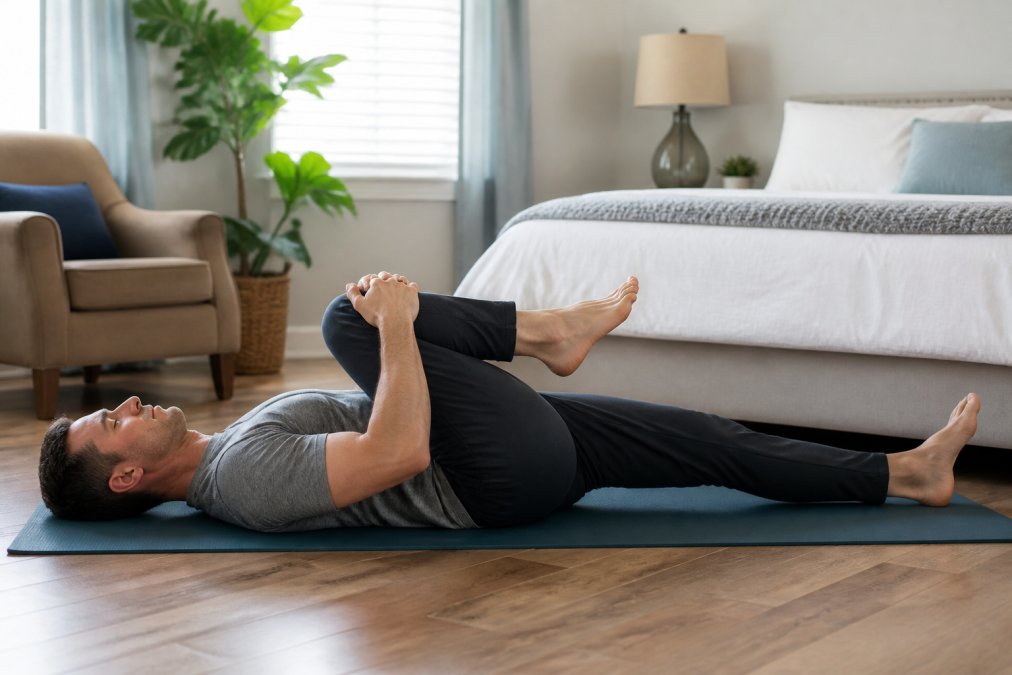
Knee-to-Chest Stretch
The knee-to-chest stretch targets your lower back and glutes, decompressing your vertebrae.
How to perform it:
- Lie on your back on a firm surface
- Bend one knee and draw it toward your chest
- Use your hands to gently pull your knee closer
- Keep your other leg extended on the floor
- Hold for 20-30 seconds
- Repeat on the other side
- Perform 2-3 repetitions per side
Pelvic Tilts
Pelvic tilts improve core stability and spinal alignment by retraining your abdominal muscles, reducing stress on your lower back.
How to perform it:
- Lie on your back with knees bent and feet flat on the floor
- Place your arms at your sides
- Tilt your pelvis so your lower back presses gently into the floor
- Hold for 2-3 seconds
- Relax and return to neutral
- Repeat 10-15 times
Perform pelvic tilts daily, even on rest days. Many people with chronic back pain have weak core stability, and this movement awakens those muscles.
Child's Pose
Child's pose decompresses your entire spine and relieves tension in your upper and lower back simultaneously.
How to perform it:
- Start on your hands and knees
- Bring your big toes together and widen your knees
- Sit your hips back toward your heels
- Extend your arms forward
- Lower your forehead to the floor
- Breathe deeply and hold for 30-60 seconds
- Repeat 2-3 times
If your knees are sensitive, place a pillow underneath them.
How Long to Hold Stretches for Back Pain
For static stretches, aim for 20-30 seconds per repetition (apta.org). This allows your nervous system to signal your muscles to release tension without causing injury. Perform each stretch 2-3 times, resting 10-15 seconds between repetitions. Most people find that 15-20 minutes of daily stretching provides significant relief.
Research from the American Physical Therapy Association indicates that consistency matters more than duration. Stretching for 15 minutes daily produces better results than stretching for 45 minutes once per week.
Intermediate and Advanced Stretches
Once you've mastered basic stretches, intermediate movements deepen your flexibility and mobility.
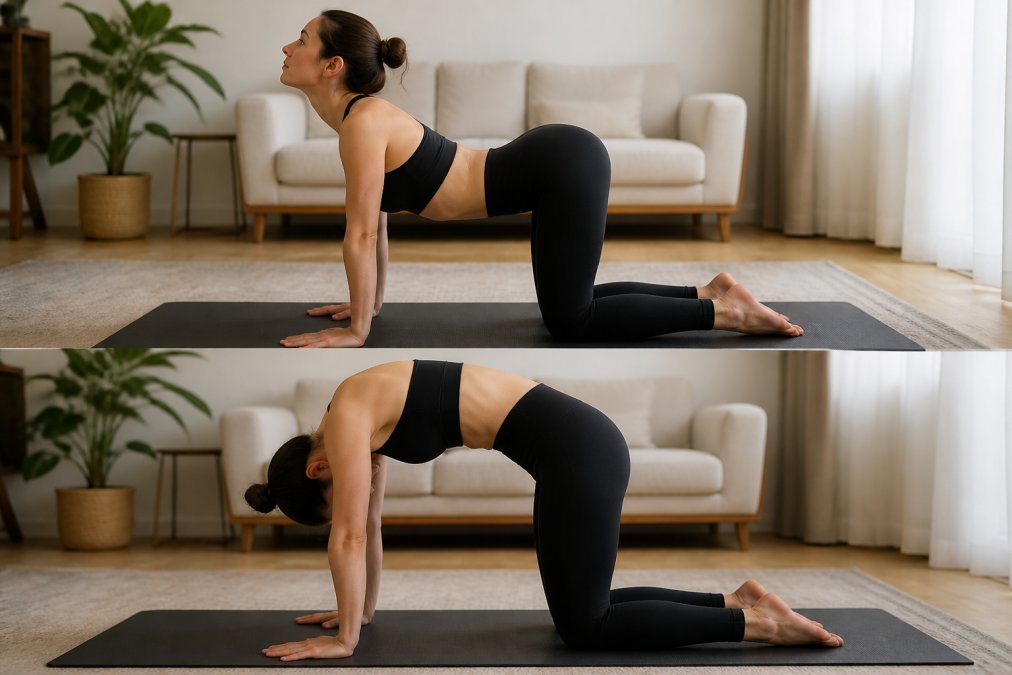
Cat-Cow Stretch
The cat-cow stretch mobilizes your entire spine through dynamic movement, improving circulation and teaching controlled spinal movement.
How to perform it:
- Start on your hands and knees
- For the cow: arch your back, lift your gaze upward, and lower your belly
- Hold for 2-3 seconds
- For the cat: round your spine, tuck your chin, and draw your belly in
- Hold for 2-3 seconds
- Flow between positions smoothly
- Repeat 8-10 times
This stretch is particularly effective for people with sedentary jobs because it reverses forward-hunched posture.
Spinal Twists
Spinal twists improve rotational mobility and release tension along your entire spine.
How to perform it:
- Lie on your back with both knees bent
- Drop both knees to one side
- Extend your arms in a T position
- Keep your shoulders flat on the floor
- Hold for 30-45 seconds
- Return to center
- Repeat on the other side
Supine Bridge
The supine bridge strengthens your glutes and lower back while stretching your hip flexors, counteracting the effects of sitting all day.
How to perform it:
- Lie on your back with knees bent and feet flat on the floor
- Place your arms at your sides with palms down
- Press through your heels and lift your hips toward the ceiling
- Squeeze your glutes at the top
- Hold for 2-3 seconds
- Lower your hips back down
- Repeat 10-15 times
Strong glutes reduce the load on your lower back. When weak, your lower back muscles compensate, leading to pain.
Building a Progressive Stretching Routine
A progressive routine starts simple and gradually increases in difficulty. Most people abandon stretching routines because they start too aggressively.
Week 1-2: Foundation Phase
Start with basic stretches performed once daily for 10-15 minutes. Focus on proper form rather than duration.
- Knee-to-chest stretch: 2 repetitions, 20 seconds each
- Pelvic tilts: 1 set of 10-15 repetitions
- Child's pose: 2 repetitions, 30 seconds each
Week 3-4: Consistency Phase
Add the cat-cow stretch and increase hold durations slightly.
- Knee-to-chest stretch: 3 repetitions, 25-30 seconds each
- Pelvic tilts: 1 set of 15 repetitions
- Child's pose: 2 repetitions, 45 seconds each
- Cat-cow stretch: 10 repetitions, flowing movement
Week 5+: Advanced Phase
Introduce spinal twists and the supine bridge.
- All previous stretches at increased duration
- Spinal twists: 2 repetitions, 45 seconds each side
- Supine bridge: 2 sets of 12-15 repetitions
- Total time: 20-25 minutes daily
When to See a Chiropractor for Back Pain
Daily stretches are preventive and maintenance-focused. They work best for general stiffness and mild discomfort. Schedule a consultation with a chiropractor if:
- Your back pain persists despite consistent stretching for 3-4 weeks
- Pain is severe or worsening
- You experience numbness, tingling, or weakness
- Pain radiates down your leg
- You've had a recent injury or accident
- Your posture correction efforts aren't working
- You have a history of disc problems
A chiropractor can assess your spinal alignment and determine whether your pain stems from structural issues or muscle tension. At Natural Healing Arts Medical, Dr. David Zamikoff specializes in diagnosing the root cause of back pain and aims to help patients achieve their wellness objectives through effective, compassionate treatment options.
Contraindications and Red Flags to Avoid
Stretching is generally safe, but certain conditions require caution.
Do not stretch aggressively if you have:
- Active disc herniation or bulging discs (gentle stretching only)
- Acute muscle strain or recent injury
- Osteoporosis or bone density issues
- Severe arthritis in your spine
- Recent spine surgery
Stop stretching and seek professional help if you experience:
- Sharp, shooting pain during or after stretching
- Pain that radiates into your legs or arms
- Loss of bladder or bowel control
- Severe muscle weakness
- Numbness that spreads or worsens
- Pain that doesn't improve after consistent stretching for 4 weeks
The goal of daily stretches is gentle, consistent movement, not aggressive flexibility gains.
Integrating Stretches Into Your Daily Routine
The biggest barrier to consistent stretching is making it a habit. Successful people integrate stretching into existing routines.
Morning integration: Perform stretches immediately after your shower when muscles are warm. Link it to an existing habit: shower, then stretch, then breakfast.
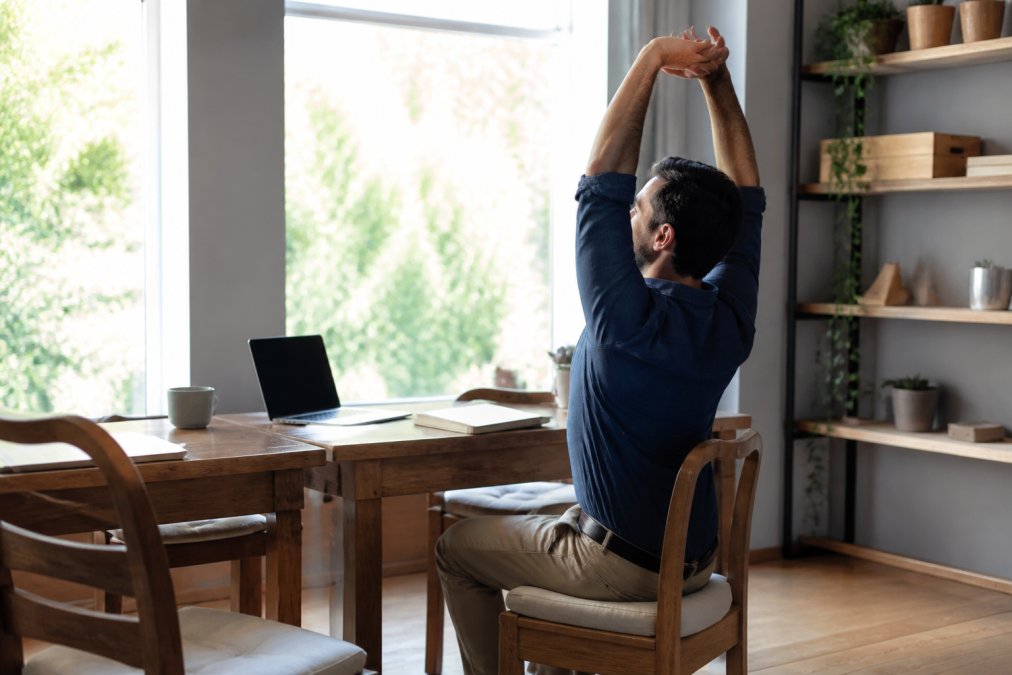
Desk job integration: Set a timer to stretch every 60-90 minutes for 5 minutes. This breaks up prolonged sitting and maintains mobility throughout the day.
Evening integration: Stretch while watching television or listening to a podcast. Many people find evening stretching improves sleep quality.
Ergonomics improvement: Adjust your workspace to support better posture. A proper desk setup, monitor height, and chair position reduce tension that makes stretching necessary.
Commit to 10 minutes daily, even on busy days. Consistency beats perfection.
Chronic back pain doesn't develop overnight, and it doesn't resolve overnight either. Daily stretches work because they address the root cause: muscle tension, poor flexibility, and reduced mobility. If stretching alone isn't resolving persistent pain, professional evaluation can identify whether structural issues need attention. Natural Healing Arts Medical, led by Dr. David Zamikoff, offers comprehensive chiropractic care and wellness solutions. Dr. David Zamikoff and his team specialize in diagnosing the underlying cause of your pain and creating a personalized plan to restore your mobility. Schedule a consultation to discuss your specific situation and discover how professional care combined with daily stretches can help you achieve lasting relief.
Frequently Asked Questions
Can stretching every day help with chronic back pain?
Yes. Daily stretches reduce muscle tension, improve flexibility, and support spinal alignment, all factors that help prevent and manage chronic back pain. Consistent stretching maintains range of motion, decreases stiffness, and promotes circulation to the lumbar spine. However, if pain persists or worsens, consult a chiropractor to rule out underlying conditions requiring professional treatment.
How long should I hold a stretch to prevent injury?
Hold each stretch for 20-30 seconds, breathing steadily throughout. This duration allows muscles to relax without overstretching. For beginners or very tight muscles, start with 15-20 seconds. Never bounce or force a stretch, gentle, sustained pressure is safer and more effective. Perform each stretch 2-3 times per session. If you feel sharp pain rather than mild discomfort, release immediately and consult a professional.
What stretches are best to do in the morning for a stiff back?
Start with knee-to-chest stretches, pelvic tilts, and child's pose. These gentle movements warm up the lumbar spine and reduce overnight stiffness without straining cold muscles. Perform them slowly and hold each for 20-30 seconds. Morning stretches prepare your spine for the day and improve posture. Avoid aggressive twists or deep bends first thing, save those for later in the day when muscles are warmer and more flexible.
When should I see a chiropractor for back pain instead of just stretching?
See a chiropractor if pain persists beyond 2 weeks despite daily stretching, if you have sharp or radiating pain, numbness, or tingling, or if an injury triggered the pain. A professional can identify whether the problem is muscle tension, spinal misalignment, disc issues, or another condition. They can also design a personalized treatment plan combining stretches with adjustments, physical therapy, and ergonomic guidance for faster recovery.