 how-to
Exercises to Complement Chiropractic Back Treatment
Table of Contents
- How Exercise Complements Chiropractic Adjustments
- Safety Screening and When to Stop Exercising
- Core Strengthening Exercises for Back Pain
- Gentle Stretches for Lower Back Pain
- Exercises After Chiropractic Adjustment: Timing and Progression
- Sets, Repetitions, Frequency, and Progression
- Common Mistakes to Avoid
- Frequently Asked Questions
Last Updated: October 10, 2026
How Exercise Complements Chiropractic Adjustments
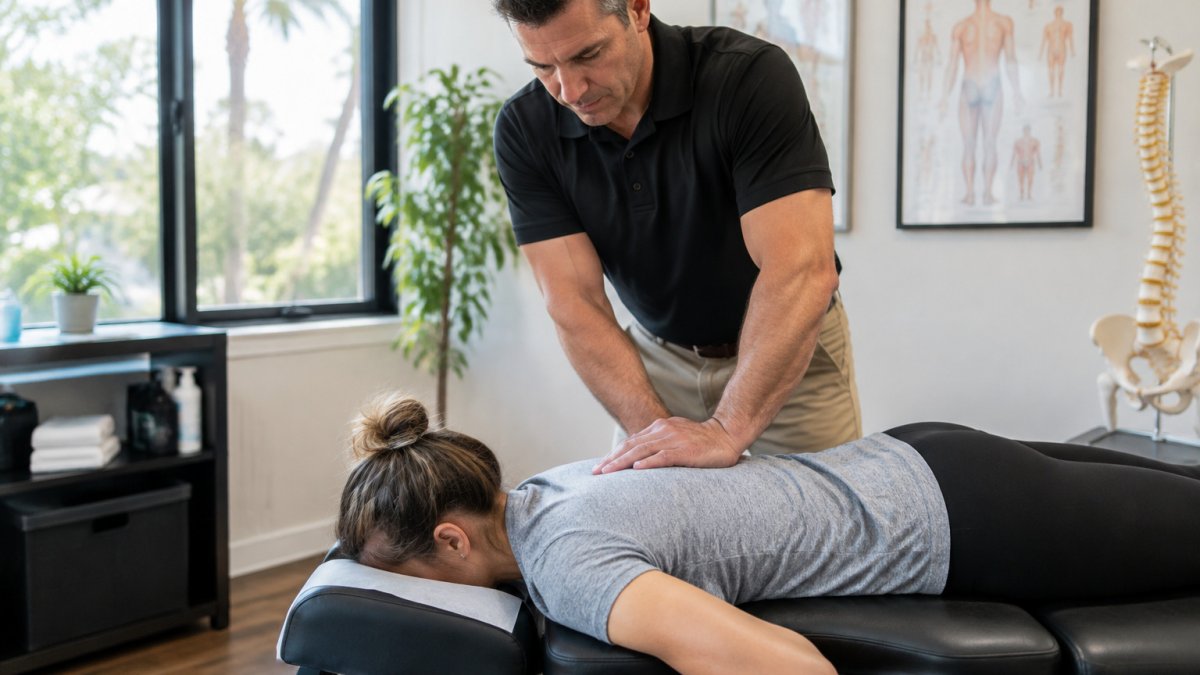
Exercises to complement chiropractic back treatment work best when paired with professional care. Chiropractic adjustments restore alignment; exercises maintain that alignment and build strength around the spine. (Source: National Institutes of Health (NIH) guidelines)
An adjustment resets your foundation, but weak muscles cause your body to slip back into old patterns. Targeted exercises strengthen supporting muscles, improve flexibility, reduce tension, and deliver longer-lasting relief with fewer repeat injuries.
Timing depends on your condition and your chiropractor's recommendation. Some people begin gentle stretches within days; others wait a week or two. The key is matching exercises to your recovery stage.
Safety Screening and When to Stop Exercising
Before starting any exercise program, seek medical clearance if you have severe pain, numbness, tingling, or weakness, these can signal nerve involvement requiring professional evaluation.
Stop exercising immediately if you experience any of these warning signs:
- Sharp, shooting pain that feels different from your normal discomfort
- Pain that radiates down your leg or arm
- Numbness or tingling that worsens during exercise
- Dizziness or loss of balance
- Pain that doesn't improve within 24 hours after exercise
Pain that worsens during movement signals you to stop. Mild discomfort (a gentle burn) is normal; sharp or radiating pain (pinching or catching) is not. Learn the difference.
Start slowly with any new exercise. Do fewer repetitions than you think you can handle. Your body adapts gradually. Pushing too hard too fast leads to setbacks. Most people recover better by being conservative early on.
Core Strengthening Exercises for Back Pain
Your core muscles, deep abdominal muscles, back muscles, and hip stabilizers, create a muscular corset that protects your spine, prevents injuries, and reduces strain during daily activities.
Core strengthening works best with slow, deliberate movements; explosive or jerky exercises aggravate your back. Most people see improvement within 4 to 6 weeks of consistent exercise.

The McGill Big 3 Exercises
The McGill Big 3, developed by spinal biomechanics researcher Dr. Stuart McGill, target core muscles essential for spine stability. They are safe and effective for most people with lower-back pain, avoiding movements that strain the spine.
The three exercises, curl-up, side plank, and bird-dog, target different core areas and create balanced strength. No equipment needed; do them at home on a mat.
Step-by-Step Instructions
Exercise 1: The Curl-Up
- Lie on your back with knees bent and feet flat on the floor
- Place one hand under your lower back for support
- Keep your other hand across your chest
- Lift your head and shoulders slightly off the ground
- Hold for 2-3 seconds
- Lower slowly back down
- Repeat 10 times, then rest
The curl-up lifts only your head and shoulders (not your entire torso) to protect your lower back. Keep your neck neutral; don't pull on your head.
Exercise 2: The Side Plank
- Lie on your side with your elbow directly under your shoulder
- Stack your feet or place one foot in front of the other for stability
- Lift your hips off the ground
- Keep your body in a straight line from head to feet
- Hold for 10-15 seconds
- Lower your hips slowly
- Repeat 5 times on each side
The side plank strengthens lateral muscles that stabilize your spine during rotation. Keep your core tight and hips level throughout.
Exercise 3: The Bird-Dog
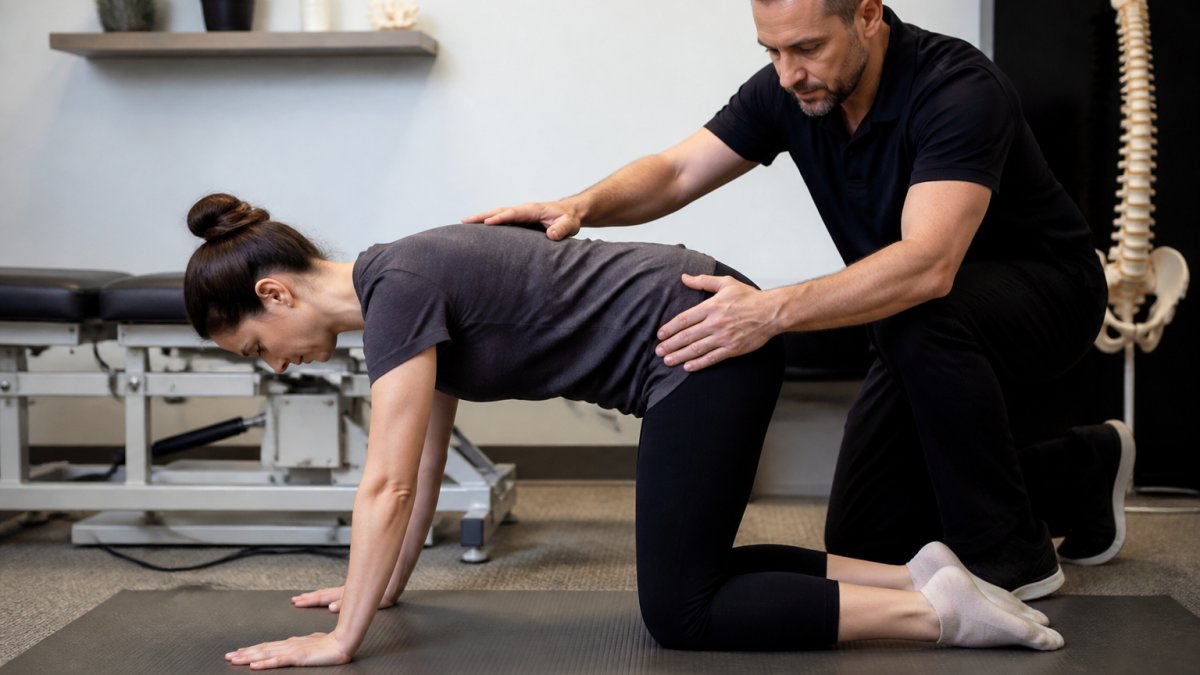
- Start on hands and knees
- Keep your hands under your shoulders and knees under your hips
- Extend one arm forward and the opposite leg backward
- Hold for 2-3 seconds
- Return to starting position
- Repeat on the other side
- Do 10 repetitions per side
The bird-dog improves coordination and core stability while teaching your body to maintain neutral spine during movement, translating to better daily posture. Move slowly and deliberately; avoid arching your lower back.
Gentle Stretches for Lower Back Pain
Gentle stretches reduce tension and improve flexibility by lengthening tight muscles that pull on your spine. Hold each stretch 20-30 seconds; never bounce, as it can cause injury.
Stretch after core exercises or later in the day when muscles are warm. Feel a gentle pull, never sharp pain.
Child's Pose
- Kneel on a mat with your big toes touching
- Sit your hips back toward your heels
- Extend your arms forward and lower your forehead to the mat
- Breathe slowly and deeply
- Hold for 30 seconds
Child's pose stretches your lower back and hips while calming your nervous system, safe for almost everyone.
Supine Hip Hug
- Lie on your back with knees bent
- Pull one knee toward your chest with both hands
- Keep your other foot flat on the floor
- Hold for 30 seconds
- Switch legs and repeat
This stretch targets your glutes and lower back, where tightness often contributes to pain.
Hamstring Stretch
- Lie on your back with knees bent
- Loop a towel around one foot
- Straighten that leg and gently pull the towel toward your chest
- Keep your lower back flat on the floor
- Hold for 30 seconds
- Switch legs
Tight hamstrings pull on your lower back; stretching them relieves spinal strain.
Exercises After Chiropractic Adjustment: Timing and Progression
Timing exercises around chiropractic appointments is crucial: support the adjustment without overwhelming your body or undoing your chiropractor's work.
What to Do on Adjustment Days
On adjustment days, your spine has been mobilized and your nervous system is processing new signals. Most chiropractors recommend light activity only:
- Immediately after adjustment (0-2 hours): Rest. Avoid intense exercise, heavy lifting, or prolonged sitting. Your body is still integrating the adjustment.
- Later the same day (2-24 hours): Gentle stretching is usually safe. Child's pose, supine hip hugs, and light hamstring stretches help your muscles adapt to the new alignment without adding load.
- Strengthening exercises: Wait until the day after your adjustment. Your chiropractor may give you different guidance based on the type of adjustment or your condition, always ask.
An adjustment temporarily increases joint mobility. Immediate heavy strengthening risks re-irritating tissues before they stabilize. Gentle stretching instead encourages muscles to lengthen into the new range of motion your chiropractor created.
Communicating Your Exercise Plan With Your Chiropractor
Show your chiropractor the specific exercises you plan to do, it's essential. They understand your spinal mechanics and injury history and may recommend modifications, exercises to avoid, timing adjustments, or a personalized progression pace.
Your chiropractor may recommend stretches or mobility drills before your appointment to prepare your body or after to reinforce the adjustment, this coordination creates real synergy.
Exercise Frequency and Rest Days
Consistency matters more than intensity. Weeks 1-2: Stretching only, 5-7 days/week; 2-3 chiropractic visits/week. Weeks 3-4: Add strengthening 3 days/week; 1-2 visits/week. Weeks 5-8: Strengthen 3-4 days/week; 1 visit/week. Beyond 8 weeks: Maintain 2-3 days/week strengthening; monthly visits as needed.
Recognizing When to Adjust Your Plan
If an exercise causes pain lasting more than 24 hours or you feel worse after adjustments, tell your chiropractor. They may modify the exercise, delay it, or recommend an alternative that targets the same muscles without aggravation.
If you're progressing well, feeling stronger with fewer symptoms, your chiropractor may clear you to increase intensity or add challenging variations.
Sets, Repetitions, Frequency, and Progression
Your starting point depends on your current pain level, strength, and recovery stage, not a one-size-fits-all prescription.
Choosing Your Starting Point: Pain-Based Modification
Assess your baseline pain and function; your starting point should match your current state.
Moderate to severe pain (6-10): Stretch only, 2-3 stretches daily for 2-3 weeks. Goal: reduce pain and improve mobility before strengthening.
Mild to moderate pain (3-5): Strengthen 1 set × 8-10 reps, 3 days/week; stretch daily. Goal: build foundational strength while managing pain.
Minimal pain or maintenance (0-2): Strengthen 2 sets × 10-12 reps, 3-4 days/week; stretch 3-4 days/week. Goal: build endurance and prevent recurrence.
If unsure which category you're in, start conservatively, it's easier to progress faster than recover from overtraining.
Progressive Dosage Schedule
Each phase lasts 2-3 weeks. Progress only if you complete it without increased pain or setbacks.
Phase 1 (Weeks 1-3): 1 set McGill Big 3, 8-10 reps, 3 days/week; daily stretching. Phase 2 (Weeks 4-6): 2 sets, 10-12 reps, 3 days/week; stretch 5-6 days/week. Phase 3 (Weeks 7-10): 2-3 sets, 12-15 reps, 3-4 days/week; add 1-2 exercises. Phase 4 (Weeks 11+): 2-3 sets, 12-15 reps or 30-45 second holds, 2-3 days/week; maintain long-term.
How to Progress Within a Phase
Progression methods: increase reps by 1-2/week, add a set, increase hold time by 5-10 seconds/week, reduce stability (fewer contact points), or add a 1-2 second pause at the hardest point. Choose one method per phase; gradual progression beats aggressive jumps.
When to Hold Steady (Not Progress)
Stay at your current level if you experience sharp pain, form breaks down, soreness lasts 24-48+ hours, symptoms increase after adjustments, or you're managing a flare-up. Holding steady is smart training, not failure.
Tracking Progress
Log date, exercise, sets, reps, and how you felt. Over 4-6 weeks, patterns emerge showing which exercises feel easier, which side is weaker, and when you're ready to progress. Share logs with your chiropractor to confirm your plan is working.
Common Mistakes to Avoid
Doing Too Much Too Fast: Start small and add volume gradually. Consistency beats intensity for lasting results.
Ignoring Pain Signals: Mild soreness is normal; sharp pain is not. Respect your body's signals.
Skipping Stretches: Both stretching and strengthening are necessary to prevent future problems.
Not Doing Exercises Consistently: Three moderate workouts per week beats one intense session. Regular effort beats sporadic intensity.
Using Poor Form: Ask your chiropractor to check your form. Quality matters more than quantity.
Combining exercises to complement chiropractic back treatment creates a powerful recovery strategy. Adjustments restore alignment.
Frequently Asked Questions
What exercises should I do after a chiropractic adjustment?
After a chiropractic adjustment, gentle mobility work and light stretching are typically recommended first. Avoid intense core strengthening for 24-48 hours; focus on controlled movements like cat-cow stretches, child's pose, and pelvic tilts. Your chiropractor can recommend specific exercises based on your adjustment and condition. Always follow their guidance on timing and intensity to allow your spine time to stabilize after treatment.
How often should I do back exercises while receiving chiropractic care?
Most patients benefit from 3-5 days per week of targeted back exercises during active chiropractic treatment. Core strengthening and stretching routines can be performed on consecutive days, while high-intensity exercises should have at least one rest day between sessions. Your chiropractor can adjust frequency based on your recovery and response to treatment. Consistency matters more than intensity, regular, controlled movement supports the healing process better than sporadic intense workouts.
Are the McGill Big 3 exercises safe to do with chiropractic treatment?
Yes, the McGill Big 3 exercises (curl-ups, bird-dogs, and side planks) are designed to build core stability without excessive spinal stress, making them well-suited to complement chiropractic care. These exercises focus on neutral spine positioning and controlled movement, which aligns with chiropractic principles. Start with modified versions and progress gradually. Discuss the timing with your chiropractor, they may recommend waiting 48 hours after an adjustment before beginning these exercises to allow your spine to stabilize.
What should I do if an exercise causes pain during chiropractic treatment?
Stop the exercise immediately and report the pain to your chiropractor at your next appointment. Sharp, shooting, or radiating pain signals that the movement is not appropriate for your current condition. Mild muscle soreness 24 hours after exercise is normal, but acute pain during the movement is not. Your chiropractor can modify the exercise, suggest an alternative, or adjust your treatment plan. Never push through pain, it's a signal that something needs to change.