 how-to
How to Manage Back Pain at Home Without Surgery in 2026
Table of Contents
- Step 1: Use Cold and Heat Therapy to Calm Acute Flare-Ups
- Step 2: Start Exercises for Lower Back Pain Relief
- Step 3: Set Up a Work-From-Home Space That Supports Your Spine
- Step 4: Use OTC Medication and Sleep Positions to Manage Symptoms
- Step 5: Know When to See a Chiropractor for Back Pain
- Step 6: Explore Chiropractic Care for Chronic Back Pain
- How to Manage Back Pain at Home Without Surgery: Your Daily Action Plan
- Frequently Asked Questions
Last Updated: September 17, 2026
Step 1: Use Cold and Heat Therapy to Calm Acute Flare-Ups
Cold and heat therapy are the fastest noninvasive tools for calming a back pain flare-up at home. Cold reduces inflammation and numbs sharp pain in the first 48 hours after an acute injury or muscle strain. Heat relaxes tight muscles and improves blood flow once the initial swelling has settled.
The rule most people get wrong: pick one, not both at once.
- Cold compress: Apply an ice pack wrapped in a thin towel for 15-20 minutes, every 2-3 hours, during the first two days.
- Heat therapy: Switch to a heating pad or warm shower after 48 hours, or any time pain feels stiff rather than sharp.
- Never apply ice or heat directly to bare skin, and never sleep on a heating pad.
A common mistake is leaving a heating pad on for hours while working. That causes skin irritation and does nothing extra for the muscle underneath. Set a timer.
If you can learn to manage back pain at home without surgery through these small habits, you will rely far less on emergency visits.
MedlinePlus guide to back pain
Step 2: Start Exercises for Lower Back Pain Relief
Gentle movement is the single most effective home treatment for most lower back pain. Bed rest beyond a day or two actually slows recovery and weakens the muscles that support your spine. What most articles get wrong is presenting exercises as a menu rather than a sequence. A cohesive routine you actually do beats a perfect list you skip.
The morning sequence (5 to 7 minutes, before you get out of bed)
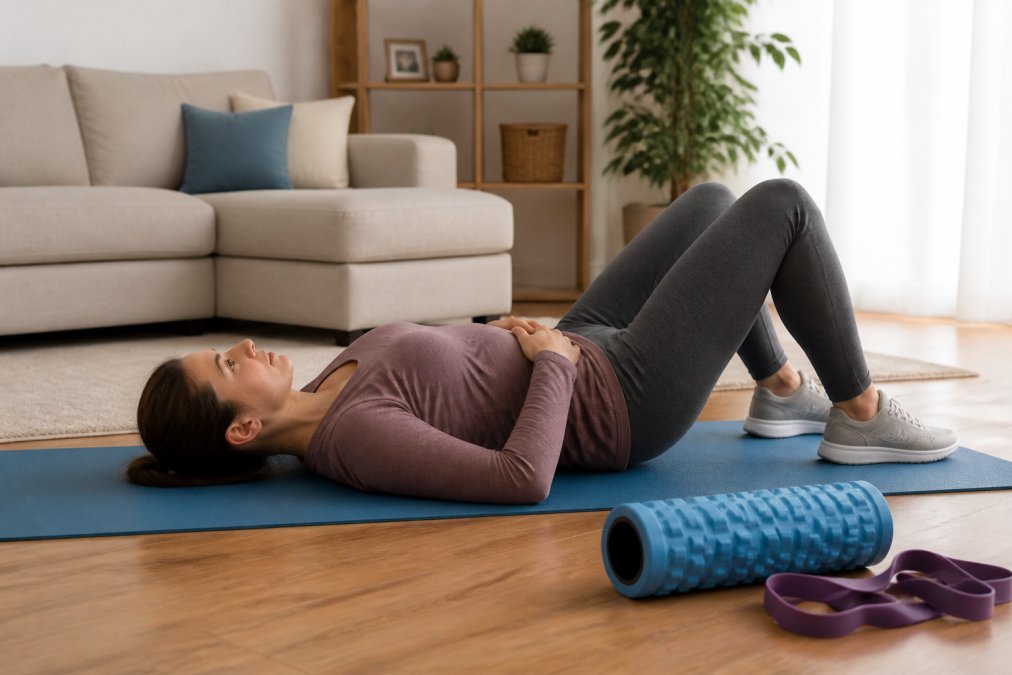
Start on your back with knees bent. This order warms tissue before loading it:
- Pelvic tilts (10 reps): Flatten your lower back against the mattress, hold 5 seconds, release. This is your warm-up, not a stretch.
- Knee-to-chest (20 seconds per side): Pull one knee toward your chest, hold, switch. This decompresses the lower back after a night in one position.
- Supine twist (20 seconds per side): Drop both knees to one side while keeping shoulders flat. This restores rotation before you stand.
Then move to the floor for the loading work:
- Cat-cow (8 to 10 slow reps): On hands and knees, alternate arching and rounding your spine. Move with your breath, not against it.
- Bird-dog (5 seconds per side, 8 reps): Extend the opposite arm and leg while on all fours. Keep hips level; if they rock, shorten the reach.
- Glute bridge (10 reps, 5-second hold): Lie on your back, knees bent, lift hips until shoulders, hips, and knees form a line. This trains the glutes that offload your lower back.
How to progress without flaring up
Start with one round daily for the first week. Add a second round in the afternoon only if the first week did not increase your pain. Progress by adding holds or reps, not by adding load. A common pattern is people jumping to weighted exercises too soon, which turns a muscle strain into a longer recovery.
Stop any movement that sends sharp pain down your leg. A dull ache is normal; shooting pain is not. A common mistake is pushing through nerve pain because "no pain, no gain" sounds motivating. It is not advice for a disc injury.
Choosing the right equipment (the gap most guides skip)
You do not need a gym, but two inexpensive items change how well these exercises work:
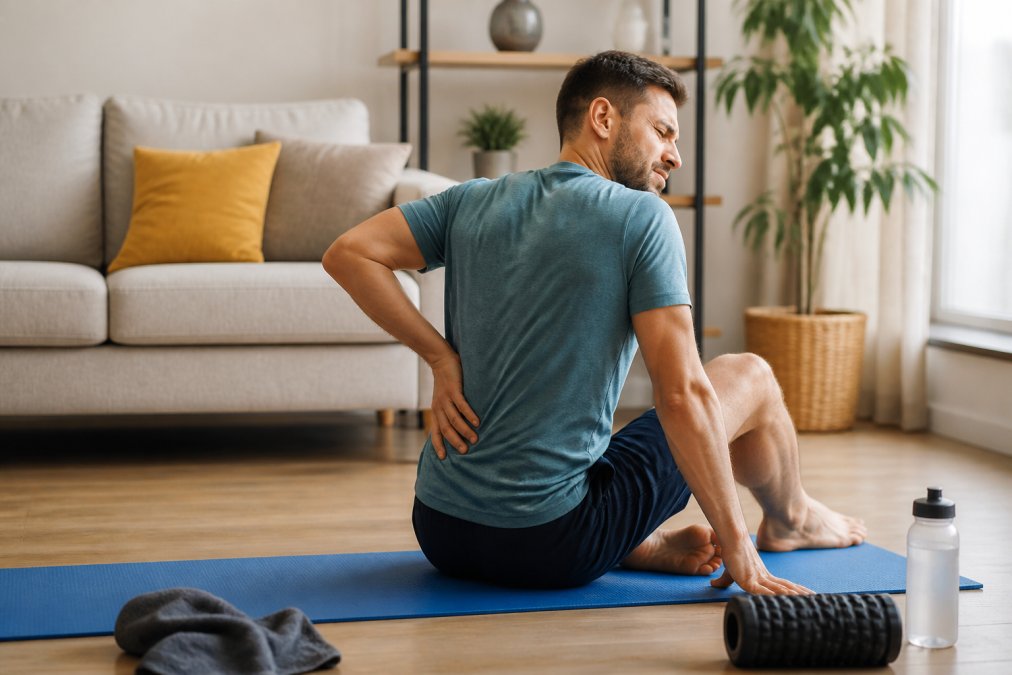
- Foam roller: A medium-density roller is the right starting point. Soft rollers compress too easily to release tight fascia; firm rollers are painful on an inflamed back. Roll the glutes and upper back, not directly over the lumbar spine.
- Exercise mat: A mat at least a half-inch thick protects the tailbone and knees during floor work. A yoga mat alone is often too thin for someone with acute pain.
- Resistance band: A light band lets you add hip and core work later without loading the spine. Skip it entirely for the first two weeks.
Step 3: Set Up a Work-From-Home Space That Supports Your Spine
Your desk setup is either helping your spine or quietly working against it. A sedentary lifestyle combined with poor ergonomics is one of the most common drivers of chronic back pain, and most home offices make it worse.
Fix these four things first:
| Setup Problem | Practical Fix | Why It Matters |
|---|---|---|
| Laptop on a flat desk | Add a stand and external keyboard | Brings screen to eye level |
| Chair with no support | Add a lumbar support cushion | Maintains spinal alignment |
| Feet dangling | Use a footrest or box | Reduces lower back strain |
| Sitting all day | Stand and move every 30 minutes | Prevents stiffness buildup |
Posture correction is not about sitting rigidly. It is about changing position often.
Step 4: Use OTC Medication and Sleep Positions to Manage Symptoms
Over-the-counter anti-inflammatory medication can reduce pain enough to keep moving, which is the real goal. The two most common options are ibuprofen (Advil, Motrin) and naproxen sodium (Aleve). Both are nonsteroidal anti-inflammatory drugs, or NSAIDs, and both work best taken with food or milk to protect the stomach lining.
-
Ibuprofen: The OTC label allows 200 mg every 4 to 6 hours while symptoms last, not to exceed 1,200 mg in 24 hours without a doctor's guidance.
-
Naproxen sodium: The OTC label allows 220 mg every 8 to 12 hours, with the first dose optionally doubled to 440 mg, not to exceed 660 mg in 24 hours for OTC use.
-
Acetaminophen (Tylenol): A non-NSAID option for people who cannot take ibuprofen or naproxen. It relieves pain but does not reduce inflammation, and the OTC ceiling is 3,000 mg per day. Exceeding it risks liver damage, and alcohol use lowers that ceiling further.
-
On your back: Place a pillow under your knees to flatten the lumbar curve. A rolled towel under the small of your back adds support if you have a gap there.
-
On your side: Put a pillow between your knees to keep hips aligned and prevent the top leg from pulling your spine into a twist.
-
On your stomach: Avoid it. It arches the lower back and forces your neck into rotation for hours.
-
Reclined: If flat sleeping hurts, a recliner or an adjustable base set to about 30 degrees often relieves disc-related pressure.
FDA information on pain relievers
Step 5: Know When to See a Chiropractor for Back Pain
Knowing when to see a chiropractor for back pain is about recognizing the point where home care stops helping. If pain lasts more than two weeks, keeps returning, or limits your daily movement, it is time for an evaluation.
See a professional sooner if you notice:
- Pain radiating down your leg with numbness or weakness
- Pain following a fall or auto accident
- Difficulty standing, walking, or controlling your bladder
- Pain that wakes you at night and does not ease with position changes
Step 6: Explore Chiropractic Care for Chronic Back Pain
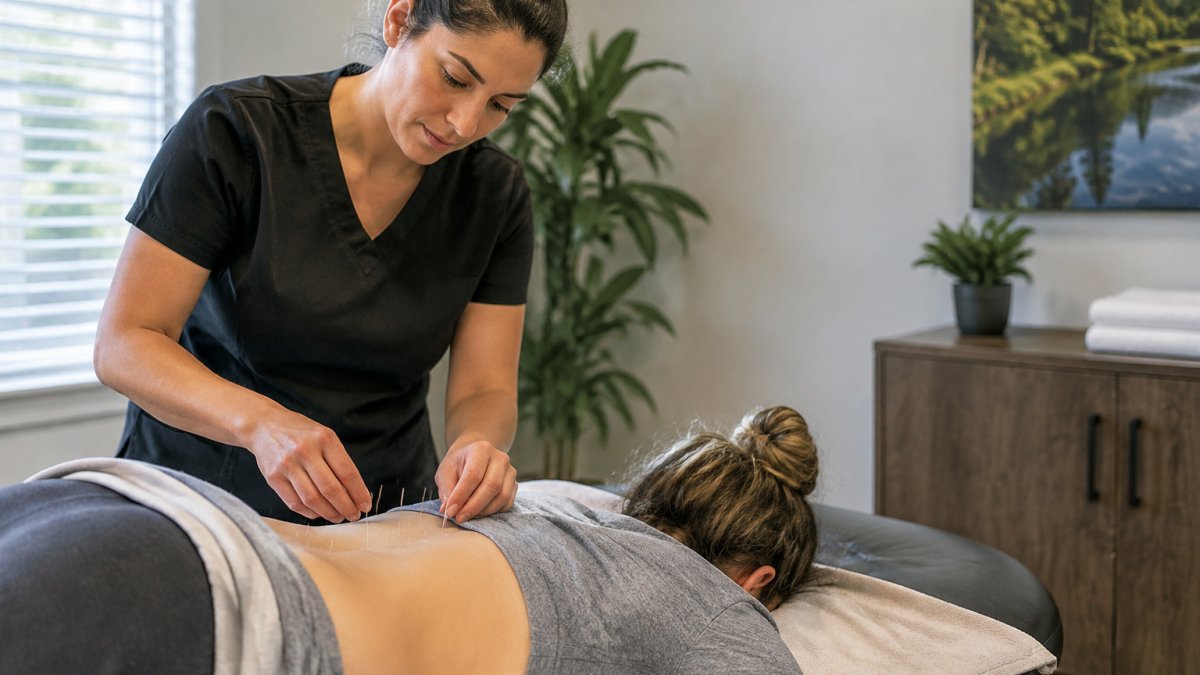
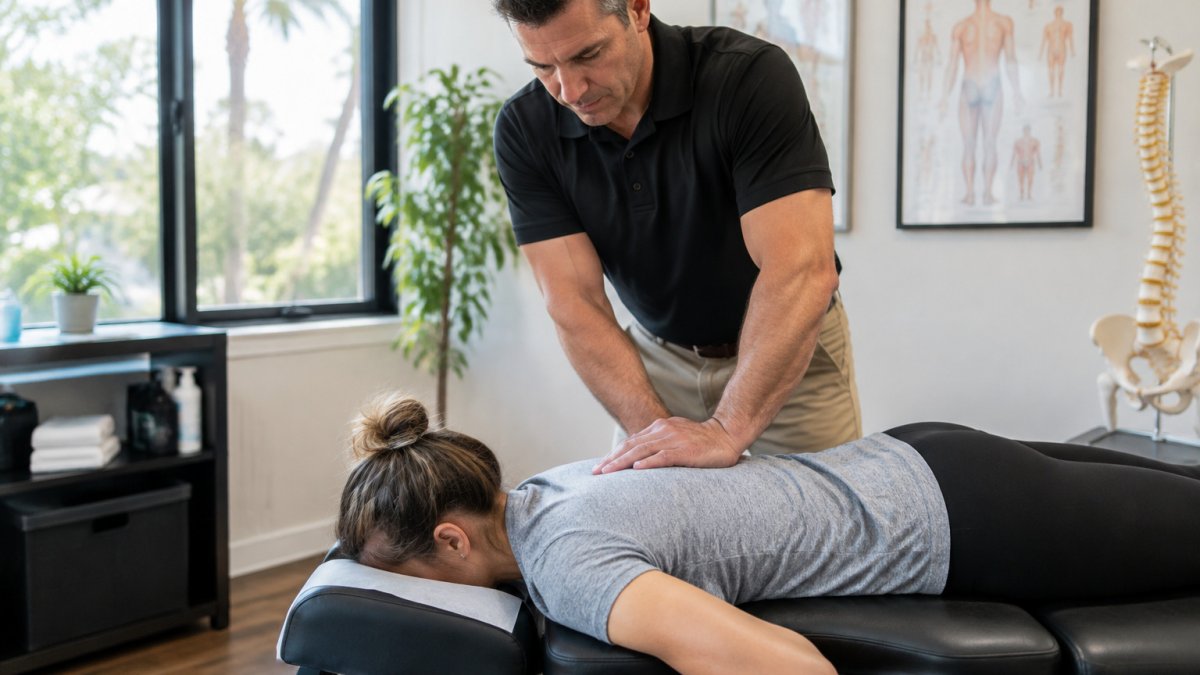
Chiropractic care for chronic back pain focuses on restoring range of motion and spinal alignment through manual therapy rather than medication or surgery. A typical plan combines hands-on adjustment with therapeutic massage, stretching routine guidance, and physical therapy exercises you continue at home.
How to Manage Back Pain at Home Without Surgery: Your Daily Action Plan
- Morning: 5 minutes of pelvic tilts and cat-cow before you get out of bed.
- Mid-morning: Check your desk setup. Stand and walk for two minutes.
- Afternoon: Repeat your stretching routine. Apply heat if muscles feel stiff.
- Evening: Light walk, then knee-to-chest stretches before bed.
- Night: Side or back sleeping position with proper pillow support.
The psychological side of chronic pain is real and often ignored. Constant pain affects sleep, mood, and stress levels, and stress in turn tightens muscles and amplifies pain. Breathing exercises, consistent sleep, and staying socially active are not extras. They are part of pain management.
Frequently Asked Questions
What are the most effective home remedies for immediate back pain relief?
For immediate relief, apply a cold compress for 15-20 minutes several times a day during the first 48 hours to reduce inflammation. After that, switch to heat therapy, such as a warm shower or heating pad, to relax muscles. Over-the-counter NSAIDs like ibuprofen or naproxen can also help. Gentle stretching and avoiding bed rest are key. If pain persists beyond a week, consult a professional.
When should I see a chiropractor for back pain instead of managing it at home?
See a chiropractor if your pain lasts more than two weeks, interferes with daily activities, or is accompanied by numbness, tingling, or weakness in your legs. Also, if you have a history of injury or a condition like sciatica, a chiropractor can provide targeted care. Chiropractic care for chronic back pain focuses on spinal alignment and soft tissue techniques to address the root cause, not just symptoms.
Are there specific exercises that help alleviate chronic back pain?
Yes, exercises for lower back pain relief include pelvic tilts, cat-cow stretches, bird-dog, and partial crunches. These strengthen core muscles and improve flexibility. Aim for 10-15 minutes daily, but stop if pain worsens. A physical therapist or chiropractor can tailor a routine to your condition. Consistency is more important than intensity.
What's the worst thing you can do for back pain?
The worst thing is prolonged bed rest, which weakens muscles and can worsen pain. Other mistakes include ignoring severe symptoms, pushing through sharp pain during exercise, and using poor posture when sitting or lifting. Also, avoid relying solely on medication without addressing underlying causes. A balanced approach with movement, ergonomic adjustments, and professional guidance works best.