 how-to
How to Prevent Recurring Tension Headaches
Table of Contents
- Understanding Tension Headache Triggers
- Ergonomic Tips for Headache Prevention at Work
- Stress Management and Sleep Hygiene
- Tension Headache Relief Exercises and Physical Therapy
- Chiropractic Care for Headaches and Neck Pain
- Tracking Your Headaches and Identifying Patterns
- Frequently Asked Questions
Last Updated: September 26, 2026
Understanding Tension Headache Triggers
[Tension headaches](/blog/chiropractic-adjustment-for-tension-headaches-a-how-to-guide) are the most common type of headache, characterized by a tight, pressing sensation around the head, and learning how to prevent recurring tension headaches starts with understanding what causes them. How to prevent recurring tension headaches starts with understanding what causes them: muscles in the neck, scalp, and jaw tighten in response to stress, poor posture, or prolonged muscle tension.
Common triggers include stress, inadequate sleep, caffeine overuse, dehydration, and prolonged static posture. Many patients don't realize their headaches stem from preventable lifestyle factors rather than a mysterious medical condition.
Identifying your personal triggers is the first step toward prevention. Track when headaches occur, what you were doing, and your emotional state to spot the real cause.
Common tension headache triggers include:
- Prolonged desk work without breaks
- Muscle tension in the neck and shoulders
- Stress and emotional tension
- Poor sleep quality or insufficient sleep
- Caffeine withdrawal or excessive caffeine intake
- Skipped meals or dehydration
- Teeth clenching or jaw tension
Ergonomic Tips for Headache Prevention at Work
Your workspace setup directly impacts whether you develop recurring tension headaches. Poor ergonomics force your neck and shoulders into unnatural positions, creating sustained muscle tension. Digital eye strain is a major, often-overlooked trigger for remote and desk-bound workers.

Monitor and Screen Positioning
Position your monitor directly in front of you at arm's length distance (20-26 inches away), with the top at or slightly below eye level. Forward head posture from looking down is a major culprit behind work-related tension headaches.
Invest in a chair that supports your spine's natural curve, with feet flat on the floor and elbows at 90 degrees when typing. Armrests reduce shoulder tension.
Digital Eye Strain and Blue Light Management
Digital eye strain triggers tension headaches: eye muscle fatigue radiates into the neck and shoulders, compounding postural tension. This intensifies with prolonged screen exposure without breaks.
Implement the 20-20-20 rule: every 20 minutes, look at something 20 feet away for 20 seconds. This prevents the eye-fatigue-to-headache cascade.
Blue light suppresses melatonin and disrupts sleep, increasing headache frequency the next day. Reduce blue light exposure in the two hours before bedtime by enabling your device's blue light filter (Night Shift on Apple, Night Light on Windows) or wearing blue light blocking glasses.
Workspace Ergonomic Adjustments
Ergonomic adjustments for headache prevention:
- Position monitor directly in front of you at arm's length distance (20-26 inches)
- Keep the top of your screen at or slightly below eye level
- Adjust your chair so your thighs are parallel to the floor
- Keep your shoulders relaxed, not hunched toward your ears
- Use a document holder at screen height if you reference papers
- Place your keyboard and mouse at elbow height
- Take a movement break every 30 minutes; use the 20-20-20 rule for eye strain
- Enable blue light filters on all devices, especially in evening hours
- Match screen brightness to your ambient lighting conditions
- Consider a monitor arm or stand to achieve precise eye-level positioning
Taking Strategic Breaks
Stress Management and Sleep Hygiene
Stress triggers muscle tension in the neck and shoulders through the fight-or-flight response. The stress-headache relationship is bidirectional: headaches increase anxiety, which increases tension, creating a self-reinforcing cycle. Breaking this loop requires both immediate stress-reduction techniques and sustained lifestyle changes.
The Stress-Anxiety-Headache Feedback Loop
Immediate Stress Management Techniques
Practical stress management strategies:
- Deep breathing: Inhale for 4 counts, hold for 4, exhale for 4. Perform this 5-10 times when you feel stress rising. This activates your parasympathetic nervous system, counteracting the fight-or-flight response.
- Progressive muscle relaxation: Systematically tense and release muscle groups from your toes to your head, holding each contraction for 5 seconds. This trains your body to recognize and release tension before it becomes a headache.
- Brief outdoor exposure: Even 10 minutes outside in natural light reduces cortisol (your stress hormone) and provides a mental reset.
- Scheduled worry time: If anxiety about future events triggers headaches, designate a specific 15-minute window each day to address worries. Outside that window, redirect anxious thoughts back to the present moment.
Sleep Quality and Circadian Rhythm
Practical sleep hygiene strategies:
- Set a consistent bedtime and wake time, even on weekends (this stabilizes melatonin production)
- Avoid screens one hour before bed (blue light disrupts sleep)
- Keep your bedroom cool (around 65-68°F), dark, and quiet
- Limit caffeine after 2 p.m. (caffeine has a half-life of 5-6 hours)
- Exercise regularly, but not within 3 hours of bedtime
- Try progressive muscle relaxation before sleep (Source: Occupational Safety and Health Administration (OSHA) guidelines on ergonomics)
Nutritional Support for Headache Prevention
Tension Headache Relief Exercises and Physical Therapy
Physical therapy and specific exercises address the underlying muscle tension causing recurring tension headaches. Neck and shoulder stretches should be gentle, held 20-30 seconds, and performed multiple times daily. Strengthening exercises stabilize your neck and shoulders, reducing fatigue and tension.
Effective tension headache relief exercises:
- Neck stretches: Gently tilt your head toward each shoulder, holding for 30 seconds
- Shoulder rolls: Slowly roll shoulders backward 10 times, then forward 10 times
- Chin tucks: Pull your chin straight back (not down) to engage neck stabilizers
- Upper back strengthening: Rows or resistance band pulls, 2-3 times per week
- Posture holds: Stand against a wall with your head, shoulders, and back touching it for 1 minute
Chiropractic Care for Headaches and Neck Pain
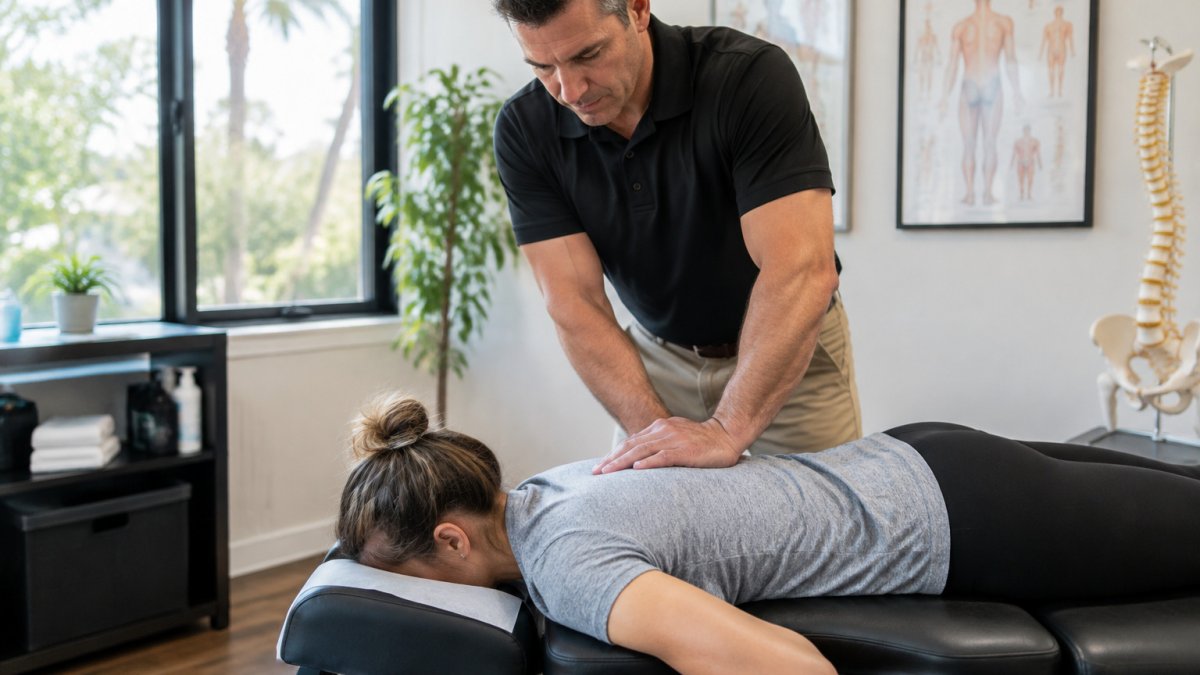
Chiropractic care addresses structural and postural factors underlying recurring tension headaches. Misalignments in the cervical spine can restrict movement and trigger muscle tension that radiates into the head. Dr. David Zamikoff and the team at Natural Healing Arts Medical specialize in relieving tension headaches through targeted chiropractic adjustments and comprehensive care.
Chiropractic treatment for tension headaches typically includes:
- Cervical spine adjustments to restore normal movement and alignment
- Soft tissue therapy to release tight muscles in the neck and shoulders
- Postural assessment and correction guidance
- Ergonomic advice tailored to your specific situation
- Exercise recommendations to support long-term prevention
Tracking Your Headaches and Identifying Patterns
A headache diary transforms vague patterns into actionable data. Without tracking, you're guessing about what triggers your headaches. With tracking, you know.
Headache tracking template:
| Element | What to Record | Purpose |
|---|---|---|
| Date & Time | When the headache started | Identify time-of-day patterns |
| Duration | How long it lasted | Track severity trends |
| Intensity | Rate 1-10 scale | Measure treatment effectiveness |
| Trigger | What you were doing | Identify preventable situations |
| Sleep | Hours and quality | Connect sleep to headaches |
| Stress Level | 1-10 rating | Link stress to headache frequency |
| Caffeine | Cups or timing | Spot caffeine-related patterns |
| Meals | Timing and content | Identify hunger-related triggers |
Frequently Asked Questions
What are the most common triggers for recurring tension headaches?
Recurring tension headaches often stem from poor posture, muscle tension in the neck and shoulders, stress, inadequate sleep, and prolonged screen time. Digital eye strain from blue light exposure can also contribute. Identifying your specific triggers through a headache diary helps you address the root cause rather than just treating symptoms. Common patterns include headaches that worsen during stressful work periods or after long hours at a desk.
Can chiropractic care help prevent tension headaches?
Yes. Chiropractic care addresses tension headaches by correcting posture misalignment, reducing cervical spine tension, and relieving pericranial muscle tenderness. Adjustments and manual therapy can restore proper alignment and reduce the muscle tightness that triggers headaches. Many patients experience fewer headaches and reduced intensity after receiving consistent chiropractic treatment combined with ergonomic and lifestyle changes.
What ergonomic adjustments work best for preventing headaches?
Position your monitor at eye level about an arm's length away, keep your shoulders relaxed, and maintain your feet flat on the floor. Your chair should support the natural curve of your spine. Take regular breaks every 30 minutes to stretch your neck and shoulders. Avoid cradling your phone between your ear and shoulder. These adjustments reduce strain on the cervical spine and neck muscles, which are primary sources of tension-type headaches.
How can I track tension headaches to find patterns?
Keep a headache diary noting the date, time, duration, intensity (1-10 scale), location, and what you were doing when the headache started. Record stress levels, sleep quality, meals, and any activities that preceded the headache. Over 2-4 weeks, patterns emerge revealing your triggers. This information helps you and your healthcare provider develop targeted prevention strategies and is essential for determining whether lifestyle changes, physical therapy, or chiropractic care is most effective for your situation.