 how-to
How to Reduce Knee Inflammation Naturally: 7 Proven Steps
Table of Contents
- What Triggers Knee Inflammation and Why It Matters
- The RICE Method: Rest, Ice, Compression, Elevation
- Anti-Inflammatory Diet for Joint Pain: What to Eat and Avoid
- Low-Impact Exercises for Knee Osteoarthritis
- Natural Topical Remedies and Herbal Supplements
- Ergonomic Adjustments and Post-Exercise Recovery
- When to Seek Professional Care for Knee Pain
- Conclusion
- Frequently Asked Questions
Last Updated: September 12, 2026
What Triggers Knee Inflammation and Why It Matters
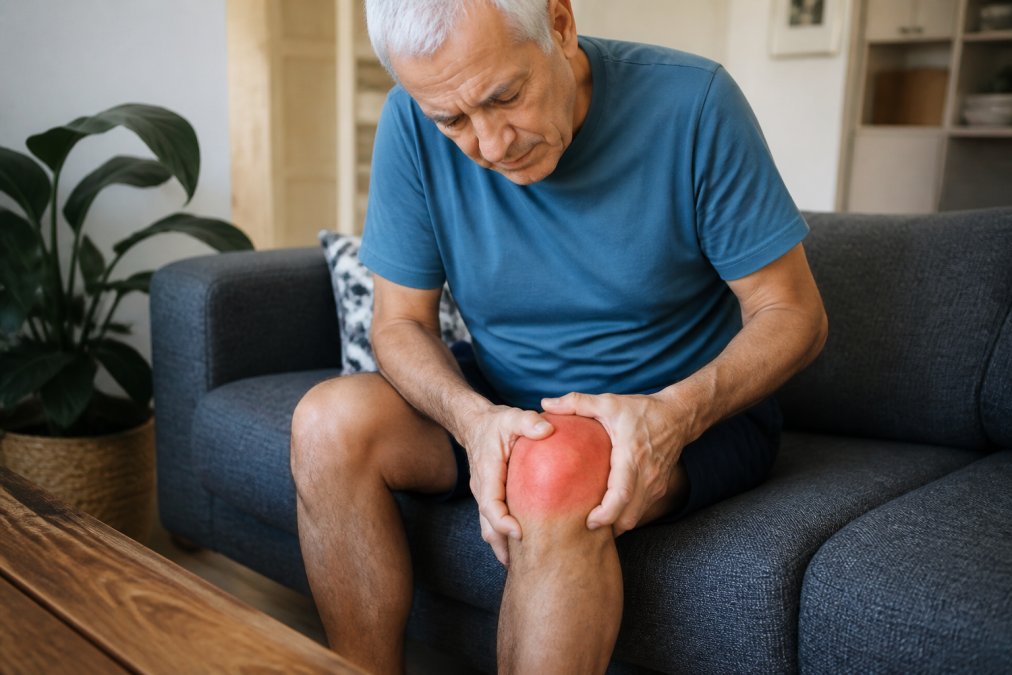
Knee inflammation is the body's immune response to injury, irritation, or cartilage wear, producing swelling, warmth, stiffness, and pain that limit how well the joint moves. Learning how to reduce knee inflammation naturally starts with understanding what set it off. At Natural Healing Arts Medical, we see this constantly: a joint that hurts is usually a joint that is swollen, and the swelling keeps the pain going.
The knee is a synovial joint, wrapped in a capsule lined with synovial membrane that produces lubricating synovial fluid. When that membrane is irritated, it produces excess fluid, joint effusion, the puffiness that makes the knee feel tight and heavy.
Common triggers include:
- Repetitive strain from running, squatting, or climbing stairs
- Osteoarthritis, where worn cartilage lets bone rub against bone
- Acute injury to the cartilage, ligament, or meniscus
- Prolonged sitting or standing that restricts circulation
- Excess weight, which multiplies the load the joint carries with every step
Why does this matter beyond discomfort? Swelling inhibits the quadriceps from firing properly, and a weak quadriceps means less support for the joint, which means more irritation. That cycle is why "just rest it" rarely resolves chronic knee pain.
The RICE Method: Rest, Ice, Compression, Elevation
RICE stands for Rest, Ice, Compression, and Elevation, a four-part protocol for calming acute swelling in the first 48 hours after an injury or flare-up. Each element does a specific job, and skipping one weakens the others.
Rest means unloading the joint, not total immobility. Use crutches or a cane if weight-bearing hurts. Ice narrows blood vessels to reduce edema. Compression with an elastic bandage limits fluid accumulation. Elevation above heart level lets gravity drain excess fluid away from the knee.
| Step | What It Does | How Long | Frequency |
|---|---|---|---|
| Rest | Removes load from the joint | Until pain eases | Continuous during flare-up |
| Ice | Reduces swelling and numbs pain | 15-20 minutes | Every 2-3 hours |
| Compression | Limits fluid buildup | During waking hours | Reapply after icing |
| Elevation | Drains fluid via gravity | 20-30 minutes | Several times daily |
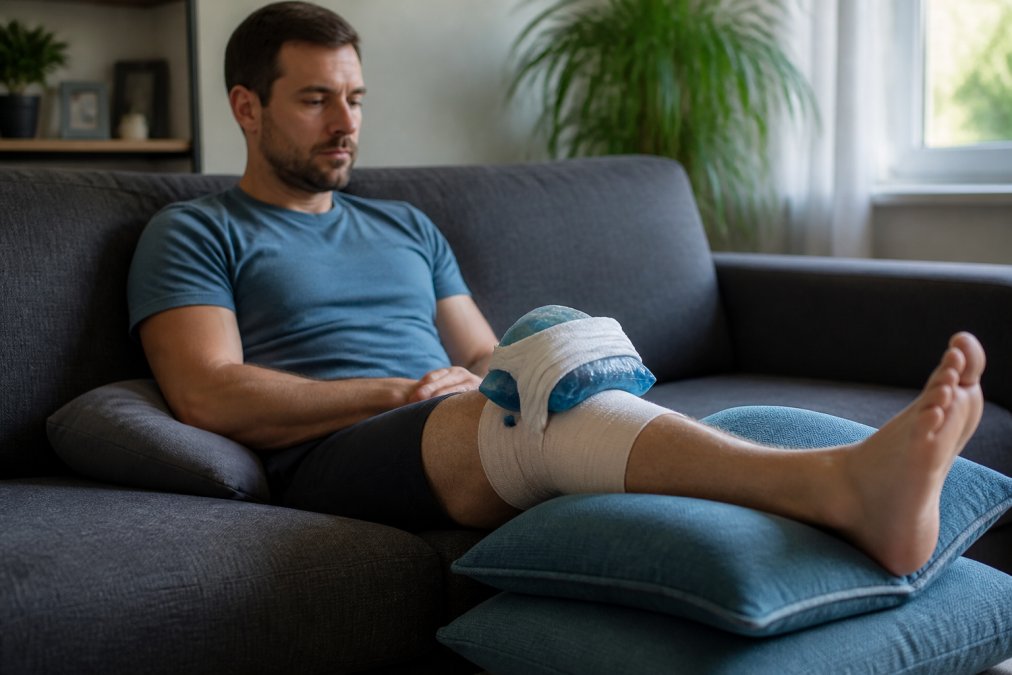
How to Apply Cold Therapy Correctly
Cold therapy works best in short, frequent sessions. Wrap the ice pack in a thin towel; never place ice directly on skin. Fifteen to twenty minutes is the sweet spot, beyond that, you risk tissue damage and reflex blood-vessel dilation that can worsen swelling.
The American Academy of Orthopaedic Surgeons guidance on knee conditioning notes that cold application is most effective in the first 48 hours after injury, after which the focus should shift toward restoring motion.
When to Use Heat vs. Cold
Heat and cold do opposite things. Cold therapy (cryotherapy) constricts vessels and reduces acute swelling. Heat therapy (thermotherapy) dilates vessels and relaxes tight muscles, helping chronic stiffness but worsening fresh swelling.
Use cold for a hot, puffy, recently injured knee. Use heat for a stiff, achy knee with no active swelling, typically before stretching or activity.
Anti-Inflammatory Diet for Joint Pain: What to Eat and Avoid
An anti-inflammatory diet for joint pain reduces the chronic, low-grade inflammation that keeps arthritic knees sore, working alongside physical treatment rather than replacing it. No single food fixes a joint, but your overall eating pattern shifts the inflammatory environment over weeks and months.
The mechanism explains why results are slow. Chronic knee inflammation is driven in part by cytokines, signaling proteins such as interleukin-6 and tumor necrosis factor-alpha, circulating in the bloodstream. What you eat changes the fats your body uses to build those signals. Diets heavy in omega-6 fats (refined seed oils, processed foods) push the system toward inflammation, while omega-3 fats from fish and flax support the resolution pathways that switch inflammation off. You are not "flushing" inflammation out with one meal; you are changing the raw material your body uses to build its inflammatory response.
Foods worth building meals around:
- Fatty fish such as salmon, sardines, and mackerel, aim for two servings per week
- Colorful vegetables and leafy greens, at least half of every plate
- Berries, cherries, and other dark fruits, a handful daily
- Olive oil, nuts, and seeds, swap these for butter and refined oils where you can
- Whole grains and legumes, these replace refined white flour products
Foods that tend to work against you:
- Refined sugar and sugary drinks
- Processed meats and fried foods
- Refined white flour products
- Excessive alcohol
Key Nutrients: Omega-3s, Turmeric, and Ginger
Omega-3 fatty acids, found in fatty fish and flaxseed, support the body's own inflammation-resolution pathways. Turmeric contains curcumin, studied for anti-inflammatory properties, and ginger contains gingerols with similar activity. These are supportive measures, not replacements for medical care, and anyone on blood-thinning medication should check with a clinician before adding high-dose turmeric or ginger.
A practical note on timing: dietary changes typically take four to twelve weeks before most people notice a difference in joint comfort, because you are changing cell membrane composition and circulating signaling molecules, not treating a symptom directly. That is why the diet works best stacked with the other interventions here. If you change nothing else, the highest-yield swap is replacing refined seed oils and processed snacks with fatty fish, olive oil, and produce, that shift moves the omega-6-to-omega-3 ratio toward a calmer joint.
Low-Impact Exercises for Knee Osteoarthritis
Low-impact exercises for knee osteoarthritis keep the joint moving without the pounding that accelerates cartilage wear. Movement is medicine: synovial fluid circulates only when the joint moves, and cartilage has no blood supply, so it depends on that circulation for nutrition.
The two muscle groups that matter most are the quadriceps and hamstrings. Strong quads absorb load before it reaches the joint; strong hamstrings stabilize the knee from behind. Most people with knee osteoarthritis weaken the quad from disuse, the joint loses support, and the cycle repeats.
Gentle Stretching and Strengthening Routines
A simple daily routine you can do at home:
- Straight-leg raise: Lie on your back, tighten the thigh, lift the straight leg about 12 inches, hold 5 seconds, lower slowly. 10 reps per leg.
- Heel slide: Lying down, slide the heel toward your buttocks as far as comfortable, then straighten. 10 reps.
- Hamstring stretch: Sit with the leg extended, hinge forward from the hips until you feel a gentle pull. Hold 30 seconds.
- Wall sit: Back against a wall, slide down to a comfortable bend, hold 20-30 seconds.
- Calf stretch: Hands on a wall, step one foot back, press the heel down. Hold 30 seconds per side.
Stop any movement that produces sharp pain. Mild discomfort at the end of range is normal; a stabbing sensation is not.
Post-Exercise Recovery: The Step Most Guides Skip
If you are trying to stay active despite knee issues, what you do in the 24 hours after a workout matters as much as the workout itself, this is where active people either protect their joint or undo their progress.
The first 20 minutes after activity. If the knee feels warm or looks puffy, apply cold for 10 to 15 minutes, not the full 20 you would use for an acute injury, because you are managing a mild reactive swell, not trauma. If the knee feels stiff but not swollen, skip the ice and do two minutes of gentle range-of-motion (heel slides or seated leg extensions) to redistribute synovial fluid.
The next 24 to 48 hours. Give the quadriceps time before loading them hard again. A common pattern is a hard leg day, then a day of walking or swimming, then another leg day. The recovery day is not a rest day, light movement keeps fluid circulating, but it is a day without heavy resistance.
Elevation timing. Elevate above heart level for 15 to 20 minutes after activity if there is any swelling. Elevation works by gravity, so it does nothing if the knee is at or below hip height.
What to avoid after a workout. Deep squatting to stretch, prolonged kneeling, and hot showers or heating pads on a knee that is already warm. Heat after exercise increases blood flow to tissue that is already inflamed and typically makes the next morning worse.
Track your response. The clearest signal your routine is working is how the knee feels the morning after, not during the workout. If it is stiffer and puffier the next day, reduce volume by about a third for the following session and rebuild. If it feels the same or better, you have found a load the joint tolerates.
Natural Topical Remedies and Herbal Supplements
Topical remedies and herbal supplements can ease knee inflammation, but they work at the margins and carry real contraindications, this is where people get hurt.
What people commonly use:
- Essential oils such as peppermint and eucalyptus, diluted in a carrier oil, for a cooling sensation
- Arnica gel for localized soreness
- Capsaicin cream for pain signaling
- Turmeric and ginger as oral supplements
- Boswellia and willow bark in some traditional preparations
The contraindications matter as much as the remedies:
- Capsaicin must never contact eyes or broken skin, and it can irritate sensitive skin badly
- Essential oils require dilution; undiluted application can cause chemical burns
- Turmeric, ginger, and willow bark can interact with blood thinners and should be cleared with a physician
- Anyone with a bleeding disorder, or preparing for surgery, should avoid willow bark and high-dose turmeric entirely
Ergonomic Adjustments and Post-Exercise Recovery
Daily ergonomics quietly determine how much load your knees absorb, and small changes add up over a working week, often the difference between a joint that stays calm and one that flares every Monday.
Adjustments worth making:
- Raise your chair so hips sit level with or slightly above knees
- Use a footrest if your feet dangle
- Stand from chairs by pushing through the arms, not the knees
- Avoid deep squats and kneeling on hard floors
- Use a cushion or kneeling pad for floor-level tasks
- Take a movement break every 30 minutes
Post-exercise recovery follows the same logic: cool the joint if it swelled, elevate it, and give the quadriceps 24 to 48 hours before loading them hard again. Recovery is not a rest day; it is when stressed tissue adapts.
When to Seek Professional Care for Knee Pain
Professional care is warranted when swelling persists beyond a few days, the knee locks or gives way, you cannot bear weight, or pain disrupts sleep, signs home measures alone will not resolve the underlying problem.
Red flags that need prompt evaluation:
- Sudden severe swelling within hours of an injury
- Inability to bear weight or straighten the knee
- Fever, redness, and warmth together, which can signal infection
- Deformity after trauma
- Numbness or tingling below the knee
For chronic knee osteoarthritis that has not responded to conservative care, surgery-free options exist. Natural Healing Arts Medical, led by Dr. David Zamikoff, provides viscosupplementation using Hyalgan, a treatment designed to restore long-lasting pain relief and freedom of movement without surgery. The practice pairs this with physical therapy during the treatment program, accepts most health insurance and Medicare, and offers flexible payment plans.
That combination matters. Injections without rehabilitation tend to produce short-lived relief, because the joint still lacks the muscular support to protect it. The Centers for Disease Control and Prevention overview of arthritis management consistently points to physical activity and weight management as core components of osteoarthritis care, and National Institute of Arthritis and Musculoskeletal and Skin Diseases resources on knee health notes that maintaining a healthy weight reduces stress on weight-bearing joints.
Conclusion
Chronic knee inflammation rarely resolves with a single intervention. It responds to a stack: calming the acute flare, changing what you eat, rebuilding supporting muscles, adjusting daily movement, and knowing when to bring in a professional.
That is the approach at Natural Healing Arts Medical. From surgery-free viscosupplementation with Hyalgan for knee osteoarthritis to physical therapy woven into the treatment program, the goal is restoring movement rather than managing decline. Most insurance and Medicare are accepted, and flexible payment plans are available.
Schedule an appointment with Natural Healing Arts Medical and take the first step toward a knee that moves without negotiating.
Frequently Asked Questions
Is walking good for inflamed knees?
Walking can help reduce knee inflammation when done in moderation and on flat surfaces. It promotes circulation and synovial fluid movement, which supports joint health. Start with short, gentle walks and stop if pain increases. For chronic conditions like osteoarthritis, low-impact exercises for knee osteoarthritis, such as walking, are often recommended. However, during an acute flare-up, rest and cold therapy may be more appropriate. Always listen to your body and consult a professional if pain persists.
What is the strongest natural anti-inflammatory for joints?
Turmeric, ginger, and omega-3 fatty acids from fish oil are among the most studied natural anti-inflammatories for joint pain. Turmeric contains curcumin, which may help reduce swelling and stiffness. Ginger has similar properties. An anti-inflammatory diet for joint pain emphasizes these along with leafy greens, berries, and fatty fish. While no single remedy works for everyone, combining several can support inflammation reduction. Check with your doctor before starting supplements, especially if you take blood thinners.
Does knee inflammation ever go away?
Knee inflammation can resolve, especially after an acute injury, with proper rest, ice, and gradual return to activity. For chronic conditions like osteoarthritis, inflammation may come and go. Managing it involves lifestyle changes, natural remedies, and sometimes medical treatment. If swelling persists for more than a few days or is accompanied by severe pain, redness, or warmth, see a healthcare provider. They can assess for joint effusion, ligament damage, or other issues requiring professional care.
When should you see a doctor for knee swelling?
Seek professional care if swelling is severe, comes on suddenly, or is accompanied by fever, redness, or inability to bear weight. Also see a doctor if home remedies don't improve symptoms within a few days or if you have a history of arthritis. A healthcare provider can check for joint effusion, order imaging, and recommend treatments like physical therapy or viscosupplementation. Early intervention can prevent further joint damage and restore mobility.