 how-to
7 Steps to Integrate Physical Therapy and Chiropractic for Knees
Last Updated: November 4, 2026
Quick Summary
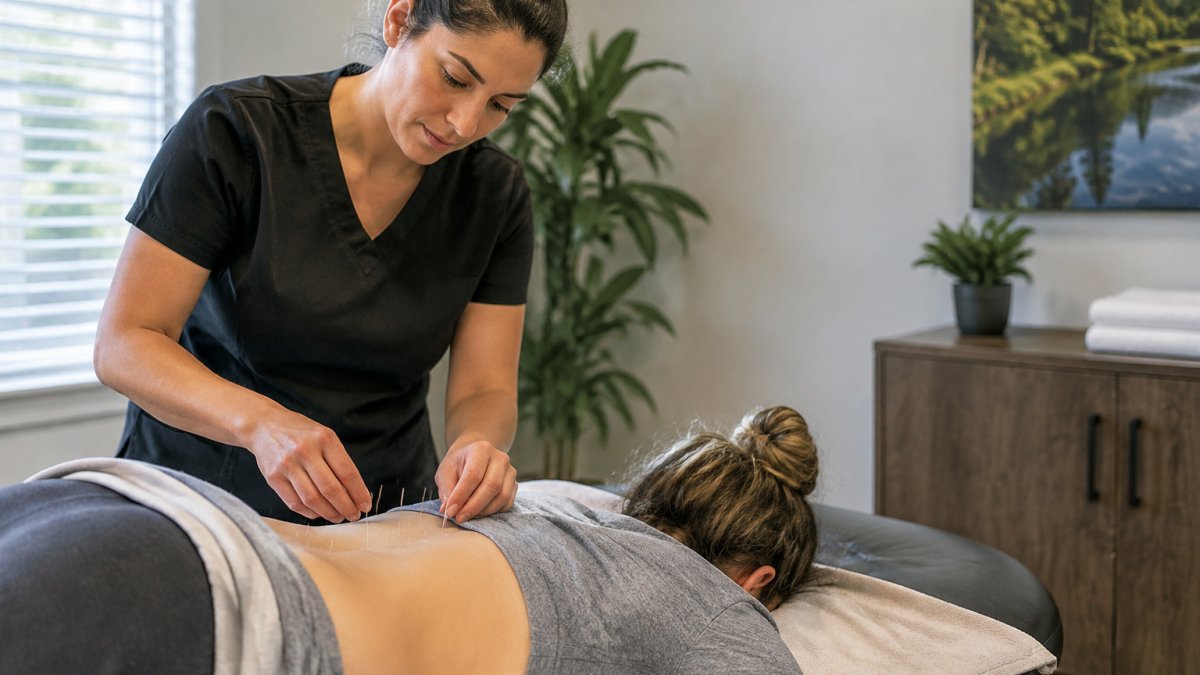
Integrating physical therapy and chiropractic for knees pairs joint alignment and mobility work with muscle strengthening, and chiropractic for knees addresses the joint while physical therapy builds the stability around it. Combined care works because knee pain is rarely just a knee problem, so both disciplines cover each other's blind spots.
- Start with a clear diagnosis, including imaging when needed, before combining chiropractic and physical therapy.
- Stage care in phases: mobility first in weeks 1-3, then loading in weeks 2-8.
- Manual therapy tends to produce short-term relief while exercise produces longer-term function gains.
- Schedule the chiropractic visit first in the week and physical therapy 24-48 hours later.
- Track walking tolerance, range of motion, stairs, swelling, and function weekly to judge progress.
Table of Contents
- Why Physical Therapy and Chiropractic Care Together Works for Knees
- Step 1: Get a Clear Diagnosis Before You Combine Treatments
- Step 2: Map Out Knee Osteoarthritis Treatment Options
- Step 3: Build a Knee Rehabilitation Exercises Plan
- Step 4: Coordinate Physical Therapy and Chiropractic Appointments
- Step 5: Track Measurable Progress and Adjust the Plan
- Step 6: Know the Safety Limits and When to Refer Out
- Book Your Knee Care Consultation
- Frequently Asked Questions
Why Physical Therapy and Chiropractic Care Together Works for Knees
Integrating physical therapy and chiropractic for knees pairs two approaches that fix different parts of the same problem, and chiropractic for knees is one of them. Chiropractic care focuses on joint alignment and movement. Physical therapy builds the muscle strength that helps keep the joint stable. (Source: the prevalence of knee pain in the United States)
A knee that hurts changes how you walk. That change can strain your hip, back, and other knee. Treating only the painful spot may leave the rest of the chain untreated.
Here is the core idea: combined care works because knee pain is rarely just a knee problem. The knee joint depends on the muscles around it, the alignment above and below it, and the way you move.
The two disciplines cover each other's blind spots:
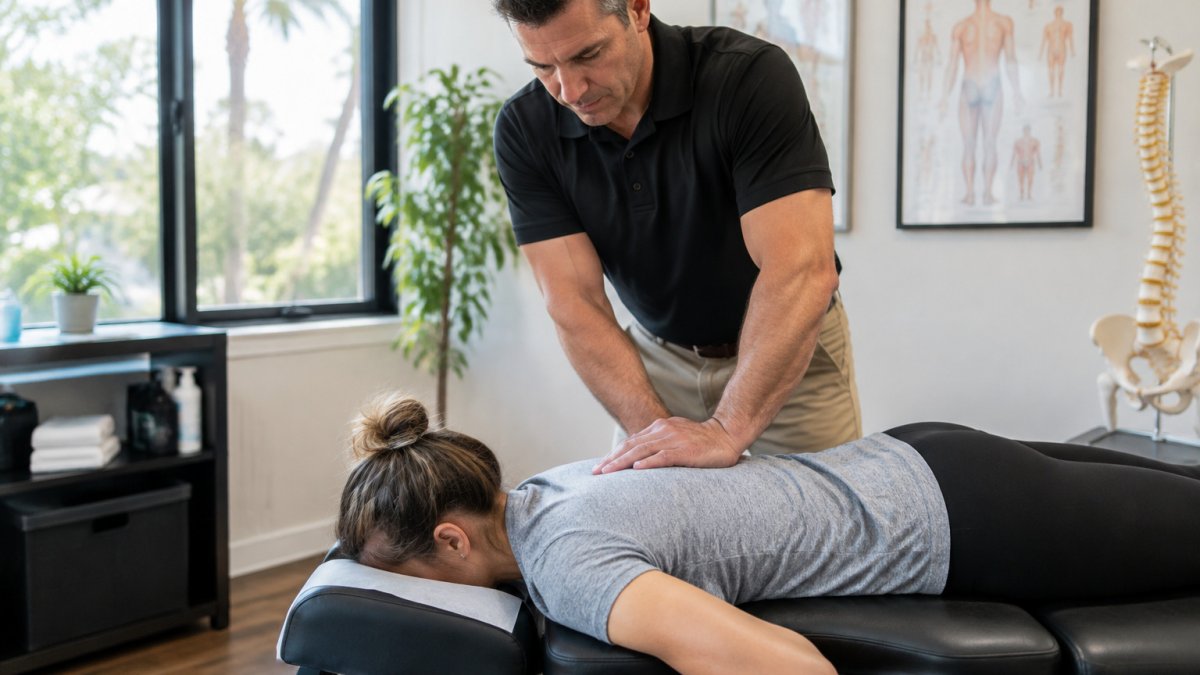
- Chiropractic adjustments restore joint alignment and mobility
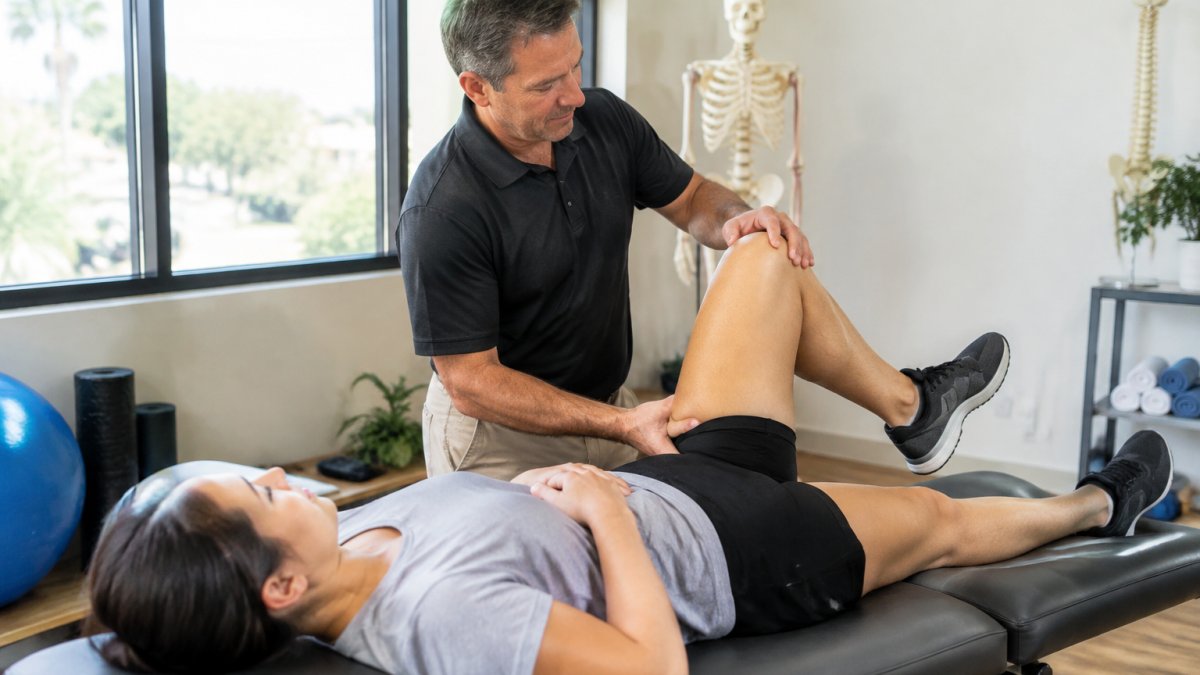
- Therapeutic exercise builds muscle strength and stability
- Manual therapy and soft-tissue treatment ease muscle tension
- Movement pattern coaching reduces compensatory strain
Results depend on your condition and how consistently you follow the plan. If you want a fuller picture of what relief can look like step by step, our guide on knee pain relief walks through the whole approach.
Step 1: Get a Clear Diagnosis Before You Combine Treatments
Start with a proper diagnosis. Combining chiropractic and physical therapy without knowing what is wrong in your knee wastes time and money, and it can make some conditions worse.
The knee joint can fail in several ways, and each one responds differently to combined care. This is where most general articles stop at a list. The useful part is knowing how the mix of chiropractic and physical therapy shifts by condition:
- Osteoarthritis: Manual therapy and joint mobilization can improve short-term mobility, but the durable gains come from loading the joint with structured strength work. The chiropractic role is usually periodic, not weekly forever. Expect the exercise plan to carry most of the long-term load.
- Patellofemoral pain (pain around the kneecap): This is driven more by tracking and hip and quad control than by joint alignment in the spine. Chiropractic care may address hip or ankle restrictions feeding the problem, while physical therapy leads with hip abductor and quad strengthening and movement retraining. Manipulation of the knee itself is rarely the main lever here.
- Meniscus tears: Degenerative tears often respond to a graded strengthening and motion program. Acute tears with locking or giving way need an orthopedic opinion before anyone manipulates the knee. Chiropractic care can help with the surrounding hip and low-back compensation, but it does not repair a torn meniscus.
- Ligament injuries: Stability is the issue. Physical therapy drives rehabilitation with progressive loading and balance work. Chiropractic care may help restore motion in a stiff, post-injury knee once cleared, but it does not substitute for ligament rehabilitation or, in some cases, surgery.
- Post-surgical recovery: Follow the surgeon's protocol first. Chiropractic and physical therapy can both help with motion and surrounding joint restrictions once the surgeon clears it, but the timeline is set by the procedure, not by the providers.
- Referred pain from the hip or back: If the knee exam is clean but the pain persists, the source may be above. This is where chiropractic assessment of the hip, pelvis, and low back earns its place, and where treating only the knee fails.
A clear diagnosis usually means a physical exam, your symptom history, and imaging when needed. Ask for copies of any X-ray or MRI reports.
Watch out: skipping imaging when your knee locks, gives way, or swells suddenly can let a structural injury go untreated while you chase adjustments that will not fix it.
Step 2: Map Out Knee Osteoarthritis Treatment Options
Once you know the diagnosis, map your knee osteoarthritis treatment options before committing to a plan.
For mild to moderate cases, common options include:
- Manual therapy and chiropractic adjustment for joint mobility
- A structured therapeutic exercise program
- Weight management support to reduce load on the joint
- Bracing or shoe inserts for alignment
- Viscosupplementation, an injection treatment that adds lubrication to the joint
What most descriptions of these options leave out is the sequence. In practice, the chiropractic and physical therapy components are not delivered as a parallel menu. They are staged:
- Assessment phase (visit 1-2): Both disciplines review the same imaging and exam findings. The chiropractor assesses hip, pelvis, and low-back mechanics that change how the knee loads. The physical therapist measures range of motion, strength, and walking tolerance to set a baseline.
- Mobility phase (weeks 1-3): Manual therapy and joint mobilization come first, because a stiff knee is hard to strengthen through a limited range. The goal is enough motion to tolerate exercise, not perfect alignment.
- Loading phase (weeks 2-8, overlapping): Therapeutic exercise becomes the center of the plan. Manual therapy tapers to periodic tune-ups rather than every visit. This is the phase that produces lasting change, and it is the one most people quit too early.
- Reassessment (every 4-6 weeks): Both providers compare notes on the same measures, walking distance, range of motion, stair tolerance, and decide whether to continue, change, or refer out.
That staging matters because it sets realistic expectations. Manual therapy tends to produce short-term pain relief; exercise produces the longer-term function gains. A plan that leans on adjustments alone tends to plateau.
Natural Healing Arts Medical offers a surgery-free option for knee osteoarthritis using viscosupplementation with Hyalgan. It is not right for everyone, and a clinician can advise whether it fits your situation.
If you want to understand how chiropractic fits into this picture in more detail, read our guide on chiropractic care for knee osteoarthritis. For the longer view on slowing joint damage, see how to prevent knee osteoarthritis progression.
Step 3: Build a Knee Rehabilitation Exercises Plan
A knee rehabilitation exercises plan is the engine of recovery. Adjustments restore motion; exercise makes that motion last. Without strengthening, the joint tends to drift back to where it started.
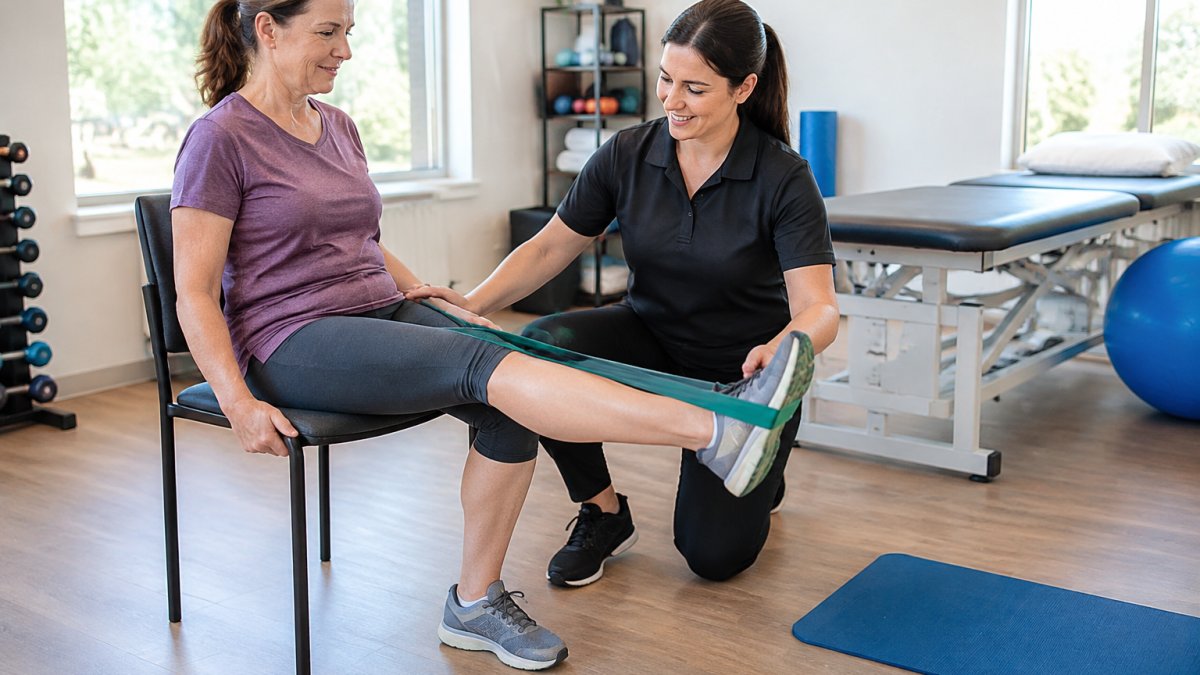
A practical weekly structure looks like this:
| Exercise Type | Example | Frequency | Purpose |
|---|---|---|---|
| Quad sets | Tighten thigh, press knee down | Daily, 2 sets | Wake up the quad |
| Straight-leg raises | Lift leg while lying down | 3x per week | Build quad strength |
| Seated knee extensions | Extend leg with band resistance | 3x per week | Improve range of motion |
| Mini squats | Shallow squat to a chair | 2-3x per week | Functional strength |
| Balance drills | Single-leg stand | Daily | Joint stability |
Progress slowly. Add resistance or reps only when the current level feels easy and pain stays calm. Our article on strengthening exercises for knee stability and support gives you a deeper set of options to build from.
Step 4: Coordinate Physical Therapy and Chiropractic Appointments
Coordinating physical therapy and chiropractic appointments is where most plans quietly fall apart. Two providers working on the same knee without talking to each other can duplicate work or, worse, work against each other.
A simple sequence that works well:
- Chiropractic visit first in the week, to restore alignment and ease tension
- Physical therapy 24-48 hours later, when the joint moves more freely
- Share notes between providers after each phase
- Reassess every few weeks and adjust the order if needed
Ask both providers to send progress notes to each other. Most will. If yours will not, that is a signal to reconsider the fit.
Step 5: Track Measurable Progress and Adjust the Plan
Track measurable progress or you are guessing. Pain scales alone tell you how you feel today, not whether the plan is working.
Track these markers:
- Walking tolerance: how far you can walk before pain starts
- Range of motion: how far the knee bends and straightens
- Stair test: how stairs feel going up and down
- Swelling: measure around the knee at the same spot weekly
- Function: can you get up from a chair without using your arms?
Write these down weekly. If walking tolerance and range of motion improve over four to six weeks, the plan is working. If nothing changes, the plan needs adjusting, not more of the same.
Step 6: Know the Safety Limits and When to Refer Out
Combined care is generally low-risk, but it is not right for every knee at every moment. Knowing the limits protects you.
Stop and get medical review if you notice:
- Sudden severe swelling or the knee feeling hot
- A knee that locks or gives way
- Fever with knee pain
- Pain that keeps getting worse despite treatment
- Numbness or loss of feeling below the knee
Some people should not receive certain manual treatments without clearance first, including those with severe osteoporosis, active infection, or a recent fracture. Tell both providers about blood thinners, prior surgeries, and any new symptoms.
A good care team refers out when something does not fit. That is a sign of quality, not weakness.
Book Your Knee Care Consultation
Knee pain that limits your walking, your stairs, or your mood deserves a real plan, not another round of guesswork.
Natural Healing Arts Medical, led by Dr. David Zamikoff, combines chiropractic care with physical therapy during your treatment program.
Before you commit, it helps to know what to look for in a provider. Our guide on how to choose a reputable chiropractor covers the questions worth asking.
Get started with Natural Healing Arts Medical and build a knee care plan that restores your freedom of movement.
Frequently Asked Questions
Is it okay to do physical therapy and chiropractic together?
Yes, for many people the two approaches work well side by side. Chiropractic adjustments focus on joint alignment and mobility, while physical therapy builds muscle strength and movement patterns around the knee. The key is coordination: your chiropractor and physical therapist should know about each other's plan so the treatments reinforce rather than contradict each other. Ask both providers to share notes, and schedule sessions so you are not doing intense strengthening right after an adjustment. A coordinated plan is safer and usually more effective than stacking treatments without communication.
Can a chiropractor do anything for your knees?
A chiropractor can help with knee pain by addressing joint alignment, reducing muscle tension, and improving range of motion in the knee and surrounding structures. Chiropractic for knees often includes manual therapy and soft-tissue treatment alongside adjustments to the hips and spine, since compensatory strain above and below the knee affects how it moves. Chiropractic care does not replace strengthening work, which is why combining it with physical therapy gives better results. For knee osteoarthritis, ask about surgery-free options such as viscosupplementation and whether they fit your case.
How should physical therapy and chiropractic appointments be coordinated?
Start by telling both providers about your full treatment plan, including visit frequency and home exercises. Many patients alternate visits, for example a chiropractic adjustment early in the week and physical therapy later, so each session has time to settle. Keep a shared log of symptoms, walking tolerance, and stiffness so both providers see the same picture. If one provider recommends a new exercise or manual therapy technique, mention it at your next appointment with the other. Coordinating physical therapy and chiropractic appointments this way prevents overloading the knee and keeps your goals aligned.
What exercises can support knee pain rehabilitation?
Knee rehabilitation exercises usually start with low-impact strengthening for the quadriceps, hamstrings, and glutes, such as seated leg extensions, straight-leg raises, and glute bridges. Range of motion work like heel slides and gentle cycling helps restore flexibility. As strength improves, your therapist may add step-ups, wall sits, and balance drills to build stability and better movement patterns. Progression should be gradual, and you should stop any exercise that causes sharp pain or swelling. A physical therapist can tailor the sequence to your condition, whether that is osteoarthritis, an injury, or recovery after a flare-up.