 how-to
7 Lifestyle Changes to Reduce Chronic Back Inflammation
Last Updated: October 25, 2026
Quick Summary
Lifestyle changes to reduce chronic back inflammation include an anti-inflammatory diet rich in fatty fish, vegetables, and olive oil, consistent strength and low-impact exercise, better sleep positions, daily stress management, and ergonomic posture habits. These changes target the inputs that keep the immune system on alert, calming the tissue environment around the spine.
- Fill half your plate with vegetables at lunch and dinner, and use olive oil as your main cooking fat.
- Aim for two servings of fatty fish per week, such as salmon, sardines, or mackerel.
- Strength train 2-3 days per week, stretch daily for 5-10 minutes, and walk most days.
- Sleep on your back with a pillow under the knees or on your side with one between the knees.
- Stand and move every 30-45 minutes, and never twist while lifting.
Table of Contents
- Why Back Inflammation Persists and What Lifestyle Can Change
- Build an Anti-Inflammatory Diet for Back Pain
- Exercises for Chronic Back Pain: Strength, Stretching, and Walking
- Sleep Positions for Back Pain and Better Sleep Quality
- Stress Management for Chronic Pain: The Overlooked Lever
- Daily Posture, Ergonomics, and Safe Lifting Habits
- When to Seek Medical Care and Warning Signs to Watch
- Planning Your First Visit at Natural Healing Arts Medical
- Frequently Asked Questions
Why Back Inflammation Persists and What Lifestyle Can Change
Chronic back inflammation is a persistent immune response in the spine and surrounding tissues that keeps pain signals firing long after an injury should have healed. At Natural Healing Arts Medical, we see this pattern often: the original strain healed, but the inflammation never fully switched off.
Most people treat back pain as a mechanical problem. Rest it, brace it, wait. But persistent low back pain often has an inflammatory driver that rest alone won't fix.
Chronic Inflammation Versus Other Causes of Back Pain
Not all back pain is inflammatory. This is the distinction most guides skip, and it changes everything about what will help you.
Chronic inflammation is a low-grade, ongoing immune response.
Other causes behave differently:
- Mechanical strain: sharp, tied to a specific movement, improves with rest
- Disc injury: radiating pain, numbness, or weakness down a leg
- Joint degeneration: pain that worsens with loading and improves with movement
Why does this matter? An anti-inflammatory diet won't fix a herniated disc. But it can calm the tissue environment around it. Knowing which driver you're dealing with tells you where to focus first.
Build an Anti-Inflammatory Diet for Back Pain
An anti-inflammatory diet for back pain is a eating pattern built around whole foods that lower immune activation: fatty fish, vegetables, fruit, nuts, olive oil, and whole grains, while cutting processed foods, refined sugar, and excess alcohol. It's not a strict protocol.
The practical version looks like this:
- Fill half your plate with vegetables at lunch and dinner
- Swap refined grains for whole grains most days
- Use olive oil as your main cooking fat
Watch out: extreme elimination diets often backfire. People cut too much, feel worse, and quit. Start with swaps, not bans.
Omega-3s, Fatty Fish, and Foods That Support Pain Relief
Omega-3 fatty acids are the most studied dietary lever for inflammation. Fatty fish like salmon, sardines, and mackerel are the richest sources. The NIH Office of Dietary Supplements omega-3 fact sheet outlines intake guidance and food sources.
Aim for two servings of fatty fish per week. If fish isn't your thing, walnuts, flaxseed, and chia seeds offer plant-based omega-3s, though in a less efficient form.
Other foods worth adding:
- Berries: blueberries, strawberries, raspberries
- Leafy greens: spinach, kale, arugula
- Turmeric and ginger: natural anti-inflammatory compounds
For a deeper, back-specific meal plan, see our guide to an anti-inflammatory diet for back pain relief.
Exercises for Chronic Back Pain: Strength, Stretching, and Walking
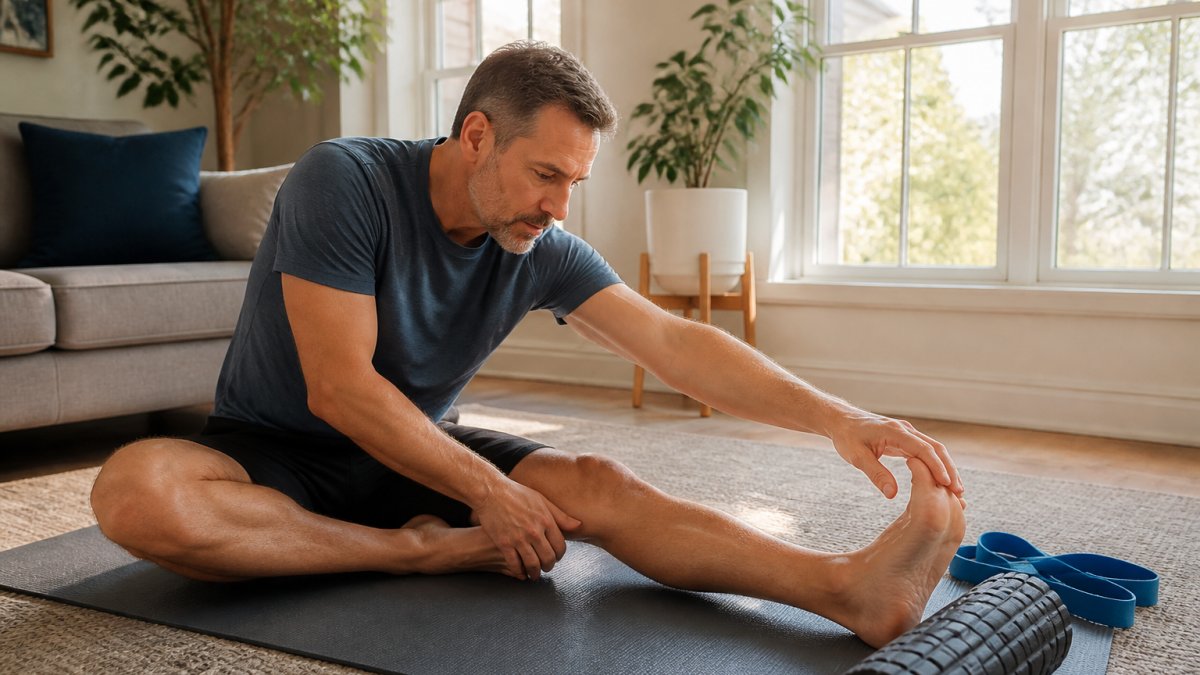
Exercises for chronic back pain work best when they combine three things: strength, flexibility, and low-impact movement. Skip one and progress stalls. The American College of Sports Medicine physical activity guidelines support regular movement for managing chronic pain, but the guidelines are general. The practical challenge is adapting movement to your pain pattern, your current ability, and the activities that reliably trigger a flare.
A simple weekly structure:
- Strength training: 2-3 days per week, focused on core and hip muscles
- Stretching: daily, 5-10 minutes, gentle and held
- Walking: most days, starting with 10-15 minutes
The biggest mistake is doing too much too soon. Start smaller than you think you should.
Matching Movement to Your Pain Pattern and Ability
Not every exercise fits every back. Use your pain pattern as a guide rather than pushing through a standard routine.
- If bending forward or sitting worsens your pain: prioritize extension-friendly movement such as walking, glute bridges, and gentle standing back extensions. Avoid repeated toe touches and deep forward folds early on.
- If standing or walking worsens your pain: favor supported positions such as lying on your back with knees bent, seated marching, and short bouts of walking broken into smaller chunks. A recumbent bike may be more comfortable than a treadmill.
- If pain radiates down a leg: keep ranges small and avoid loaded twisting. Bird dogs and dead bugs with slow, controlled movement are usually better tolerated than heavy lifts.
A common pattern is that people tolerate movement better in the morning after a warm shower, or in the afternoon after sitting less. Notice your own window and place exercise there.
Low-Impact Aerobic Activity and Core Muscle Training
Low-impact aerobic activity keeps blood flowing to healing tissue without jarring the spine. Walking, swimming, cycling, and elliptical work all qualify. The goal is not intensity; it is consistency. Two 10-minute walks often beat one 20-minute walk you skip because of pain.
Core training is the other half. A strong core supports the spine and reduces strain on inflamed tissue. Focus on:
- Dead bugs: lying on your back, alternate arm and leg extensions
- Bird dogs: on hands and knees, extend opposite arm and leg
- Glute bridges: lying on your back, lift hips
Keep each set short and stop before fatigue changes your form. Two or three sets of 5-10 slow repetitions are enough at first.
How to Progress Without Flaring
Use a simple rule: increase one thing at a time, and only after a week of consistent, tolerable activity.
Track progress beyond pain intensity. Note:
- How long you can walk before needing to sit
- How many hours you sleep without waking from pain
- Whether you can put on socks or get out of a chair with less effort
These measures often improve before pain scores do, and they give you a clearer signal that the plan is working.
If you're already in treatment, our guide to exercises that complement chiropractic back treatment shows how to pair movement with care.
A simple weekly structure keeps strength, flexibility, and low-impact movement in balance.
| Component | Frequency | Starting point |
|---|---|---|
| Strength training | 2-3 days per week | Core and hip muscles |
| Stretching | Daily | 5-10 minutes, gentle and held |
| Walking | Most days | 10-15 minutes |
Sleep Positions for Back Pain and Better Sleep Quality
Sleep positions for back pain matter because poor sleep fuels inflammation. The body repairs tissue during deep sleep, and short or fragmented sleep is associated with higher levels of inflammatory markers. Cut sleep short and the tissue environment stays irritated. That is why sleep is not a passive habit; it is an active part of managing chronic back inflammation.
The best positions for most people with low back pain:
- On your back with a pillow under the knees
- On your side with a pillow between the knees
- Fetal position for disc-related pain
Avoid sleeping on your stomach. It arches the spine and strains the neck.
Why These Positions Help and How to Troubleshoot Them
The goal of any sleep position is to keep the spine in a neutral line and reduce pressure on inflamed tissue.
- Back sleeping distributes weight evenly. A pillow under the knees takes tension off the lower back. If you wake with stiffness, try a thinner pillow under the head so the neck is not pushed forward.
- Side sleeping keeps the spine stacked. A pillow between the knees prevents the top leg from rolling forward and twisting the lower back. Choose a pillow thick enough to fill the gap between your knees; too thin and the hip drops.
- Fetal position opens the space between vertebrae and can ease disc-related pain. Keep the curl gentle rather than tight.
Common problems and fixes:
- Waking with a stiff back: check mattress support. A mattress that sags in the middle lets the hips sink and the spine curve. Medium-firm is a reasonable starting point, but comfort and support matter more than a label.
- Pillow too high or too low: your chin should be roughly parallel to the floor when lying on your back. On your side, the pillow should fill the space between your ear and shoulder.
- Pain when rolling over: place a pillow between the knees and bend them slightly before turning. Move the whole body as a unit rather than twisting at the waist.
Building a Sleep Routine That Supports Recovery
Position is only one part of sleep quality. A consistent routine helps the nervous system settle and supports the deep sleep during which tissue repair occurs.
- Keep the same bedtime and wake time, including weekends, as closely as you can.
- Keep the room dark, quiet, and cool.
- Stop screens and bright light 30-60 minutes before bed.
Track sleep quality along with pain. A simple note of how many times you woke and how rested you felt can show whether changes are helping before pain scores shift.
For detailed guidance, read our article on the best sleeping positions for lower back pain.
Stress Management for Chronic Pain: The Overlooked Lever
Stress management for chronic pain is the lever most people ignore. Stress raises cortisol and inflammatory markers, which makes back pain worse. Then poor sleep follows, and the cycle tightens.
What actually helps:
- Daily breathing practice: 5 minutes of slow, deep breathing
- Gentle movement: walking or stretching to discharge tension
- Consistent sleep schedule: same bedtime, same wake time
The CDC guidance on managing stress offers practical, evidence-based techniques. Pick one and do it daily rather than trying five and quitting. To understand exactly how stress worsens back pain, see our article on how stress impacts chronic back pain levels.
Daily Posture, Ergonomics, and Safe Lifting Habits
Posture and ergonomics reduce the daily load on an inflamed spine. Small adjustments repeated all day add up.
Quick fixes that help:
- Screen at eye level: raises the monitor, not your chin
- Feet flat on the floor: adjust chair height
- Elbows at 90 degrees: keyboard and mouse within easy reach
Safe lifting matters too. Bend at the hips and knees, keep the load close, and never twist while lifting. If you sit for work, our guide to the best ergonomic office chairs for back pain covers what to look for.
When to Seek Medical Care and Warning Signs to Watch
Some back pain needs professional care, not self-management. Knowing the warning signs protects you.
Seek care promptly if you notice:
- Loss of bladder or bowel control
- Numbness in the groin or saddle area
- Weakness in one or both legs
These signs can point to conditions that need urgent evaluation. For most people, though, chronic back inflammation responds well to consistent lifestyle changes plus guided care.
Planning Your First Visit at Natural Healing Arts Medical
Lifestyle changes work best alongside professional guidance. At Natural Healing Arts Medical, led by Dr.
We also offer surgery-free treatment for knee osteoarthritis using viscosupplementation with Hyalgan, for patients whose mobility is limited by joint pain alongside their back issues.
If you've tried physical therapy and felt stuck, or you're wary after a past chiropractic experience that didn't listen, we start with a real conversation about what's driving your pain.
Frequently Asked Questions
What lifestyle changes can help reduce chronic back inflammation?
The most effective changes combine regular movement, an anti-inflammatory diet, and better sleep. Aim for 150 minutes of low-impact aerobic activity weekly, add strength training for core and back muscles two days a week, and include fatty fish such as salmon two to three times weekly. Quitting smoking, managing weight, and practicing stress management for chronic pain also help. These habits work best alongside professional care, so discuss your plan with a qualified clinician before starting.
Can an anti-inflammatory diet for back pain really make a difference?
Diet supports but does not cure chronic back inflammation. An anti-inflammatory diet for back pain emphasizes vegetables, fruit, whole grains, olive oil, nuts, and omega-3 fatty acids from fatty fish like salmon. Reducing processed foods, refined sugar, and excess alcohol may lower overall inflammation. Expect gradual change over weeks to months, not overnight relief. Pair dietary changes with exercise, sleep improvements, and medical guidance for the best results.
What exercises for chronic back pain are safe to start with?
Walking, swimming, and stationary cycling are low-impact options most people tolerate well. Gentle stretching and core stabilization exercises, such as pelvic tilts and bird-dogs, build support for the spine without heavy loading. Start slowly, expect mild soreness, and stop any movement that causes sharp or radiating pain. A physical therapist or chiropractor can tailor exercises for chronic back pain to your ability and pain triggers.
When should I see a healthcare professional about persistent back pain?
See a clinician if pain lasts more than a few weeks, keeps returning, or limits daily activity. Seek prompt care for warning signs such as leg weakness, numbness in the groin area, loss of bladder or bowel control, fever, unexplained weight loss, or pain after a fall or accident. These may signal a condition needing urgent evaluation. For ongoing chronic back inflammation, a consultation can clarify causes and build a self-management plan.
Chronic back inflammation rarely resolves on its own. It takes consistent daily choices, the right movement, and care that addresses your specific pattern. Natural Healing Arts Medical offers chiropractic care, physical therapy during treatment, and insurance-friendly options to help you move better and hurt less. Get started with Natural Healing Arts Medical and schedule an appointment to build a plan around your back.