 how-to
Managing Knee Pain While Sleeping at Night
Last Updated: October 23, 2026
Quick Summary
Managing knee pain while sleeping at night starts with supporting the joint: sleep on your back with a pillow under the knee or on your side with a pillow between the knees, keeping the knee slightly bent. Gentle stretches before bed, heat for stiffness, and correct pillow placement reduce night pain.
- A pillow under the knee should leave a gap about the height of your hand.
- Do a five-minute stretch routine about 30 minutes before bed.
- Apply heat to the knee for 15 to 20 minutes before sleep.
- Use an ice pack wrapped in cloth for 10 to 15 minutes, never directly on skin.
- See a doctor if night pain lasts more than a few weeks or keeps waking you.
Table of Contents
- Why Knee Pain Wakes You Up and How to Manage It
- The Best Sleeping Position for Knee Pain
- Pillow Placement for Knee Pain While Sleeping
- Nighttime Knee Pain Exercises and Stretches
- Heat, Cold, and Supportive Bedding
- Safe Use of Over-the-Counter Pain Relief
- When to See a Doctor for Knee Pain
- A Bedtime Plan for Recurring Nighttime Knee Pain
- Frequently Asked Questions
Why Knee Pain Wakes You Up and How to Manage It
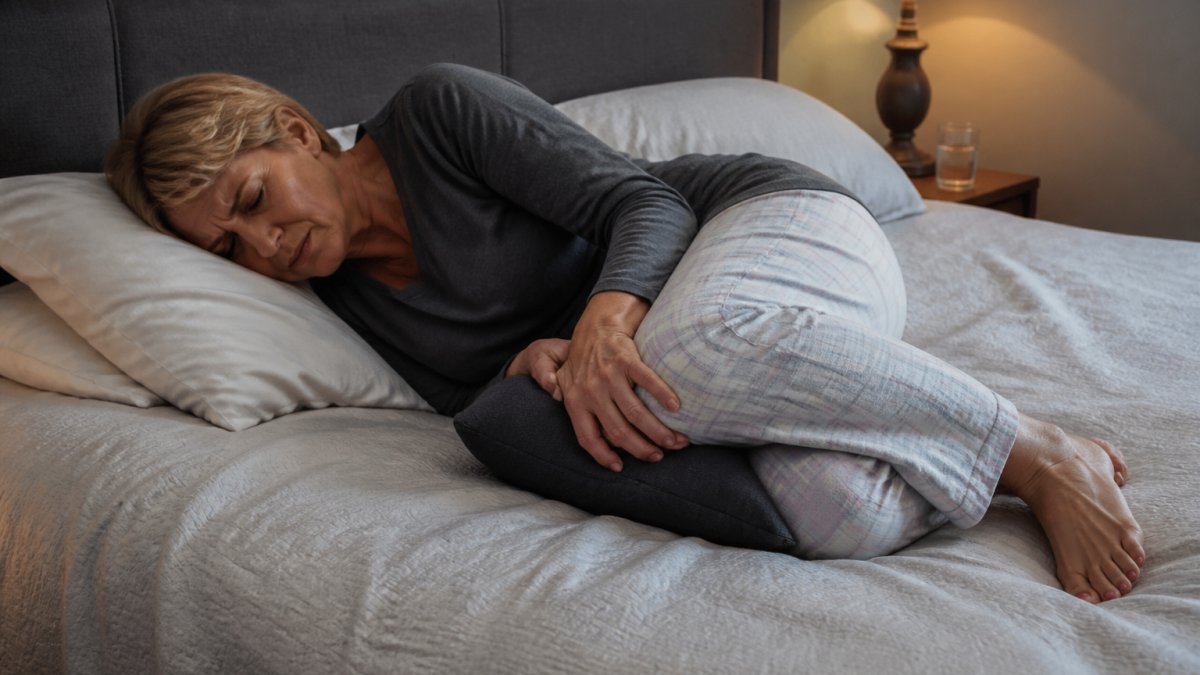
Knee pain that shows up at night is rarely random. That stillness is what makes managing knee pain while sleeping at night different from managing it during the day. (Source: Statista's 2024 report on arthritis prevalence)
At Natural Healing Arts Medical, we hear this from patients constantly: the knee feels fine at noon, then throbs at 2 a.m. A common reason is knee stiffness from arthritis, where a joint that is not moving gets stiff and sore.
Pain at night is not a sign you did something wrong. It is a sign the joint needs support and movement.
Below, we break down positions, pillows, stretches, and heat so you can build a routine that actually works.
The Best Sleeping Position for Knee Pain
The best sleeping position for knee pain is on your back with a pillow under the knee, or on your side with a pillow between the knees. Both keep the joint slightly bent and reduce pressure on the affected knee.
Back Sleeping
Lying on your back keeps the spine and hips neutral. Place a pillow under the knee so it rests at a slight bend. This takes pressure off the joint and eases morning stiffness.
Side Sleeping
Side sleeping works well if you put a pillow between the knees. This keeps the hips level and stops the top leg from dragging the knee out of line. Sleep on the side that does not hurt, or on the affected side with extra cushioning.
Pillow Placement for Knee Pain While Sleeping
Pillow placement for knee pain while sleeping comes down to one goal: keep the knee slightly bent and supported so the joint is not locked straight or twisted.
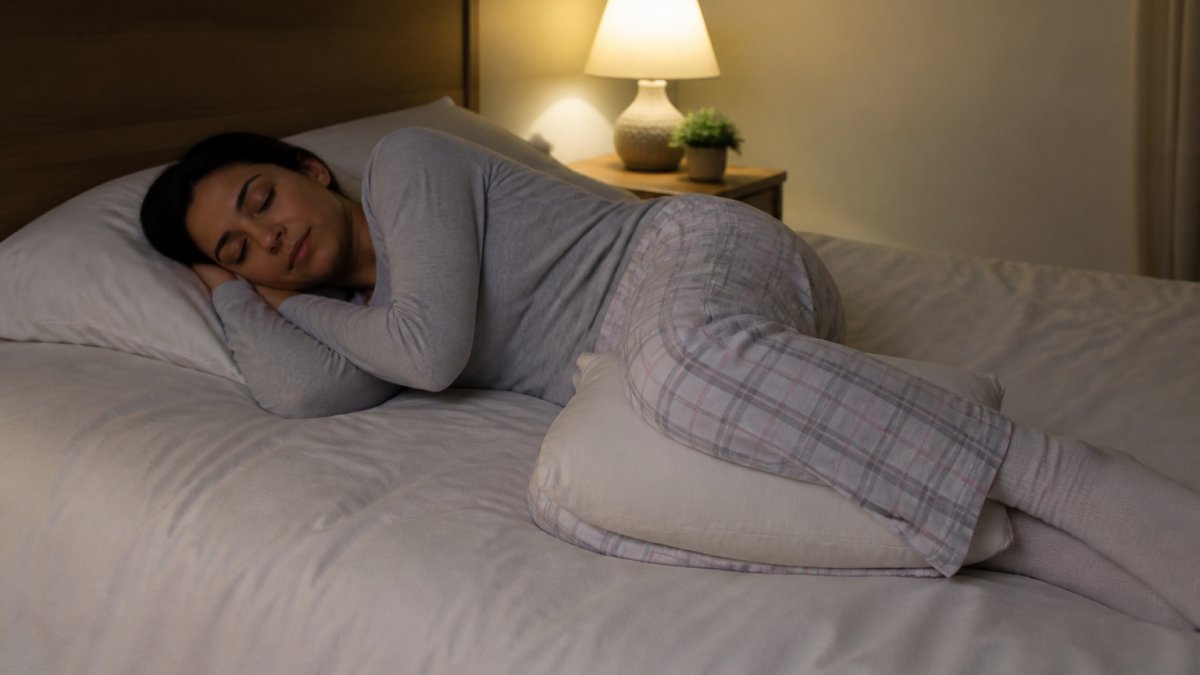
The right amount of bend is usually a small gap, roughly the height of your hand, under the knee when you lie on your back.
Here is where to put pillows based on how you sleep:
- Back sleepers: one pillow under the knee, thick enough to keep a slight bend, plus one under the lower back if it feels unsupported. A rolled towel under the knee can substitute for a thin pillow.
- Side sleepers: a pillow between the knees, thick enough to keep hips level and the top leg from dropping forward. If the pillow is too thin, the top knee drifts down and twists the pelvis; too thick and the hip tilts.
- Stomach sleepers: a thin pillow under the hips, and avoid bending the knee hard. Stomach sleeping is the hardest position for knee pain because it forces the knee to rotate; if you must, keep the affected leg slightly bent with a small pillow under the shin.
- Combination sleepers: set up two zones, a knee pillow for back sleeping and a between-knees pillow for side sleeping, so you do not have to hunt for one at 3 a.m.
Choosing the pillow itself:
- Firmness: memory foam or a firm wedge holds shape better than a standard bed pillow, which compresses under the leg's weight.
- Size: a knee pillow should span from mid-thigh to mid-calf so it supports the whole joint, not just the kneecap.
- Cover: a breathable cover matters if you run hot at night; overheating wakes people as often as pain does.
Troubleshooting:
- If you wake with a stiff knee, the pillow may be too thin, add a folded towel.
- If your hip or low back aches, the pillow may be too thick, remove a layer.
- If the knee feels unstable, a pillow plus a light brace (worn loose) can help, but do not strap a brace tight all night.
Good pillow placement reduces pressure on the knee and helps you fall asleep faster.
Nighttime Knee Pain Exercises and Stretches
Gentle movement before bed eases tight muscles and warms the joint. Nighttime knee pain exercises should be slow and easy, never hard or bouncy.
A Simple Bedtime Stretch Routine
Try this short routine about 30 minutes before bed:
- Quad set: lie flat, press the back of the knee down, hold 5 seconds. Repeat 10 times.
- Hamstring stretch: loop a towel around the foot, pull gently until you feel a stretch. Hold 30 seconds each leg.
- Heel slides: slide the heel toward you, bending the knee as far as comfortable. Do 10 slow reps.
- Straight-leg raise: tighten the thigh and lift the leg a few inches. Hold 5 seconds, 10 reps.
- Gentle knee bends: sit on the edge of the bed and bend and straighten the knee slowly.
This routine supports range of motion and eases muscle tightness. Stop if anything sharpens the pain.
Heat, Cold, and Supportive Bedding
Heat therapy before bed relaxes tight muscles and eases stiffness.
Cold therapy is better for pain or swelling after activity. Use an ice pack wrapped in a cloth for 10 to 15 minutes. Never put ice directly on skin.
Supportive bedding matters too. A firmer mattress keeps the body aligned, and a mattress topper can add comfort without losing support.
| Method | Best For | How Long |
|---|---|---|
| Heat | Stiffness, muscle tightness | 15-20 minutes |
| Cold | Swelling, sharp pain after activity | 10-15 minutes |
| Knee brace | Extra support during sleep | As advised by your clinician |
Safe Use of Over-the-Counter Pain Relief
Over-the-counter pain relievers can help on tough nights, but they are not a free pass. Follow the label exactly and talk to a doctor or pharmacist before regular use, especially if you take other medicines or have kidney, liver, or heart conditions.
A few safety basics:
- Do not mix multiple products that contain the same ingredient.
- Watch the dose. More is not better and can harm the liver or stomach.
- Check interactions with blood thinners and blood pressure medicines.
- Ask before long-term use. Nightly use for weeks deserves a medical review.
These medicines ease pain relief but do not treat the cause. If you rely on them most nights, that is a signal to get the knee checked.
When to See a Doctor for Knee Pain
Most nighttime knee pain is not an emergency, but some patterns need prompt care. The key is separating urgent warning signs from symptoms that can wait for a routine visit.
Get urgent care the same day (or call 911 if severe)
Seek prompt medical attention if you have:
- Fever, chills, or feeling generally unwell with a hot, swollen, red knee, this can signal infection, which is a medical emergency.
- Sudden severe swelling that came on over hours, especially with intense pain.
- Inability to bear weight after an injury, or a knee that gives way or locks.
- A knee that is red, warm, and extremely tender to touch, gout and infection can both look like this, and they need different care.
- Chest pain, shortness of breath, or calf swelling with knee pain, these are not knee problems and need emergency evaluation.
Book a routine visit within a week or two
Schedule an appointment if:
- Night pain lasts more than a few weeks or is getting worse.
- Pain wakes you most nights or disrupts sleep regularly.
- The knee is swelling or stiff every morning and loosens only after activity.
- Home care, positioning, heat, ice, stretches, is not helping.
- You are relying on over-the-counter pain relievers most nights.
Condition-specific red flags
Different causes behave differently at night, and the pattern helps your clinician:
- Osteoarthritis: stiffness after rest, pain that worsens with weather or activity, and a grinding sensation. Night pain that persists despite comfort measures deserves an evaluation.
- Bursitis: localized swelling and tenderness over the front of the kneecap, often worse when kneeling or after activity.
- Gout: sudden, intense pain, redness, and warmth, often starting at night, this is the classic presentation and warrants prompt care.
- Injury (sprain, strain, meniscus tear): swelling within hours, instability, or a popping sensation at the time of injury.
- Infection: fever plus a hot, swollen joint, urgent.
What to bring to the visit
A simple two-week log makes the appointment more useful. Note:
- Which nights pain woke you and at what time.
- What you tried (heat, ice, pillows, medicine) and whether it helped.
- Any swelling, stiffness, or limping you noticed.
- Medicines you take, including over-the-counter ones.
A proper medical evaluation can find the cause and rule out problems that need more than self-care. For ongoing knee osteoarthritis, our team at Natural Healing Arts Medical offers surgery-free treatment options, including viscosupplementation, and we accept most health insurance and Medicare.
A Bedtime Plan for Recurring Nighttime Knee Pain
Recurring night pain responds best to a routine you repeat. Here is a simple plan to follow each evening:
- Take a warm shower or use heat on the knee for 15 minutes.
- Do the five-minute stretch routine.
- Set up your pillow for your sleep position.
- Take pain relief only as directed, if needed.
- Keep the room cool and dark for better sleep quality.
- Note how you slept and what helped.
Track this for two weeks. Patterns will show up fast, and you can bring that record to a clinician. If night pain keeps disrupting sleep, do not wait it out. At Natural Healing Arts Medical, led by Dr. David Zamikoff, we help patients find the cause and build a plan to restore comfort and movement. Schedule an appointment and take the first step toward sleeping through the night again.
Frequently Asked Questions
Why does knee pain get worse at night?
Several factors combine at night. During the day, movement keeps joint fluid circulating and distracts you from discomfort. When you lie still, inflammation and fluid can settle around the joint, and the lack of distraction makes pain more noticeable. Muscle tightness from a day of activity also contributes. If you have osteoarthritis, bursitis, or a recent injury, these effects can be stronger. A bedtime routine that includes gentle movement, proper pillow placement, and heat or cold therapy can reduce nighttime knee pain and help you fall asleep more easily.
Should I put a pillow under or between my knees when I sleep?
It depends on your sleep position. If you sleep on your back, place a pillow under the affected knee to keep it slightly bent, which reduces pressure on the joint. If you sleep on your side, put a pillow between your knees to keep your hips and knees aligned and prevent the top leg from dragging the knee out of line. A supportive pillow between the knees can also help side sleepers avoid twisting the lower back. Try both and see which one reduces your morning stiffness.
Is heat or ice better for knee pain before bed?
Heat is usually better before bed if your knee feels stiff and tight. A warm bath, a hot water bottle, or a heating pad for 15 to 20 minutes can relax muscles and ease stiffness so you fall asleep more comfortably. Use ice instead if the knee is swollen, hot to the touch, or you had recent activity that aggravated it. Apply ice for 15 to 20 minutes with a cloth barrier. Never sleep on a heating pad or ice pack, and avoid heat if you have reduced sensation in your legs.
When should I see a doctor about knee pain at night?
See a doctor if knee pain wakes you repeatedly, persists for more than a few weeks, or comes with swelling, redness, or warmth around the joint. Get urgent care if you cannot bear weight, the knee looks deformed, you have a fever, or the pain follows a fall or injury. Nighttime pain that keeps returning deserves a medical evaluation to rule out conditions like osteoarthritis, bursitis, or gout. A doctor can recommend imaging, physical therapy, or surgery-free treatments such as viscosupplementation when appropriate.