 how-to
Natural Ways to Reduce Stress-Induced Neck Tightness
Last Updated: October 24, 2026
Quick Summary
Natural ways to reduce stress-induced neck tightness include gentle stretches, slow breathing with a longer exhale, heat for ongoing stiffness, and ergonomic fixes like raising your screen to eye level. Pairing movement with stress-reduction practices works best, because stretching alone rarely lasts if the stress never comes down.
- Do a 5-minute daily stretch routine with chin tucks, side tilts, slow turns, shoulder rolls, and an upper trap stretch.
- Breathe in for four counts and out for six during each hold to reduce muscle guarding.
- Use heat for 15-20 minutes on chronic tightness and ice for 10-15 minutes on acute strains.
- Take a movement break every 30 to 45 minutes and keep your screen top at eye level.
- Seek care for red flags like arm numbness, weakness, or neck stiffness after an injury.
Table of Contents
- Why Stress Makes Your Neck Tight (and How to Break the Cycle)
- Common Causes and Triggers of Stress-Related Neck Tension
- Neck Stretches for Stress Relief You Can Do Anywhere
- How to Relieve Neck Pain Caused by Stress and Anxiety
- Heat or Ice for Neck Tension: Which One to Use and When
- Posture, Ergonomics, and Relaxation Techniques That Protect Your Neck
- How Long Does Stress-Related Neck Tightness Last?
- When to Seek Professional Care for Neck Tightness
- Frequently Asked Questions
Why Stress Makes Your Neck Tight (and How to Break the Cycle)
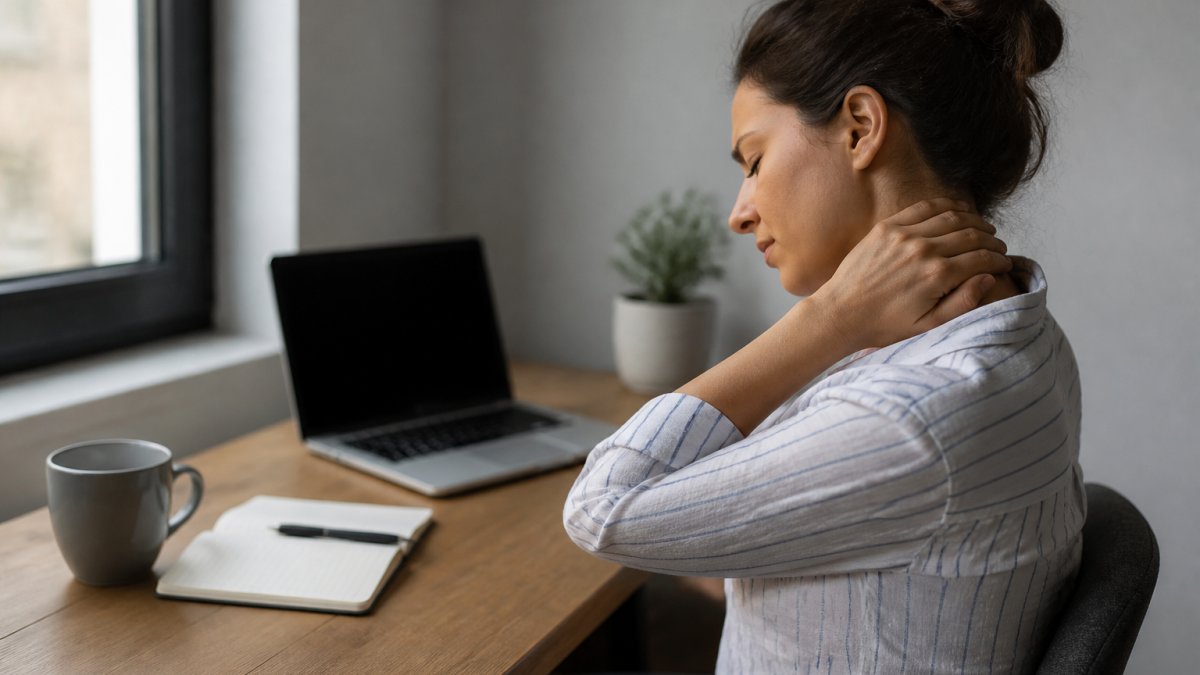
Stress-induced neck tightness is a real physical response, not something you imagine. When you feel anxious, your body tenses the muscles around your neck and shoulders as a reflex. That reflex is useful for a moment.
At Natural Healing Arts Medical, we see this pattern often in people who cannot point to a single injury. They just wake up tight, and the tightness never fully leaves.
The Stress-Muscle Tension Cycle
The cycle works like this. A stressful moment triggers a fight-or-flight response. Your neck muscles contract and stay partly contracted, a response clinicians call muscle guarding.
That soreness then becomes its own stressor. You notice the ache, you worry about it, and the muscles tighten further. Round and round it goes.
Breaking the loop means interrupting it from both ends: calm the nervous system and loosen the muscle. Doing only one rarely lasts.
Common Causes and Triggers of Stress-Related Neck Tension
Everyday habits do more damage than most people expect. A common mistake is blaming one bad night's sleep when the real cause is a dozen small triggers stacked together.
Watch for these:
- Long hours at a laptop with your head forward
- Holding your phone low and looking down to read it
- Clenching your jaw during focused work
One trigger alone is manageable. Three or four at once is when neck tightness settles in and stays.
Neck Stretches for Stress Relief You Can Do Anywhere
Neck stretches for stress relief work best when they are gentle, repeated, and paired with slow breathing. You do not need equipment or a gym. You need a few minutes and a slow, easy pace.
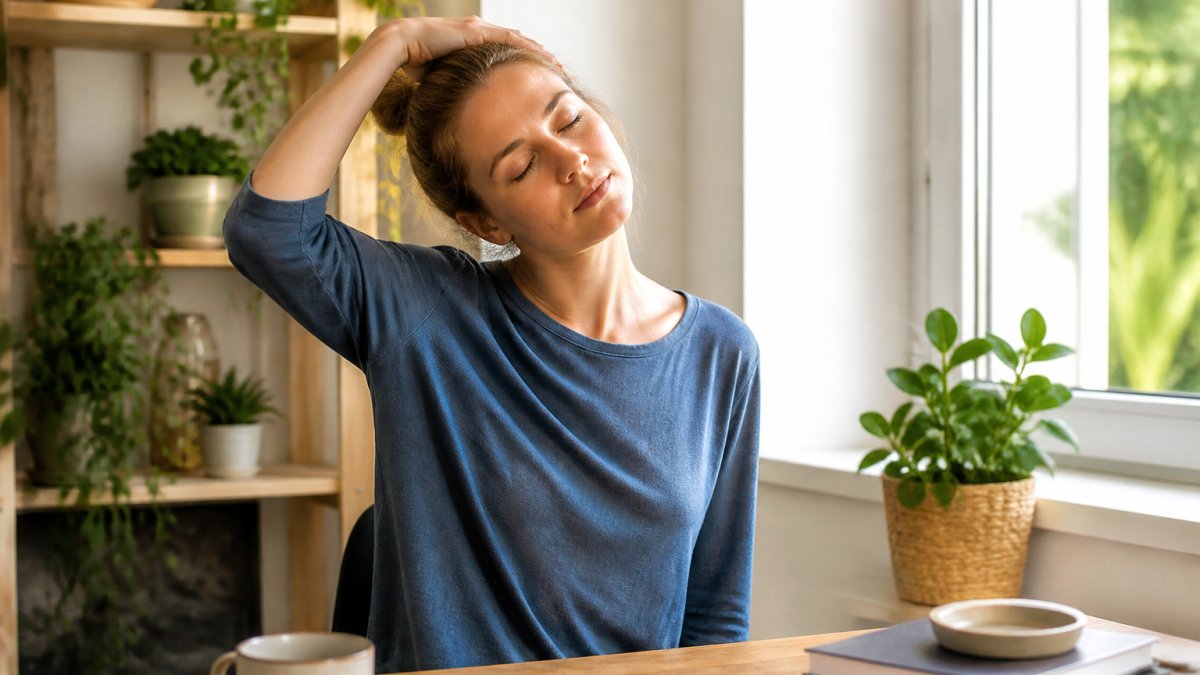
Move into each stretch until you feel mild tension, never sharp pain. Hold, breathe, and release slowly.
A 5-Minute Daily Stretch Routine
This short routine fits into a coffee break. Repeat it once in the morning and once in the afternoon if you can. Each movement is timed to keep the total near five minutes.
- Chin tuck (1 minute): Sit tall. Slide your chin straight back as if making a double chin, hold for five seconds, release. Repeat 10 times. Keep your gaze level; do not nod down.
- Side tilt (1 minute): Drop your right ear toward your right shoulder without lifting the shoulder. Hold 20 seconds while breathing slowly. Switch sides and repeat once.
- Slow turn (1 minute): Turn your head to look over one shoulder until you feel mild tension. Hold 10 seconds. Switch sides and repeat twice per side.
- Shoulder roll (1 minute): Roll your shoulders back in slow circles, 10 times. Keep the circles small and smooth; avoid shrugging toward the ears.
- Upper trap stretch (1 minute): Gently lower one ear toward the shoulder on the same side, optionally resting the hand lightly on the head for feedback only. Hold 20 seconds. Switch sides and repeat once.
Keep your range of motion comfortable. If a movement causes dizziness, sharp pain, or numbness, stop and reassess. For a longer morning sequence, see our guide to simple morning stretches for stiff neck relief.
A Longer Daily Plan with Progression
If tightness returns most days, a slightly longer plan helps build tolerance. Aim for 8 to 10 minutes once daily, ideally after a warm shower when muscles are more pliable.
- Minutes 1-2: Begin with diaphragmatic breathing: lie on your back with knees bent, place one hand on your belly, and breathe in through the nose for four counts and out for six counts. Repeat for two minutes.
- Minutes 3-5: Perform the five-move routine above, one round.
- Minutes 6-8: Add a doorway chest stretch: place your forearms on the door frame with elbows at shoulder height, step through gently, and hold 20 to 30 seconds for two rounds. This addresses the rounded-shoulder posture that often accompanies neck tension.
Progression: In week one, do the 5-minute routine twice daily. In week two, add the longer plan three days per week. In week three, if symptoms are stable, add light resistance work such as rows with a resistance band for two sets of 10 repetitions, two days per week.
How to Relieve Neck Pain Caused by Stress and Anxiety
Relieving neck pain caused by stress and anxiety means treating both the muscle and the mind. Stretching alone helps, but the tension returns if the stress never comes down.
Try these, layered into your day:
- Breathing exercises: Breathe in for four counts, out for six. Do this for two minutes.
- Meditation: Even five quiet minutes lowers the body's stress response.
- Warm shower or heat pad: Loosen the muscle before you stretch.
Stress reduction is not a luxury here. It is part of the treatment. Our article on natural remedies for neck and shoulder stiffness covers more options you can try at home.
Heat or Ice for Neck Tension: Which One to Use and When
Heat or ice for neck tension comes down to timing. Use heat for ongoing tightness and stiffness. Use ice when the area is acutely sore, swollen, or flared up after a strain.
| Situation | Best Choice | Why | How Long |
|---|---|---|---|
| Chronic tightness, end of day | Warm compress or heat pad | Relaxes muscle, boosts blood flow | 15-20 minutes |
| Recent strain or flare-up | Ice pack, wrapped in cloth | Calms acute soreness | 10-15 minutes |
| Morning stiffness | Heat | Eases the muscle before stretching | 10-15 minutes |
| Tension headache starting | Heat on shoulders and neck | Reduces muscle guarding | 15 minutes |
Never put heat or ice directly on bare skin. Wrap it in a thin towel first.
Posture, Ergonomics, and Relaxation Techniques That Protect Your Neck
Good posture and ergonomics protect your neck by reducing the load it carries all day. Small setup changes beat willpower.
Start with these:
- Raise your screen so the top sits at eye level
- Keep your feet flat and your chair back supported
- Bring your phone up to eye level instead of looking down
For desk workers, our guide on how to fix neck pain from a desk job goes deeper. Remote workers can also read how to improve posture while working from home.
Relaxation techniques finish the job. Slow breathing, meditation, and short walks all lower the muscle guarding that stress creates.
How Long Does Stress-Related Neck Tightness Last?
Stress-related neck tightness usually eases within days to a couple of weeks when you address the stress and keep moving. It lasts longer when the triggers stay in place and you stop moving the neck.
Several things affect the timeline:
- Whether the stress source is short-term or ongoing
- How much you sit still versus move each day
- Whether you stretch and use heat consistently
If tightness keeps returning, tracking your symptoms and triggers helps. Note when it flares and what you were doing. That pattern is useful information for you and for any clinician you see.
When to Seek Professional Care for Neck Tightness
Seek professional care when neck tightness comes with pain that spreads down the arm, numbness, or weakness. Those signs need a proper evaluation, not more stretching at home. A useful rule is to separate common stress-related tightness from symptoms that suggest a nerve, joint, or medical issue.
Red Flags That Warrant Prompt Assessment
Get checked promptly if you notice any of the following:
- Weakness in the arm or hand, such as dropping objects or difficulty gripping
- Numbness or tingling that spreads into the arm or fingers
- Severe headache unlike your usual tension headache, especially one that comes on suddenly
These signs are uncommon, but they are reasons to call a clinician rather than push through with more stretches.
Movements to Avoid When the Neck Is Flared
When tightness is acute, avoid aggressive end-range stretching, full neck circles, and any movement that reproduces sharp pain or numbness. Avoid using a foam roller directly on the front of the neck, and avoid heavy overhead lifting until symptoms settle. Heat is generally preferred over ice for ongoing tightness, but ice can be used for 10 to 15 minutes after an acute strain if the area feels hot or swollen.
Realistic Expectations and When to Reassess
Most people with stress-related neck tightness notice improvement within a few days to two weeks when they address triggers, keep moving, and use heat and gentle stretching consistently. A common pattern is that symptoms ease during the day but return after long desk sessions; that pattern suggests ergonomic and stress factors are still active.
Reassess your approach if:
- Tightness lasts more than two to three weeks despite consistent self-care
- Symptoms are worsening week over week
- New numbness, weakness, or headache appears
At Natural Healing Arts Medical, Dr. David Zamikoff evaluates neck and headache complaints and builds a care plan around your goals. If tension has spread into headaches, our how-to guide on chiropractic adjustment for tension headaches explains what to expect.
Frequently Asked Questions
Can stress and anxiety really cause neck tightness?
Yes. When you are stressed, your body releases hormones that prime muscles to contract, and the neck and shoulders are among the first areas to tighten. This is called muscle guarding. Over time, constant tension can lead to stiffness, reduced range of motion, and tension headaches. The good news is that stress-induced neck tightness usually responds well to stretching, heat, breathing exercises, and posture changes, especially when you address the stress itself rather than only the muscle.
What stretches help relieve neck tension?
Gentle neck stretches for stress relief include a slow side tilt (ear toward shoulder), a chin tuck to strengthen deep neck muscles, and a shoulder roll sequence to release upper back tension. Hold each stretch 15 to 30 seconds and repeat 2 to 3 times. Move slowly and stop if you feel sharp pain or numbness. A consistent 5-minute daily routine works better than occasional long sessions, and pairing stretches with slow breathing helps muscles relax faster.
How long does stress-related neck tightness last?
For most people, acute stress-related neck tightness eases within a few hours to a few days once the stressful trigger passes and you use at-home relief like heat, stretching, and rest. If tightness lingers for more than two weeks, keeps returning, or comes with numbness, weakness, or headaches that won't quit, it is worth having a professional evaluate you. Chronic tension often points to ongoing stress, poor posture, or an underlying neck strain that needs targeted care.
Should I use heat or ice for neck tension?
Use heat for tight, stiff muscles without swelling, such as chronic stress-related tension. A warm compress or heat pad for 15 to 20 minutes relaxes muscle fibers and improves blood flow. Use ice instead if the area is acutely inflamed, such as after a sudden strain or injury, for 10 to 15 minutes at a time. Never apply either directly to bare skin for extended periods, and avoid heat if you have reduced sensation in the area.