 how-to
Relieve Chronic Neck Pain Naturally: 7 Proven Methods
Table of Contents
- Understanding Chronic Neck Pain and Its Root Causes
- Neck Pain Stretches for Chronic Stiffness
- Cold and Heat Therapy for Neck Pain Relief
- Ergonomic Adjustments for Workstations and Daily Life
- How Chiropractic Adjustments for Neck Pain Support Recovery
- How Long Does It Take for Neck Pain to Go Away
- Self-Massage and Stress Management Techniques
- When to See a Doctor for Chronic Neck Pain
- Frequently Asked Questions
Last Updated: August 22, 2026
Understanding Chronic Neck Pain and Its Root Causes
Chronic neck pain affects millions of people, often stemming from modern lifestyle habits and structural issues. The cervical spine contains seven vertebrae that support your head and enable movement. When these vertebrae become misaligned, muscles tighten, or inflammation develops, persistent discomfort can radiate into the shoulders and upper back. Poor posture from desk work, tech neck from constant phone use, old injuries, and stress-related muscle tension are among the most common culprits.
Understanding what's causing your specific pain is the first step toward relief. Some people experience stiffness that worsens with movement, while others feel sharp pain localized to one side or referred pain that travels down the arm. These distinctions matter because they determine which natural approaches will work best for your situation.
Neck Pain Stretches for Chronic Stiffness
Stretching is one of the most effective ways to relieve chronic neck pain naturally by addressing muscle tension and improving range of motion. Consistency matters more than intensity, performing these stretches daily yields better results than occasional sessions.
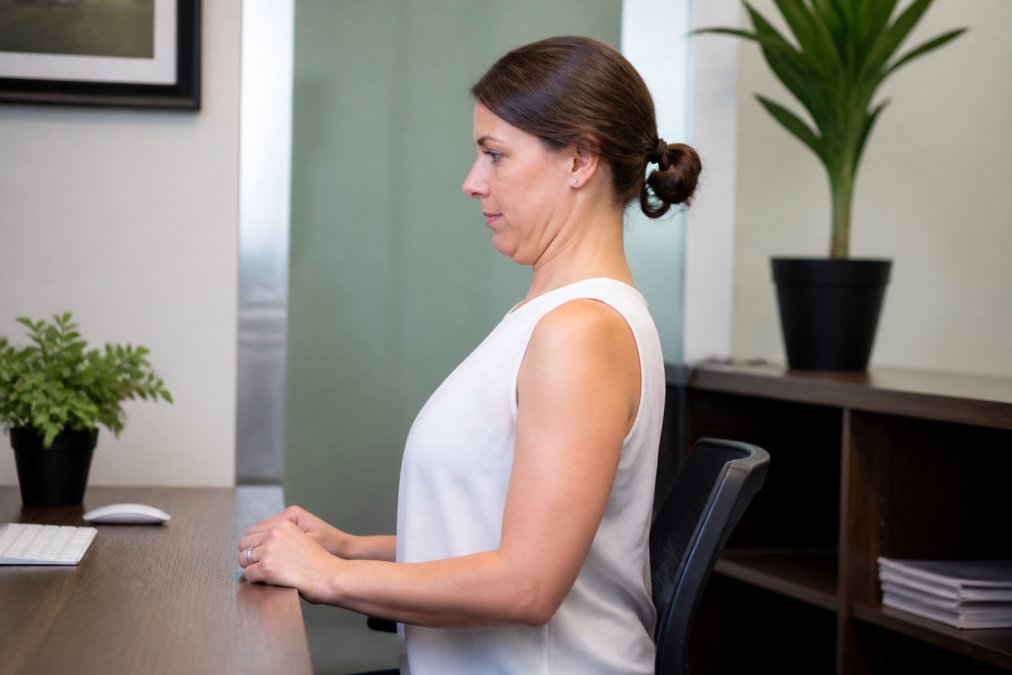
Chin Tuck Exercise
The chin tuck corrects forward head posture and engages the deep cervical stabilizers, restoring proper alignment and reducing strain on surrounding muscles.
To perform: Sit upright with your shoulders relaxed and eyes forward. Gently draw your chin straight back as if making a double chin, hold for 2-3 seconds, then release. Repeat 10-15 times, two to three times daily. The movement should be small and controlled.
Levator Scapulae Stretch
The levator scapulae muscle runs from your upper shoulder blade to the cervical spine. When tight, it restricts movement and creates localized pain on one side of the neck.
To perform: Sit upright and gently tilt your head toward one shoulder. Using your hand, apply gentle downward pressure on the side of your head. You should feel a stretch along the back and side of your neck. Hold for 20-30 seconds, breathe steadily, and avoid bouncing. Repeat three times on each side, two to three times daily. This stretch is particularly helpful if your pain is one-sided or if you experience stiffness after sleeping.
Neck Rotation and Flexion Stretches
Rotation and flexion stretches improve overall cervical mobility and prevent the stiffness that contributes to chronic pain.
For neck rotation: Sit upright, slowly turn your head to look over one shoulder, and hold for 15-20 seconds. Return to center and repeat on the other side. Perform five repetitions per side, once or twice daily.
For neck flexion: Sit upright and slowly lower your chin toward your chest. Hold for 15-20 seconds without forcing the movement. Repeat five times, once or twice daily.
Cold and Heat Therapy for Neck Pain Relief
Temperature therapy is one of the oldest and most effective ways to relieve chronic neck pain naturally. Cold and heat work through different mechanisms, and understanding when to use each is essential.
Cold therapy reduces inflammation and numbs acute pain, working best in the first 48 hours after an injury or during acute flare-ups. Apply cold using ice packs, cold gel packs, or frozen vegetables wrapped in a thin towel for 15-20 minutes at a time, with at least 2 hours between applications.
Heat therapy increases blood flow and relaxes muscles, working better for chronic stiffness and muscle tension that has persisted for weeks or months. Use a heating pad, warm compress, or hot shower for 15-20 minutes, several times daily if needed.
Many people find that alternating between cold and heat produces the best results. Start with cold therapy for acute pain, then transition to heat as inflammation decreases.
Ergonomic Adjustments for Workstations and Daily Life
Poor ergonomics is one of the leading causes of chronic neck pain, particularly for people who spend 6+ hours daily at a desk. Small adjustments to your workspace can dramatically reduce strain on your cervical spine.
Your monitor should be positioned at eye level, approximately 20-26 inches from your face. If it's too low, you'll lean forward and create forward head posture. Your keyboard and mouse should be positioned so your elbows are at 90 degrees and your wrists remain neutral. Your chair should support your lower back's natural curve and allow your feet to rest flat on the floor.

Beyond the desk, be mindful of phone and tablet use. Holding your phone at chest level and looking down creates forward head posture that causes chronic pain. Instead, bring your phone to eye level or use a stand. Take frequent breaks every 30 minutes to stand, move around, and look at distant objects.
How Chiropractic Adjustments for Neck Pain Support Recovery
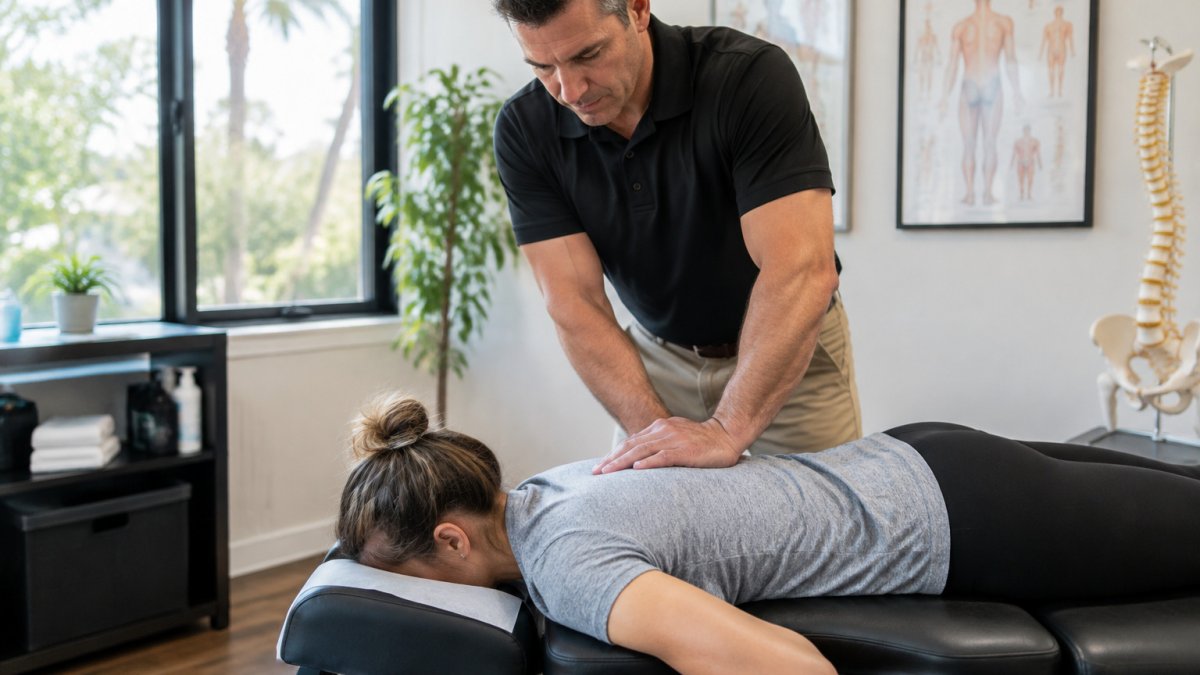
Chiropractic adjustments for neck pain address misalignments in the cervical spine that contribute to chronic pain and restricted movement. When vertebrae become misaligned, they can compress nerves, irritate muscles, and limit your range of motion. Adjustments restore proper alignment and allow your body's natural healing processes to work more effectively.
A chiropractor evaluates your spine through physical examination and imaging to identify specific misalignments, then uses precise techniques to restore vertebral alignment. This reduces nerve compression, decreases inflammation, and allows muscles to relax. Many patients report immediate relief after adjustments, though sustained improvement comes from consistent treatment combined with home exercises and ergonomic changes.
Chiropractic care is particularly effective for neck pain caused by poor posture, old injuries, or whiplash. Natural Healing Arts Medical specializes in relieving pain from various conditions including headaches, disc injuries, and whiplash through comprehensive chiropractic care. Dr. David Zamikoff and his team work with each patient to develop a personalized treatment plan that addresses their specific condition.
The duration of chiropractic treatment varies based on severity and how long you've experienced pain. Acute cases may resolve in 4-6 weeks, while chronic pain often requires 8-12 weeks of consistent care.
How Long Does It Take for Neck Pain to Go Away
The timeline for neck pain relief depends on several factors: how long you've experienced pain, the underlying cause, your age, and how consistently you follow treatment recommendations.
Acute neck pain from a recent injury typically improves within 2-4 weeks with proper care. Most people experience noticeable improvement within 7-10 days if they address the underlying cause.
Chronic neck pain that has persisted for months or years requires longer treatment. You should expect 6-12 weeks of consistent care before experiencing significant relief. This timeline assumes you're performing daily stretches, making ergonomic adjustments, and receiving professional treatment like chiropractic care or physical therapy.
Some people experience rapid improvement, while others progress more slowly. Factors that speed recovery include your age, overall health, consistency with home exercises, and whether you address ergonomic issues. The most important insight is that relieving chronic neck pain naturally requires patience and consistency. Most people who follow a comprehensive approach experience substantial improvement within 8-12 weeks.
Self-Massage and Stress Management Techniques
Self-massage addresses muscle tension and trigger points that contribute to chronic neck pain. Using your fingers or thumbs, apply firm pressure to tight spots in your neck and shoulders, spending 30-60 seconds on each tender area. You can perform this massage multiple times daily, making it a powerful tool for managing pain between professional treatments.
Another effective technique is myofascial release using a foam roller or massage ball. A small massage ball placed against the wall allows you to apply pressure to tight muscles in your neck and upper back. Roll slowly across the tight area for 1-2 minutes. This technique is particularly effective for trigger points.
Stress management is equally important because psychological stress creates physical tension. Stress causes muscles to tighten, particularly in the neck and shoulders, compounding existing chronic pain. Deep breathing exercises, meditation, yoga, and other relaxation techniques reduce stress-related muscle tension and support pain relief.
A simple deep breathing routine takes just 5 minutes: Sit comfortably, breathe in slowly through your nose for a count of 4, hold for 4, then exhale for 4. Repeat 10-15 times. This activates your parasympathetic nervous system, reducing muscle tension and pain perception. Practicing this routine twice daily produces measurable improvements within 1-2 weeks.
According to research on stress and musculoskeletal pain, chronic stress significantly increases pain perception and slows recovery. Managing stress through breathing, meditation, or other relaxation techniques is therefore essential for anyone seeking to relieve chronic neck pain naturally.
When to See a Doctor for Chronic Neck Pain
While natural approaches work well for most chronic neck pain, certain warning signs indicate you need professional medical evaluation. Seek immediate medical attention if you experience severe pain following an accident or injury, numbness or tingling that radiates down your arm, weakness in your arms or hands, difficulty with balance or coordination, or loss of bladder or bowel control.
For chronic pain without these warning signs, schedule an appointment if your pain persists beyond 4-6 weeks despite home care efforts, your pain is progressively worsening, or your pain interferes significantly with daily activities or sleep.
Natural Healing Arts Medical offers comprehensive evaluation and treatment for chronic neck pain. Dr. David Zamikoff and his team use physical examination, imaging when necessary, and detailed patient history to identify the root cause of your pain and recommend the most effective treatment approach.
The American Academy of Orthopaedic Surgeons recommends conservative treatment as the first approach for most chronic neck pain cases. Professional care enhances these methods rather than replacing them.
Chronic neck pain doesn't have to be a permanent part of your life. The stretches, ergonomic adjustments, and self-care techniques in this guide have helped countless people relieve chronic neck pain naturally. Natural Healing Arts Medical has been selected as one of America's Best Chiropractors for over a decade, recognized for compassionate, effective treatment that addresses the root causes of pain. Whether your pain stems from poor posture, old injuries, or stress-related tension, a personalized approach combining home care with professional chiropractic adjustments produces the most reliable results. Schedule an appointment with Dr. David Zamikoff to develop a comprehensive plan tailored to your specific condition and get back to living without chronic pain.
Frequently Asked Questions
Q: What is the best natural way to relieve chronic neck pain?
A: The most effective approach combines multiple methods: neck pain stretches for chronic stiffness performed daily, proper ergonomic adjustments at your workstation, heat therapy to reduce muscle tension, and stress management techniques. Many people find that combining stretching routines with posture correction and addressing inflammation through lifestyle changes produces the most lasting relief. Consistency matters more than any single remedy, most people see improvement within 2-4 weeks of daily practice.
Q: When should I see a chiropractor for chronic neck pain?
A: Consider seeing a chiropractor if your neck pain persists beyond 2-3 weeks despite home care, if you experience numbness or tingling radiating down your arm, or if your range of motion is significantly limited. Chiropractic adjustments for neck pain can address underlying vertebrae misalignment and nerve compression that home remedies alone may not resolve. A qualified chiropractor will assess whether your condition requires professional intervention or can be managed with self-care techniques.
Q: How long does it take for neck pain to go away with natural methods?
A: How long does it take for neck pain to go away depends on the severity and cause. Acute neck pain from poor posture may improve within days of ergonomic changes and stretching. Chronic neck pain typically requires 4-8 weeks of consistent effort combining stretches, heat therapy, posture reset, and stress reduction. Some people experience relief within 1-2 weeks, while others with long-standing stiffness need 2-3 months of dedicated practice. Professional chiropractic care can accelerate recovery by addressing structural issues.
Q: Can lifestyle changes really reduce chronic neck stiffness?
A: Yes. Many cases of chronic neck stiffness stem from poor posture, stress, and muscle tension rather than structural damage. Adjusting your workstation height, taking regular movement breaks, managing stress through deep breathing, and performing daily stretching routines can significantly reduce stiffness and range of motion limitations. These changes address the root causes of tension rather than just treating symptoms, making them essential for long-term relief and preventing recurrence.