 how-to
Knee Pain Relief: A Step by Step Guide
Table of Contents
- Step 1: Calm the Acute Flare With the RICE Method
- Step 2: Get an Orthopedic Assessment and Diagnostic Imaging
- Step 3: Natural Ways to Manage Osteoarthritis at Home
- Step 4: Knee strengthening exercises for beginners rebuild support around the joint. Weak muscles let the knee take the full load, which speeds up wear. Strong quads and hamstrings act like a brace you build yourself.
- Step 5: Pain Management Medications and Injections
- Step 6: Adjust Your Workspace and Footwear to Protect Your Knees
- Step 7: Address the Emotional Toll of Chronic Knee Pain
- When to See a Doctor for Knee Pain Relief
- Frequently Asked Questions
Last Updated: September 20, 2026
Step 1: Calm the Acute Flare With the RICE Method
- Rest: cut back on walking, stairs, and kneeling. Let the joint settle.
- Ice: apply a cold pack for 15 to 20 minutes, several times a day.
- Compression: wrap the knee with an elastic bandage to limit swelling.
- Elevation: prop the leg above heart level when you sit or lie down.
Once swelling calms, move on. If the knee is still hot, swollen, or giving way after a few days, get it looked at.
Step 2: Get an Orthopedic Assessment and Diagnostic Imaging
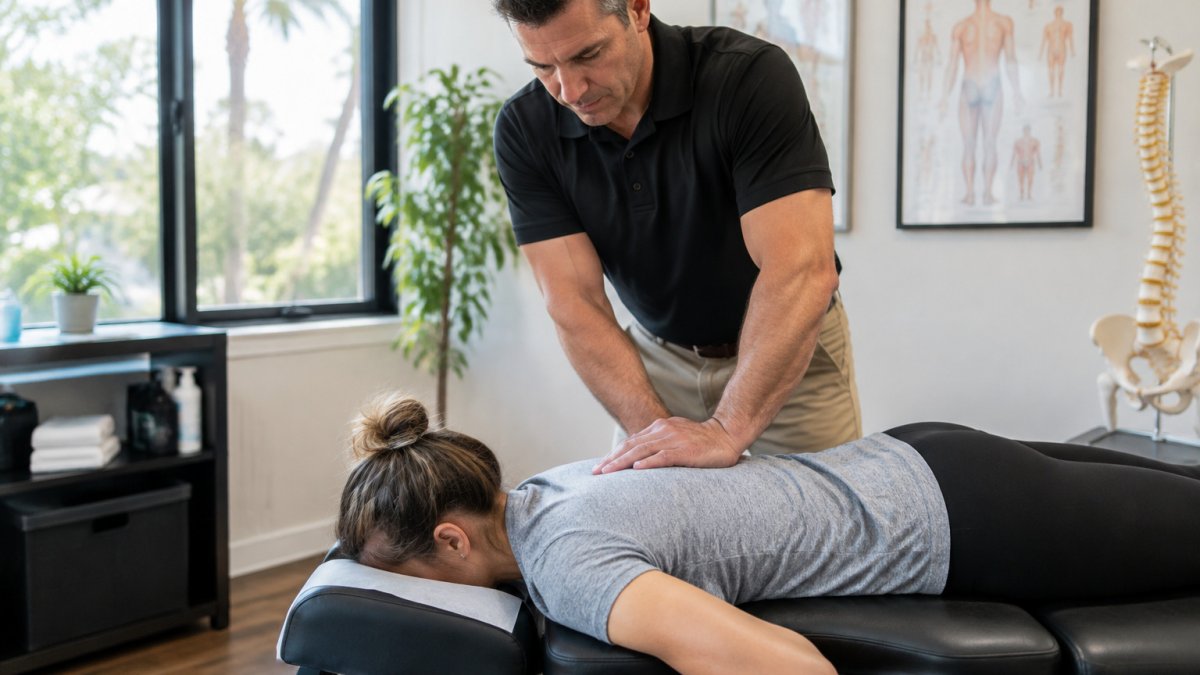
An orthopedic assessment is a hands-on exam that checks how your knee moves, where it hurts, and what is causing the problem. A doctor tests your range of motion, presses on specific spots, and looks for swelling or tenderness.
What each test tells you:
- X-ray: joint space, arthritis, bone alignment
- MRI: soft tissue, meniscus tears, ligament strain
- Physical exam: stability, strength, and where the pain starts
Step 3: Natural Ways to Manage Osteoarthritis at Home
Natural ways to manage osteoarthritis focus on lowering joint inflammation and protecting the joint from daily wear. Osteoarthritis, the "wear and tear" form, responds well to steady, low-impact habits.
Start with these:
- Keep moving. Gentle daily activity keeps joint stiffness from setting in.
- Stay at a healthy weight. Extra pounds add load to every step.
- Use heat before activity and ice after.
- Try a cane or brace on bad days to offload the joint.
Anti-Inflammatory Foods and Weight Management
Food will not cure arthritis, but it can calm the background inflammation that makes knees ache. A diet built on vegetables, fish, nuts, and olive oil helps many people feel better day to day.
A simple plate to aim for:
- Half vegetables and fruit
- A quarter lean protein, like fish or beans
- A quarter whole grains
Step 4: Knee strengthening exercises for beginners rebuild support around the joint. Weak muscles let the knee take the full load, which speeds up wear. Strong quads and hamstrings act like a brace you build yourself.
Start with these, two to three times a week:
- Quad sets: sit with the leg straight, press the back of the knee down, hold 5 seconds.
- Straight leg raises: lie down, lift the straight leg a few inches, lower slowly.
- Mini squats: hold a chair, bend the knees slightly, stand back up.
- Side step-ups: step sideways onto a low platform, then down.
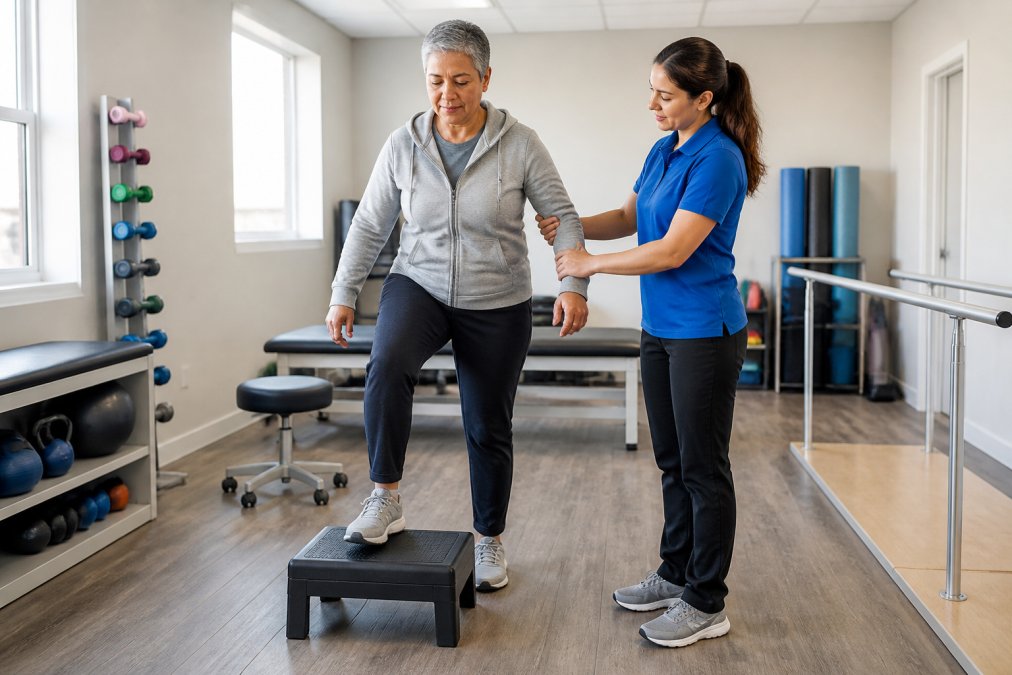
Side Step-Ups and Knee Conditioning Basics
Side step-ups train the muscles on the outside of the hip, which control how the knee tracks. Poor biomechanics here is a common reason knees ache with stairs.
Step 5: Pain Management Medications and Injections
Over-the-counter pain relief bridges the gap while your other steps take effect. Acetaminophen eases pain but does not fight swelling; ibuprofen and similar drugs reduce both pain and inflammation.
Viscosupplementation for Knee Pain: How It Works
Viscosupplementation for knee pain is a series of injections that add a gel-like fluid, often hyaluronic acid, into the joint, improving cushioning and lubrication so the knee moves with less grinding and pain.
Step 6: Adjust Your Workspace and Footwear to Protect Your Knees
Most knee-pain guides stop at the joint. But your chair and your shoes quietly decide how much load your knees carry, and both are cheap to fix. This is the step most people skip, and often the one that keeps a flare from coming back.
Why Your Desk Setup Loads Your Knees
When you sit with knees higher than hips, or feet dangling, the knee stays flexed for hours. A bent knee under load compresses the patellofemoral joint, the space between kneecap and thigh bone, a common driver of the dull ache after a long workday.
The fix is mechanical, not medical:
- Set seat height so your knees sit at roughly a 90-degree angle, with thighs parallel to the floor. If your chair will not go low enough, a footrest closes the gap.
- Keep feet flat and fully supported. Dangling feet force you to brace with your quads all day, which tightens the front of the thigh and pulls on the kneecap.
- Leave a fist-width gap behind your knees so the seat edge is not pressing into the back of the leg.
- Stand and move every 30 to 45 minutes. Set a timer. Even 60 seconds of walking resets the joint and gets synovial fluid moving through the knee.
How Footwear Changes Knee Alignment
Your foot is the first joint in the chain that ends at your knee. When the arch collapses inward, overpronation, the shin rotates inward and the knee follows, concentrating force on one side of the joint over thousands of steps a day.
What to look for:
- A firm heel counter. Squeeze the back of the shoe. If it folds easily, it will not control the heel, and the knee absorbs the wobble.
- Real arch support. A removable insole you can swap for an orthotic is a bonus.
- A slightly elevated heel (a few millimeters) takes tension off the Achilles and calf, which in turn reduces pull on the knee.
- Enough cushioning to absorb impact, but not so soft the shoe feels unstable.
The Takeaway for This Step
You do not need a new office or a closet of new shoes. You need a chair height that lets your knees rest near 90 degrees, a footrest if your desk will not cooperate, and one pair of shoes with a firm heel and real arch support. Fix those three things and you remove hours of daily load.
Step 7: Address the Emotional Toll of Chronic Knee Pain
Every other guide on this topic treats the knee as a mechanical part. That is a mistake. Chronic knee pain changes how you sleep, move, work, and feel about your body, and ignoring that side is why so many sensible recovery plans stall around week six.
Why Pain and Mood Are Wired Together
Pain is not a simple signal from knee to brain. The brain decides how much pain to produce based on context, how threatened, tired, or hopeless you feel. That is why the same arthritic knee aches mildly on a good day and feels unbearable on a bad one.
The loop runs both directions:
- Poor sleep lowers your pain threshold, so the same joint hurts more the next day.
- Anxiety and low mood amplify pain signals and make movement feel riskier than it is.
- Less movement weakens the muscles that support the knee, which increases pain, which worsens mood.
Concrete Tools That Actually Help
Vague advice like "stay positive" does nothing. These tools make a measurable difference:
- A two-line daily log. Write your pain score (0-10) and one word for your mood. After two weeks, patterns jump out, often a bad night's sleep shows up as a bad knee day before anything else does.
- Paced activity, not boom-and-bust. On a good day, resist the urge to do everything. On a bad day, do not shut down completely. Steady beats spiky.
- Sleep hygiene first. Consistent bedtime, cool dark room, no screens for the last 30 minutes. Sleep is the single highest-leverage mood and pain lever most people ignore.
- Tell your care team how you feel, not just where it hurts. Clinicians cannot treat what you do not mention. Mood is a clinical variable, not small talk.
- Stay connected. Isolation worsens pain perception. Even a short call or a walk with a friend counts.
- Ask about counseling or a pain-psychology program. Cognitive behavioral therapy for chronic pain has a strong track record for reducing pain interference, how much pain gets in the way of your life, even when the joint itself has not changed.
What to Watch For
If knee pain has you withdrawing from things you enjoy, sleeping badly for weeks, or feeling persistently low or hopeless, raise it with a doctor or mental health professional. Chronic pain and depression commonly travel together, and treating one often eases the other. Asking for help is not a sign the physical plan failed, it is part of the physical plan.
When to See a Doctor for Knee Pain Relief
See a doctor if knee pain lasts more than a few weeks, keeps you from daily tasks, or comes with swelling that will not settle, signs you need more than home care.
Get care sooner if you notice:
- A knee that locks, buckles, or gives way
- Bruising after an injury
- Redness, heat, or fever with the joint
- Pain that wakes you at night
Frequently Asked Questions
What relieves knee pain immediately?
For immediate relief, start with the RICE method: rest the knee, apply ice for 15-20 minutes every few hours, use a compression bandage to reduce swelling, and elevate the leg above heart level. Over-the-counter acetaminophen or ibuprofen can ease pain and joint inflammation. Avoid heat on a fresh injury, and do not push through sharp pain. If swelling or tenderness does not improve within 48 hours, see a doctor for an orthopedic assessment.
What activities should I avoid when experiencing knee pain?
Skip high-impact activities like running, jumping, deep squats, and lunges while your knee is inflamed. Avoid prolonged kneeling or sitting with the knee bent for long periods, which can increase joint stiffness. Do not ignore pain during exercise. Low-impact activity such as swimming, cycling, or walking on flat ground is generally safer. If an activity causes swelling or bruising, stop and rest. A physical therapist can help you modify your routine safely.
How can I manage knee osteoarthritis symptoms at home?
Natural ways to manage osteoarthritis include daily range of motion exercises, weight management to reduce joint load, and an anti-inflammatory diet rich in vegetables, fatty fish, and olive oil. Use heat before activity and ice after. Strengthening exercises for beginners, like side step-ups and straight-leg raises, support the joint. Supportive footwear with cushioning reduces impact. If symptoms persist, nonsurgical treatment options such as viscosupplementation for knee pain may help restore mobility.
When should I see a doctor for persistent knee pain?
See a doctor if pain lasts more than a few weeks, limits your ability to walk or bear weight, or comes with swelling, tenderness, or bruising that does not improve. Seek care immediately if the knee locks, gives way, or you cannot straighten it. Chronic pain that affects sleep or mood also warrants an evaluation. An orthopedic assessment with diagnostic imaging can identify ligament strain, meniscus tears, or cartilage damage and guide a step by step guide to knee pain relief plan.